



Real meaning of spinach being more expensive than pork







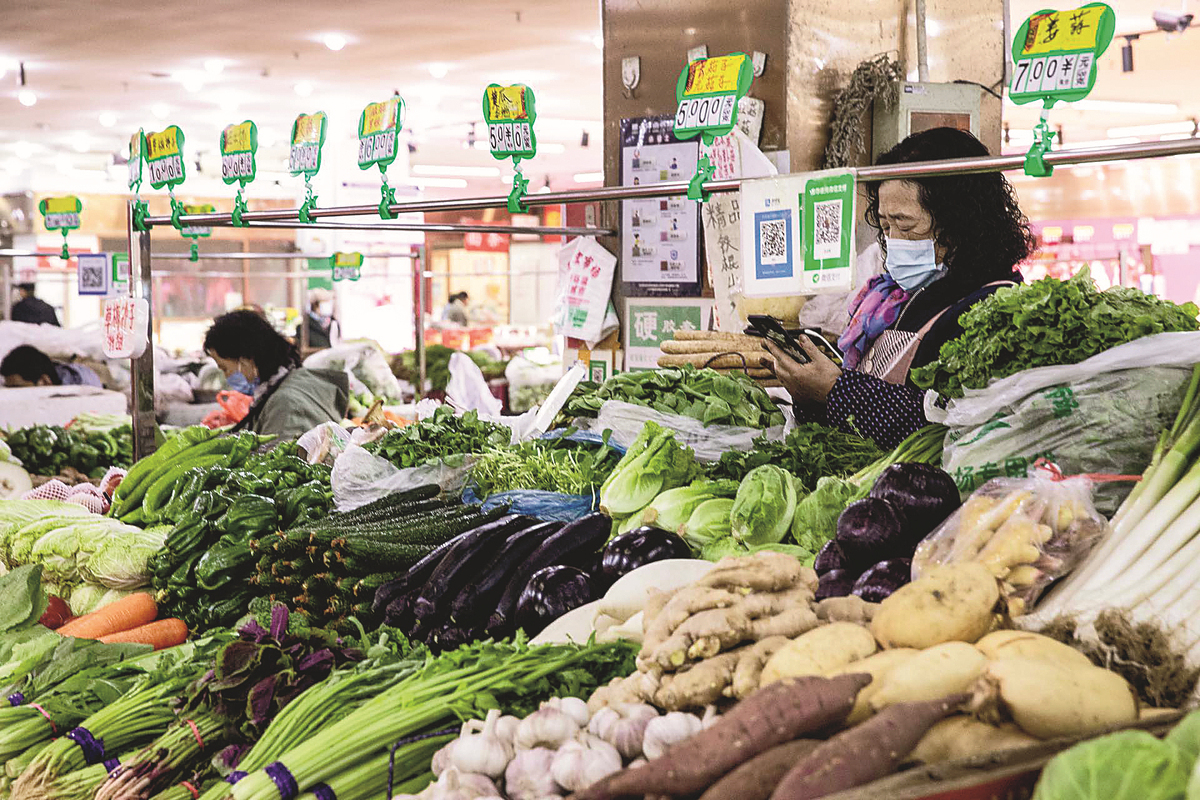
When I tapped and trawled some apps for my regular grocery shopping last week, a surprise greeted me. Spinach, a green leafy vegetable typically found on most dining tables at Chinese households, was retailing at about 16 yuan ($2.5) per half a kilogram. Improbable as it may sound, spinach was pricier than pork!
Then I consumed the news-how recent extreme weather in some regions combined with factors like COVID-19 resurgence in some areas and energy crunch to send vegetable prices soaring.
Rising vegetable prices have caught people's attention as much as the recent surge in coal prices. Although pork prices have been falling, thus somewhat softening the impact of costlier vegetables, concerns about rising inflationary risks have been growing.
Some economists worry that the high commodities prices would inflate production costs and prompt factories to eventually pass the higher input costs on to consumers.
While some economists predicted that consumer inflation may slightly pick up in the fourth quarter, most believed it would remain mild and well below the government's target of 3 percent.
What's encouraging is the central government has taken necessary measures to stabilize commodity prices, ensure adequate energy supply and has kept a watchful eye on any sharp rise in prices that could affect people's livelihoods.
Economists said that policymakers should also focus on addressing the gap between producer and consumer prices, which have been widening over the past nine months. China's factory-gate inflation hit a record high in September by growing 10.7 percent year-on-year, in contrast to the country's mild consumer inflation, which grew by 0.7 percent year-on-year, falling from 0.8 percent in the previous month.
The distortion of high producer prices and falling consumer prices could put policymakers in a difficult situation as high factory inflation could constrain the government from using strong stimulus policies to spur growth and boost domestic demand. Some economists also saw China's mild consumer inflation as a sign of a slow recovery of domestic demand, which needs additional policy support.
While the recent resurgence of COVID-19 cases could cloud the recovery of China's consumption and the services sector, a sign of relief was seen during this year's Singles Day online shopping festival-the carnival now stretches to nearly a couple of weeks, and is no longer limited to just Nov 11. This reflected the strong purchasing power of Chinese shoppers.
Li Jiaqi, a well-known e-commerce livestreamer, presold about $1.9 billion worth of products in a 12-hour livestreaming session that attracted nearly 250 million viewers.
Yet, there has been some pessimism around the outlook for the Chinese economy and some even worried that there is a rising risk of stagflation in the world's second-largest economy, given the rising costs and lower growth.
But the pessimistic sentiment tends to overlook the strong resilience of the Chinese economy supported by a huge consumer market. While exports have been a bright spot that drives the Chinese economy, domestic consumption remains a strong growth engine that contributed about 64.8 percent of growth in the first three quarters.
Meantime, more policy adjustments are on the way to address imbalances in growth and the structural weakness that is partly reflected in the price gap of producers and consumers.
More supportive policies are also expected to be offered to smaller companies and producers that are vulnerable to both higher prices and production costs.



















