'Mild rebound' in Q4 GDP is still possible







Coal woes, power crunch give jitters, but policy steps set to steady growth expectations
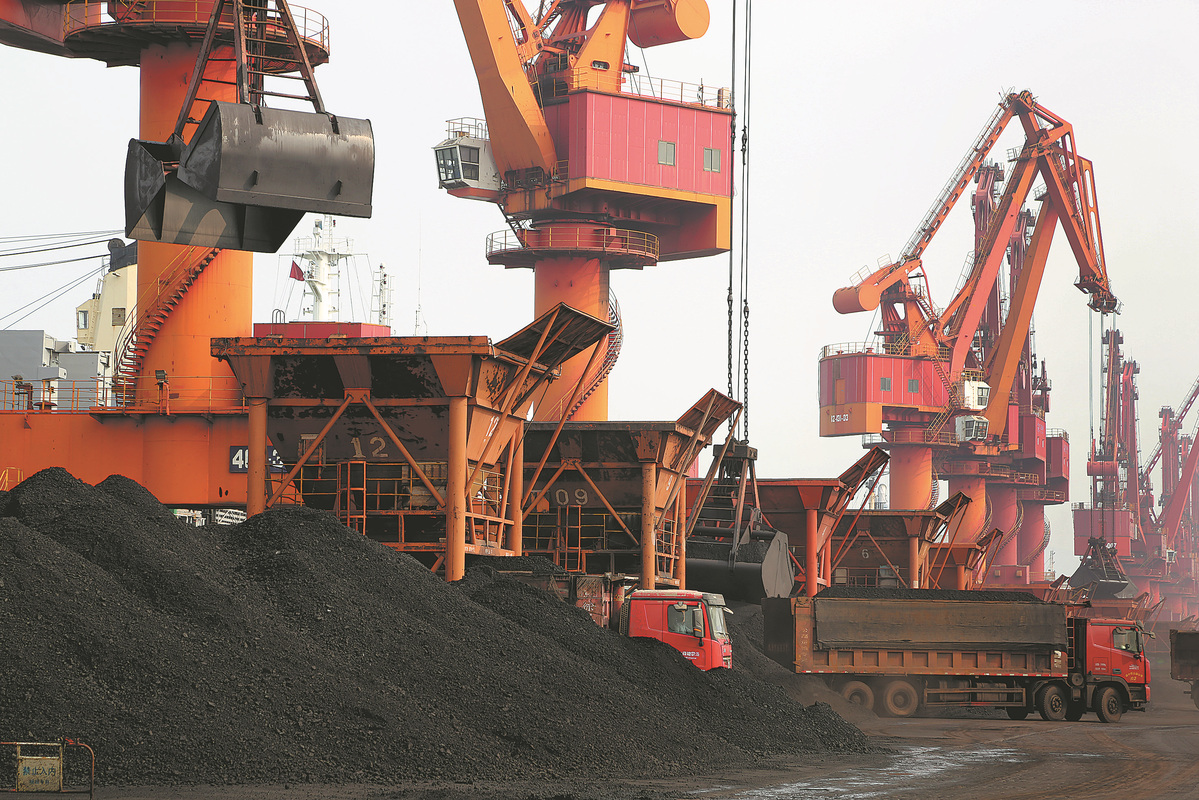
This year's runaway coal prices in China sparked by the commodity's shortages, the attendant fears about possible power shortages during the winter/heating season, and potential implications for the economy, are not only giving the markets the jitters but raking up bitter memories of last year.
That was when soaring pork prices tested the local market nerve and prompted the national government to step in to contain them in quick time, so as to preempt broader inflation.
Is history repeating itself with a twist here and a turn there? So wonder market mavens while trying to gauge the extent of the woes from the Zhengzhou Commodity Exchange. Its most-traded thermal coal contract surged more than 140 percent in late October to an all-time peak of 1,982 yuan ($310) per metric ton. Less than two months back, it was below 800 yuan.
Despite macroeconomic concerns among a few market circles, analysts expect that China's GDP growth in the fourth quarter may yet rebound to above 5 percent as the government will likely further expand fiscal spending to boost domestic demand and investment.
China's GDP grew at 4.9 percent year-on-year in the third quarter, down from 7.9 percent in the second quarter.
Xu Hongcai, deputy director of the China Association of Policy Science's economic policy committee, said the government has accelerated the issuance of local government special bonds and it is likely to loosen credit and financing policies for companies.
"The prices of major commodities and raw materials will remain elevated in the fourth quarter and they are unlikely to drop substantially in the near term," Xu said.
"We'll likely see a mild rebound of growth in the fourth quarter as the government will expand fiscal spending to shore up growth. It appears that policymakers will use every possible tool to avoid further deceleration of GDP growth."
To understand the significance of such fiscal and monetary tools, it is important to understand the dynamics of the broader picture. Coal shortages, analysts said, were caused by a mix of factors like the following: rising demand for power from industries amid robust economic recovery and export growth; low coal inventory; and decline of domestic coal supply that was disrupted by extreme weather and strict restrictions on coal production to meet carbon emission goals.

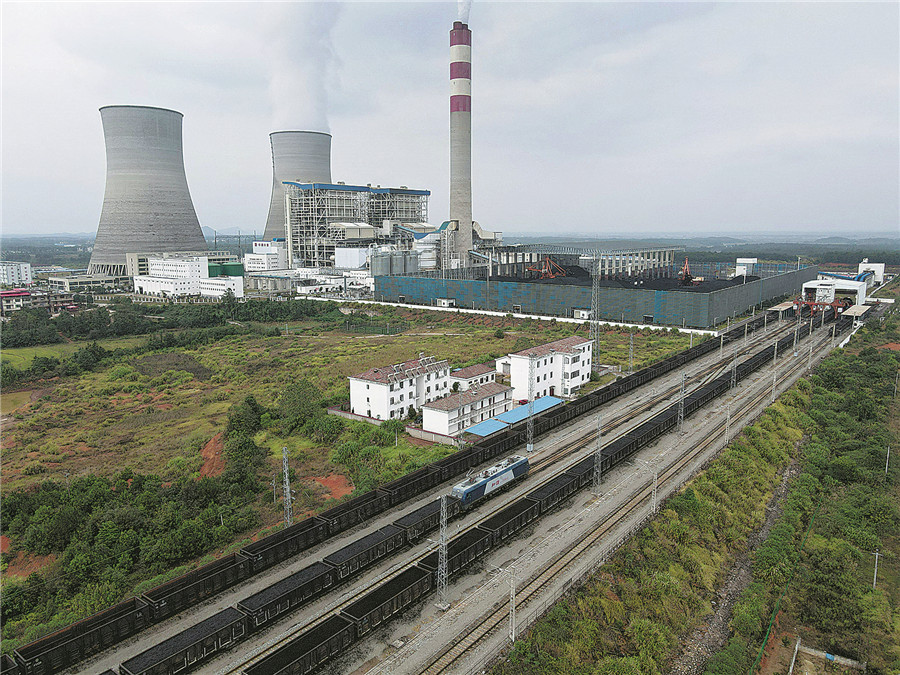
The coal shortage ultimately led to China's recent power crunch and electricity rationing in some regions. The rigid on-grid power price mechanism, under which the power price is allowed to fluctuate only within a certain range, exacerbated the power shortage as coal-fired power plants have little incentives to produce in light of soaring coal prices.
As China is to enter a peak winter season for power consumption, the country's energy situation has prompted economists to ponder how long it would take for the pressure of power shortage to be eased and how much of an impact it could have on the Chinese economy, a major engine for global growth.
China's policymakers have acted swiftly to rein in coal prices and ensure adequate supplies. For, the fossil fuel, being key to energy, remains pivotal in the country's growth. While the country has been pushing for green development, coal still accounts for about 57 percent of China's primary energy consumption while coal-fired power generation makes up about 70 percent of the country's total.
Some analysts estimate that if the shortages of coal and power supplies are not addressed properly, they could hurt China's industrial production and drag down the overall economic growth. Higher prices of coal-fired electricity would mean greater production costs for companies, especially those in the energy-intensive upstream industries, and could drive up prices of other raw materials, ultimately pushing inflation higher.
Economists at investment bank China International Capital Corp said that growth of China's factory gate inflation, which already hit a record high in September by rising 10.7 percent year-on-year, will likely remain above 10 percent in October. Meanwhile, growth of the country's consumer prices could reach nearly 2 percent.
CICC analysts also forecast that energy shortage could reduce China's GDP growth rate in the fourth quarter by 0.1 to 0.15 percentage point.
Various measures have been taken by the central and local governments to ease the pressure exerted by coal and power shortages and to ensure stable industrial production and economic growth. The measures included boosting coal production and imports, improving the electricity pricing mechanism and cracking down on illegal activities such as hoarding and collusion in the market.
China's economic regulator, the National Development and Reform Commission, has issued multiple guidelines since the end of September to stabilize both power production and consumption. The regulator has reformed the power pricing mechanism, expanding the fluctuation range to 20 percent which could help reduce the losses coal-fired power plants have to bear. In addition, electricity prices for high energy-consumption companies will be set by the market and will not be subject to the 20 percent ceiling, the NDRC said.
The regulator has also been working on a mechanism to stabilize coal prices over the long run and bring the coal market back to rational operations and promote the sustainable and healthy development of the coal and power sectors.
Lu Ting, chief China economist at Nomura Securities, said China's efforts to ease the power shortage pressure would help enable growth of industrial production to rebound in the fourth quarter; but, rising power prices could pile inflation pressure on the economy.
"Amid Beijing's rising efforts to boost coal supply and mitigate power outages, we expect industrial production growth to rebound slightly to around 3.5 percent year-on-year in October from 3.1 percent in September," Lu said in a research note.
Lu estimated that the impact of rising power prices on consumer prices could eventually be close to 0.4 percentage point with the consumer price inflation likely to be around 1.6 percent in the fourth quarter. The impact on factory gate inflation would be much more direct as the year-on-year producer price inflation in the fourth quarter could be as high as 11.8 percent, according to him.
Officials at the National Bureau of Statistics said that the elevated commodity prices and disruption to supply chains have affected the continuous recovery of industrial profitability that requires further policy support.
Smaller manufacturers in downstream industries could bear the brunt of rising power prices as many of them face higher production costs and yet have little price bargaining power for their products.
Robin Xing, chief China economist at Morgan Stanley, said that the actual impact of rising electricity prices on downstream producer and consumer inflation could be limited in the near term as the government has vowed to ensure stable power prices for households, agriculture and public services.
In addition, the pass-through effect of rising power prices on downstream producers and consumers could remain subdued amid low market concentration and sluggish consumer demand, which could pose additional margin pressures for some downstream producers, although strong external demand may provide some relief, Xing said.
Analysts said that China's GDP growth may further decelerate in the fourth quarter amid strong headwinds, which could prompt policymakers in Beijing to step up efforts to shore up growth and keep its monetary and fiscal policies accommodative for the rest of the year and the spring of next year.
Broad-based or targeted cut of banks' reserve requirement ratio, or RRR, remains a viable choice for the People's Bank of China, the central bank, to ensure sufficient liquidity in the market, analysts said. But chances of the central bank actually slashing interest rates appear to be slim in light of rising inflation, they hastened to add.
"We revise China GDP downward to 4.3 percent year-on-year in the fourth quarter from 4.5 percent year-on-year and we revise China GDP to 8.9 percent for the whole of 2021 from 8.7 percent... this is based on the expectation that there will be a 0.5 percentage point broad-based RRR cut in the fourth quarter to support growth by ensuring enough liquidity to avoid spikes in interest rates," said Iris Pang, chief China economist at Dutch bank ING.
Lu of Nomura Securities said that the PBOC could ramp up liquidity support in the fourth quarter but it may not be in the form of an RRR cut. "Instead, the PBOC may use instruments such as the medium-term lending facility, open market operations and a newly introduced 'green facility' (targeting carbon emissions reduction) to keep liquidity conditions reasonably adequate in the fourth quarter," he said.
Other analysts said the actual impacts of power and coal shortages on industrial production could be limited, given the government's quick response to increase coal supply and to stabilize the coal prices.
While China will continue to push for high-quality and greener development, some policy fine-tuning is likely to come, including temporary easing of carbon emission controls and refining of policy enforcement with differentiated implementation to avoid sharp energy crunch, given the rising downward growth pressure and some "campaign-style "practices of local governments, said Wang Tao, chief China economist at UBS.