Three challenges ahead for EU-China relations







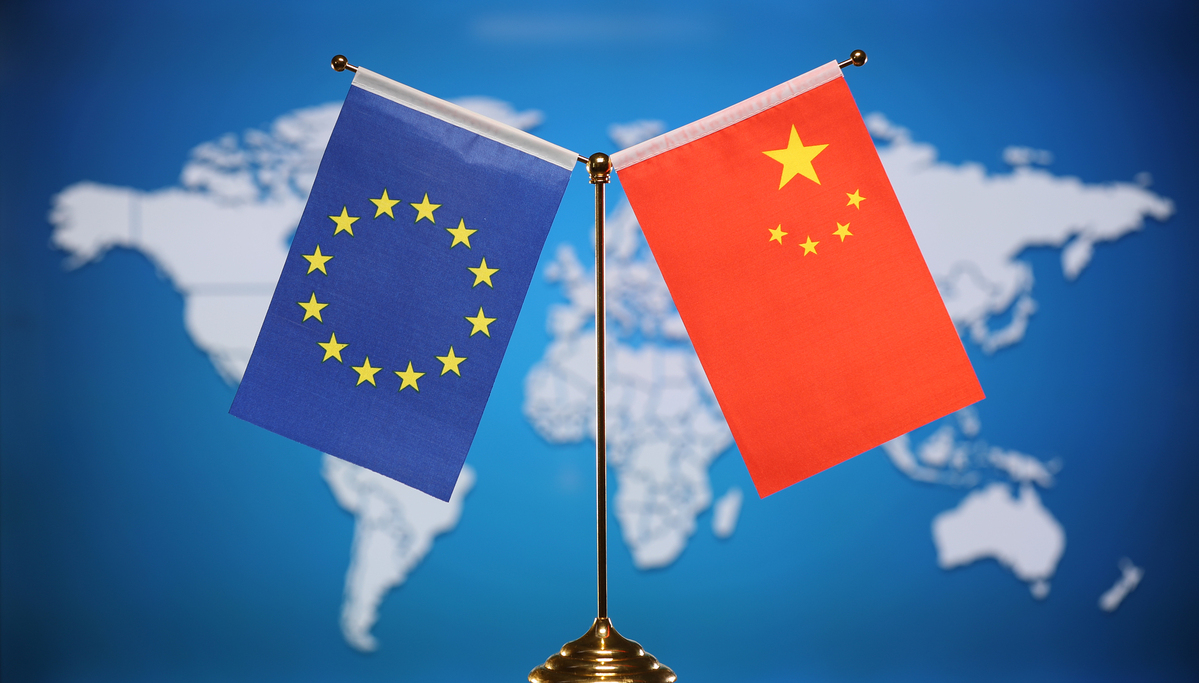
European Council President Charles Michel is due to converse with President Xi Jinping over a phone call on Friday, October 15, 2021 in a call that is widely expected to cover areas including human rights, trade issues, and domestic politics in both European countries (on fronts pertaining to the rights of Chinese migrants and students) and China (concerning China's handling of crises in Hong Kong and over Taiwan).
Whilst such conversations are – trivially – better than non-communication, it is imperative to note that dialogue for the sake of dialogue could only go so far in diffusing tensions and repairing relations. The EU and China share a plethora of common interests and convergences – ones that could well foment and ground a reliable basis for collaboration and closer relations. Yet unless three imminent challenges are appropriately dispensed with and addressed, bilateral exchange would remain fundamentally vacuous and devoid of bite.
The first challenge concerns the management of internal disagreements within both Europe and China. Now, EU foreign policy chief Josep Borrell has vowed to engage with Beijing "from a position of unity and strength" – yet the extent to which such pledges have teeth and credibility must be called into question, given the widely disparate interests and attitudes towards China amongst EU states. Baltic states, spearheaded by Lithuania, have grown increasingly skeptical of what they perceive to be China's labour rights conditions, flagrant defiance of European norms when it comes to economic presence in the region (e.g. Huawei), and China's handling of civil unrest in Hong Kong. For such states, their concerns with China are chiefly ideological, as opposed to economic. Other member states, such as Greece and Spain, are by far more receptive towards China – eyeing keenly the prospects of opening up their markets, firms, and trade at large to what would soon become the largest consumer market in the world. Germany and France have sought to hedge between competing interests, though with Germany's succession turmoil and Macron's having his own battle to fight in six months, it remains unclear as to if they would be able to provide genuinely Europe-serving and long-termist leadership in shaping the European community's response to China. The challenge for Europe, therefore, is to establish at least some modicum of internal consensus – both in order to avoid undercutting its own credibility and sowing further seeds for divisions, but also in ensuring that Europe is in a position to negotiate with China cogently and effectively.
On the other hand, Beijing must also confront the surging tides of opprobrium directed towards certain members of the European community, amongst its own population. Many in the Chinese public are skeptical of European states' actions and speech towards their country – perceiving the consternation displayed over China's alleged human rights malpractices as evidence of foreign interference and patronising imperialism. Chinese diplomats must themselves reckon with the increasingly bellicose anti-Western sentiments rampant amongst the grassroots in their country – and toe the fine line between tactfully offering reasonable concessions, and coming across as too weak and capitulatory towards the other side. Now of course, the Chinese state can resort to careful management of public opinions as a means of moderating any potential flack received for its "softening" on Europe – yet will it do so? Does it want to do so? That much remains to be seen.
The second challenge revolves around visceral and blatant "sore thumbs" that haunt bilateral relations. European countries and China alike have long prospered off and benefited from the deep economic ties, sociocultural exchange, and academic collaboration between both sides, which have unfortunately been undercut as a result of the tensions arising over recent years. The reciprocated series of sanctions and counter-sanctions earlier this year – ones imposed by the EU, over China's Xinjiang policy, Hong Kong policy, and trade practices; as well as the ones mounted by China towards what it construes to be attempts at undermining its ruling party's governance – has locked both parties in a difficult stalemate. Journalists, academics, and civil society organisations that had long acted as the conduit of unofficial, track-II dialogue between both sides, have found themselves in the crossfire of deteriorating Sino-European relations.
Resuming civil society exchanges, conversations, and dialogues spearheaded by non-state actors is absolutely essential to a reset to EU-China relations. Whilst lifting of sanctions and counter-sanctions would be vital in restoring healthy, constructive bilateral exchange, preventing a further backsliding to bilateral relations, and signaling both sides' openness to talk, making a convincing case for the removal of sanctions could well be tricky. The EU leadership must offer a resounding and emphatic justification in order to mollify the significant number of Sinoskeptics within the community; on the other hand, Beijing must also find a way to reconcile the sternness it had displayed earlier, with the flexibility that is perhaps long overdue – yet difficult to sell to the public.
The final challenge is more subtle. Much ink has been spilled on areas in which Beijing and Brussels have commonalities and common interests – common interests in combating climate change, public health crises, and geopolitical and international security threats. Yet what is sorely missing is a modicum of creativity – creativity that is vital in expanding the region of convergence between what is currently on offer.
European states are skeptical, too, of American interests and intents in the region, yet if there is one thing China should learn from its trans-Pacific counterpart, it is the fact that the United States consistently innovates in rebranding and improving its value proposition. From offering economic and financial aid through the Marshall Plan in the early days of the Cold War, to pledging military and security support through NATO and related arrangements throughout the Cold War, to leveraging the U.S. and UK's Special Relationship – prior to Brexit – as a gateway for European firms in accessing America (and vice versa), Washington has consistently innovated. Through its innovation, it has also brought forth resounding reasons for which Europe – at the very least – could ill-afford to alienate America.
The recent establishment of AUKUS and President Biden's stern approach to China have rendered some in the European community partially estranged from the United States. Yet Beijing would be mistaken to think that this alienation would translate – automatically and naturally – into greater affinity for China. Trust and goodwill must be earned, and we can only hope that with the Xi-Michel call, the case for bilateral collaboration (even with some competition) – as opposed to rivalry or confrontation – emerges victorious after all.
The author is DPhil in Politics candidate and Rhodes Scholar at Balliol College, Oxford. The views don't necessarily reflect those of China Daily.