



Short videos, livestreaming redefine retail








Emotional e-connect overcomes short attention spans of many consumers
In traditional commerce, businesses keenly peddle their merchandise, highlighting features, functionalities and alluring price tags.
In short, all eyes are on the products, and the relationship between customers and merchants is as simple as transactional.
Today, some merchants would prefer a remote, loose, weak linkage, or in the case of Liu Bing, a temporary decoupling of him and the accessories he sells.
From the outside, Liu, 35, is a vlogger on Douyin, China's leading short video app, where he imparts so-called life lessons through a series of two-minute video clips to the younger generation, or "between 18 and 28 years old", as he precisely put it.
But a more ambitious plan is in the making: when the current 30,000 followers grow to a size of 50,000 and beyond, Liu will consider introducing necklaces, earrings and other jewelry items featuring Chinese characteristics that he designs, manufactures (in partnership with an original equipment manufacturer) and sells.
"Of course, (I"ll likely do that) in a very subtle way at the beginning, such as by wearing them as I record the videos but without elaborating," said Liu, a former marketer working for several Chinese internet companies. "Perhaps, the followers will get noticed and they may ask questions about the accessories."
Liu's choice of "detour" uncovered a new way of doing business: selling your persona before selling your brand.
Enriching media forms from short videos to livestreaming are rewriting the retail playbook in China. Merchants are elbowing their way to capture people's significantly shortened attention span, and that's when emotional connection kicks in.
"We are witnessing a shift from rack-based shopping to discovery-based shopping, and eventually to trust-based shopping," said Jason Yu, general manager of consultancy Kantar Worldpanel China. "I choose to buy something not necessarily because of the products per se, but because of the person selling it."
This retail "new normal" can be traced back to the early days of livestreaming, a real-time interaction between customers and store owners materialized by technological readiness, that is, smartphones and high-speed internet connections.
For long, livestreaming has remained an obscure practice, which found popularity only in the realm of online gaming. But when Taobao, China's top e-commerce site, introduced the function five years ago, it took off and turned into something of a must for businesses aspiring for a younger generation of consumers.
Taobao Live is the brainchild of Zhao Lidong, who oversees product development and content commercialization at Taobao Live. She said she believes new media forms as such stand to offer sellers and influencers a more personal, straightforward way to engage with their audiences.
"I think it comes down to the available supply and the shopping habits of Chinese consumers today," she told Alizila, Alibaba's news site. "In China, people are used to consuming hours of content on their smartphones. They embrace innovative tools."
Today, the platform has groomed a handful of influencers, or better known as "hosts" in the online shopping lexicon, including household names Austin Li and Viya. Many admit to buying for the sake of supporting their beloved characters.
"Since the height of the COVID-19, I've formed a habit of watching Viya's livestreaming session every night and see what I can buy," said Liu Min, a sophomore student in Shanghai who has spent over 10,000 yuan ($1,553) through livestreaming since last year.
"Of course, her deals are good. But she's more like a big sister, taking care of our daily needs. I don't even bother to go to the supermarket."
The model is now embraced by a growing number of players, who adapt to, and make variations on this influencer-driven shopping in a bid to keep abreast of varying consumer interests.
Douyin, for instance, is seen by many industry observers as giving mature e-commerce players a run for their money. By ramping up its e-commerce initiatives since last year, Douyin's gross merchandise volume-it is a key gauge of sales in e-commerce-topped $77 billion in 2020, more than three times that of 2019.
Its e-commerce initiative kicked up a notch in March, as the company unveiled flagship stores for brands, on top of its existing Douyin stores where anyone, notably influencers, can apply and multiple brands can be sold.
This year's mid-year June 18 promotional campaign saw Douyin debuting the ring fence previously dominated by the likes of Tmall and JD. It offered steep discounts, tens of thousands of livestreaming sessions, where key opinion leaders appearing in widely circulated short videos turn into perhaps the most persuasive salespeople.
While denying previous market speculation that Douyin would formally establish an in-house business unit focusing on e-commerce, the company is placing its latest bets on agriculture related e-commerce, encouraging and facilitating farmers to be part of the online peddling game.
"Interest is the ultimate guiding baton here," said Yu. "It manages to activate the entire industrial chain, from producers, suppliers, to merchants."
China's livestreaming e-commerce market, loosely known as online transactions made via influencer endorsements through their livestreaming sessions, reached 961 billion yuan in 2020, a jump of 121.5 percent from the previous year, according to data from iiMedia Research.
The sector is on a steady upward trajectory to reach 1.2 billion yuan this year.
The likes of Taobao have felt the pinch of latecomers, scratching heads to retain customers and to prolong their time spent on the shopping app.
As part of this campaign, Taobao Live has been lifted from an obscure button hidden in product display pages to high up on the front page of the app, making it much more accessible to users.
These serve to pave the way for Tmall's signature Nov 11 shopping festival where 1,000 hit items in eight categories will be promoted by influencers through short videos, livestreaming, and other integrated marketing campaigns, said Cheng Daofang, who leads the Taobao Live unit. He expected the total exposure of these short videos to reach 2 billion times.
Liu, the vlogger and entrepreneur, has also embarked on the livestreaming game but is deliberatively taking a two-pronged approach. On the one hand, Liu contracted a dedicated livestreaming team for the mere purpose of sales. On the other, he continues to play his role as a "mentor" to the youngsters through short videos, exerting a subtle influence on people's values and therefore their propensity of choice of goods.
"The rationale here is that if they (the followers) like me, trust me, they are more inclined to trust what I recommend, especially when it's a business I own by myself," Liu noted.
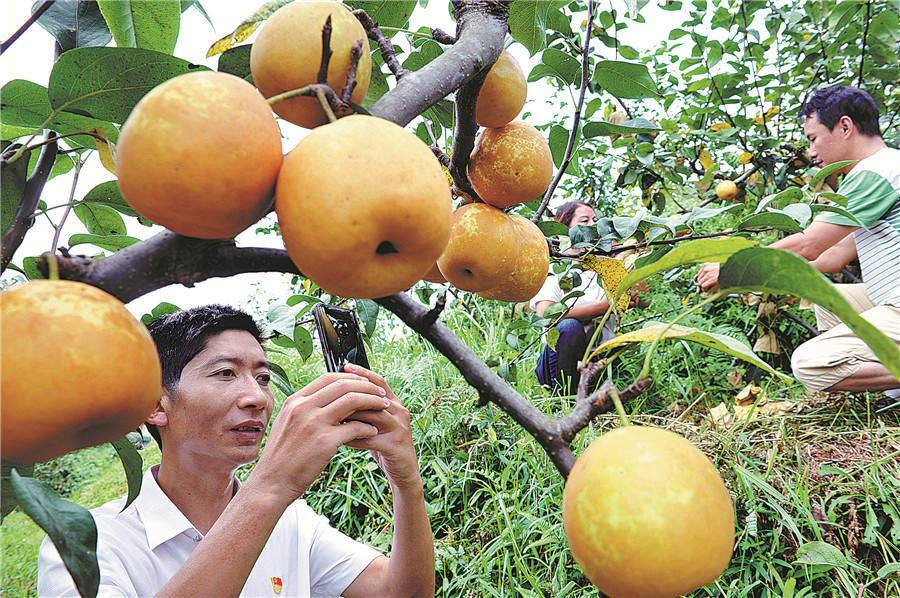
As livestreaming industry proliferates, brands can no longer solely rely on key opinion leaders-KOLs or Wang Hong-to market their projects, due to costs and quality control issues. Instead, they employ key opinion consumers-KOCs-who specialize in product reviews for a smaller patch of followers.
"KOCs make eminent sense to retailers due to their higher perceived reliability and trustworthiness," said Jennifer Ye, partner and China consumer markets leader at consultancy PwC.
"To appeal to younger consumers in China, it is critical for brands to find KOCs that embody the right brand values, and who can reliably connect with target audiences through user-generated content," said Ye, citing the example of Chanel partnering with a local media company to establish a network of micro-influencers.
Peng Jingxuan, 26, who is doing her second master's degree in France, unexpectedly developed a cult following after posting her videos playing guzheng, a traditional Chinese musical instrument, on Bilibili, China's top video portal and community for notably the Generation Z population.
During her performance, she dressed up in traditional Chinese costumes and wore makeup in ancient Chinese style. With a fan base of 1.5 million and many of her videos played more than 1 million times each, brands spanning cosmetics to snacking utilize her services.
"Because my videos are essentially promoting the rising China cultural tide, I'd favor brands whose brand-positioning aligns with my online persona, namely an advocate of Chinese culture," Peng said of her rationale in choosing merchants to collaborate with.
For instance, high-flying snacking brand Three Squirrels and Synear Foods are among the labels that insert their commercials into Peng's videos.
"The key learning from the trend of Guo Chao, or the rising Chinese cultural tide, is that to be culturally relevant, brands need to understand and respond to their audience in a way they can relate to," said Ye.
But just as the old Chinese saying goes, "water can carry a boat, but can also overturn it", there could be potential backlash over overreliance on influencers, warned Yu from Kantar Worldpanel.
"If a delicately curated persona collapses, the potential damage that would do to brands is beyond what they can bear."




















