Three challenges AUKUS poses to ASEAN







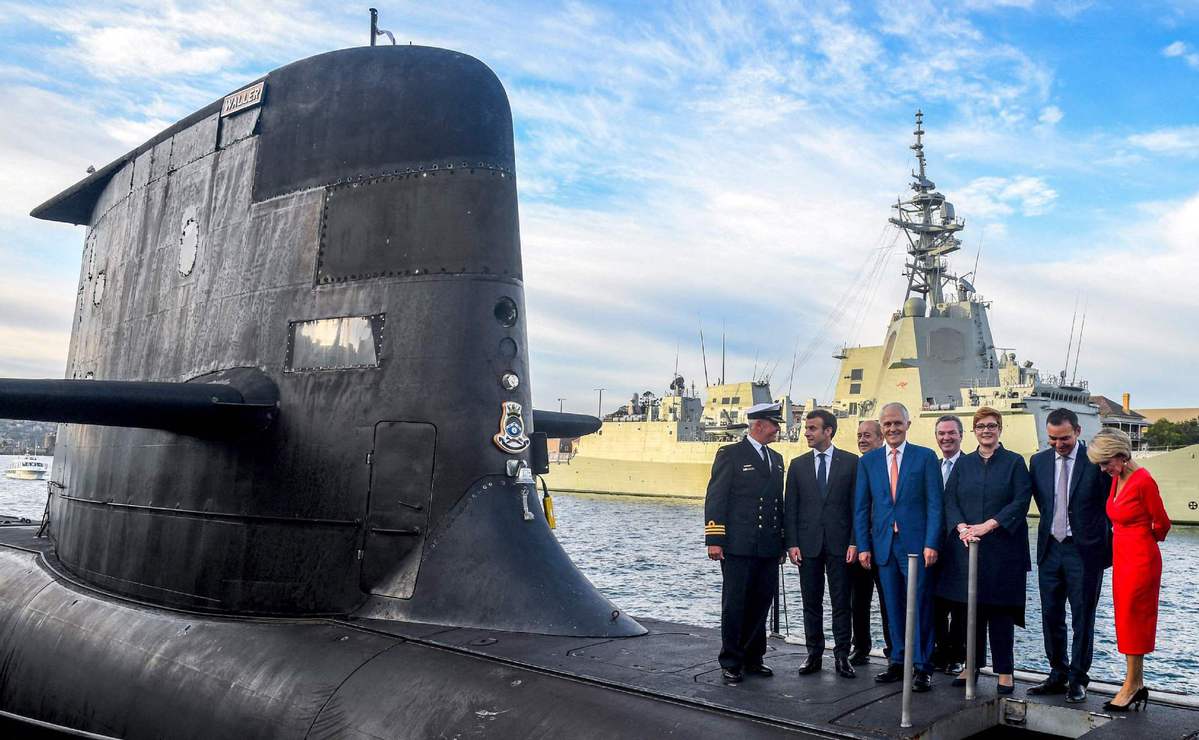
On September 15, the United States, the United Kingdom and Australia came together to sign a security cooperation agreement and established a trilateral security partnership - AUKUS.
AUKUS, a de facto trilateral security alliance in traditional international politics, is the only multilateral military security alliance in the Asia-Pacific in the past 30 years.
More surprisingly, the US and the UK, the two permanent members of the United Nations Security Council, have also promised to provide Australia with at least eight nuclear-powered submarines, making Australia the seventh country in the world to access this military strength.
In addition, this new trilateral alliance is highly consistent with the idea of "alliance and partnership" emphasized by the Biden administration, and is also consistent with the strategic goal of the US to focus all its energy on China, which it believes to be the "biggest geopolitical test" for the US.
As a multilateral military alliances with nuclear armaments targeting the same competitor - China, AUKUS shows signs of Cold War.
Besides, ASEAN will also face severe challenges from AUKUS because ASEAN countries are located around the South China Sea, a strategic thoroughfare, facing Australia across the ocean, and some member states are an important link in the first island chain of the US and a fortress to contain China.
Specifically, AUKUS has put ASEAN to the test in three aspects.
First, ASEAN may fall into a security dilemma in which everyone finds themselves in danger. On the one hand, the US and the UK will provide Australia with nuclear-powered submarines, which not only means that Australia's military strength would improve by leaps and bounds, giving the United States a strong partner. This move is bound to trigger a new round of arms race in the Indo-Pacific.
Since entering the 21st century, Malaysia, Indonesia, Vietnam and other ASEAN countries have actively introduced conventional-powered submarines and other surface combatants from Germany and Russia. Especially since 2010, with the continuous intense situation in the South China Sea, nations have accelerated the modernization of naval forces through procurement.
However, nuclear-powered submarines have obvious advantages over conventional-powered submarines. In addition to strong endurance and high speed, they can usually be equipped with nuclear missiles. Their offensive, lethality and deterrence are by no means comparable to conventional-powered submarines. What is more worrying is that Australia, which is already eager to show its impact, is bound to deploy nuclear-powered submarines to the South China Sea to support the strategic needs of the US in the South China Sea. Therefore, ASEAN countries will see a close neighbor whose military strength will increase instantaneously approaching them gradually.
On the other hand, ASEAN countries have always relied on the balance of great power to ensure security. With the formation of AUKUS, there will be a "Big Mac" from Southeast Asia to the South Pacific, and the original balance of power distribution in the region will be broken. Therefore, ASEAN will have to decide where its strategy of seeking balance needs to go.
ASEAN's political and security integration is still in at a relative low level compared with the EU, and its member states are far from standing on the common ground in terms of diplomatic and defense policies. It is difficult for ASEAN member states to rely on the collective defense of ASEAN to seek "collective security". They can only rely on independent military capacity-building and appropriate and independent diplomatic strategies. Therefore, in the face of the establishment of the AUKUS and Australia's nuclear-powered submarine, ASEAN countries will fall into the dilemma of feeling threatened, which will lead to a speed-up on arm race.
Second, ASEAN will have to think about how to resolve the problem of "compelled to take side". Although the US has repeatedly stressed that it does not intend to force ASEAN countries to choose sides between China and the US, the establishment of the AUKUS has shown that an anti-China camp led by the US has gradually begun to form. The geographical location of Southeast Asia is extremely special and important, which would determine the success or failure of the US strategy to curb China to a considerable extent.
On the one hand, the US will not easily accept the containment strategy against China, which will be greatly reduced or even difficult to give birth due to ASEAN's lack of cooperation. On the other hand, China is ASEAN's natural neighbor and irreplaceable economic and trade partner. Therefore, most ASEAN countries have no intention to worry about the costs and consequences of border selection, and also strive to maintain the independence of diplomatic and security strategies, especially the "central position" of ASEAN. However, in the face of the aggressive posture of the United States, ASEAN would still be unable to escape the dilemma of "compelled to take side".
Third, AUKUS will tear ASEAN apart and block the process of ASEAN's political and security integration. The response of ASEAN countries toward AUKUS is not consistent. Among them, Philippine Foreign Minister Teodoro Lochen publicly stated that the AUKUS will improve the military response capacity of its close neighbors and allies to threats or challenges to the current situation in the region, help restore and maintain balance and will not undermine regional stability.
However, Malaysian Prime Minister Ismail Sabri held diametrically opposite views. Sabri warned that the agreement to provide nuclear-powered submarines to Australia could trigger a nuclear arms race in the region. Malaysian Defense Minister Hishammuddin Hussein later said that he would seek China's views.
In addition, on September 17, the Indonesian Foreign Ministry also expressed concern that the AUKUS may trigger a "regional sustained arms race and military power projection". In addition to the three island ASEAN countries, Vietnam's ambiguous statement is thought-provoking, which also shows the flavor of supporting the US to form a small multilateral alliance to contain China.
ASEAN countries' different view toward AUKUS lies in their differences in security strategies, demand for US security protection and cooperation, and the different perceptions toward China's roles in the region. In particular, the Philippines and Vietnam, which have conflicts of maritime rights and interests with China, essentially support the strategic deployment of the US to contain China.
Therefore, it is difficult for ASEAN countries to take a common position on AUKUS, and their divided positions will bring challenges to the process of regional political security integration and the realization of ASEAN Political-Security Community Blueprint 2025.
AUKUS is the first formal alliance established by the US in the Asia-Pacific in 30 years, but it will not be the last. In face of the violent shock of regional order caused by the US, ASEAN should not forget its "original aspiration" and "mission" when it was established. All member states should actively defend the unity of ASEAN and let ASEAN continue to play a "damper" role in the evolution of regional order.
The author is director of the World Navy Research Center at the National Institute for South China Sea Studies.
The opinions expressed here are those of the writer and do not necessarily represent the views of China Daily and China Daily website.
If you have a specific expertise, or would like to share your thought about our stories, then send us your writings at opinion@chinadaily.com.cn, and comment@chinadaily.com.cn.