



SCO can play positive role in Afghanistan







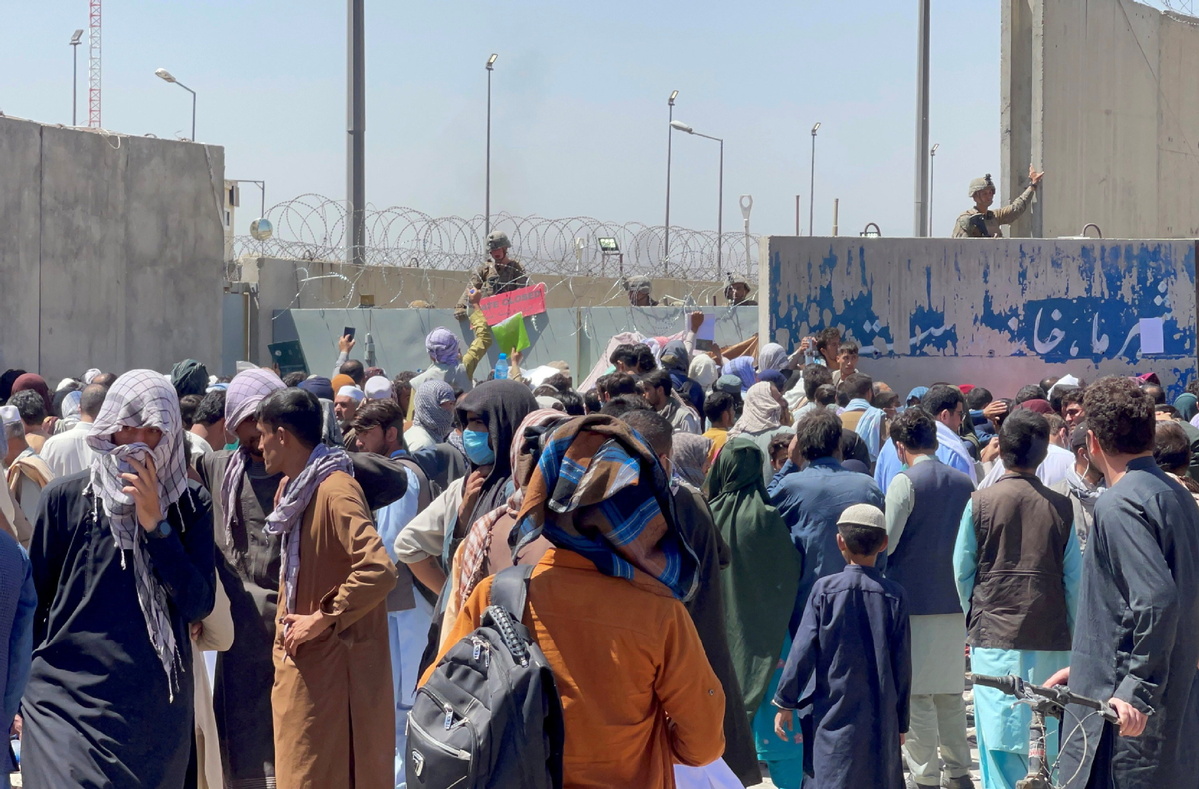
Afghanistan has been mired in wars for decades. Now, the Taliban's return to power has raised fresh questions about the country's future. The defeat of a superpower in Afghanistan is not new, yet the United States will have much to reflect on its 20-year war and misadventure in the country.
The US has failed to understand Afghanistan, and the dramatic change in Kabul is the result of flawed US policies. The drastic sweep of the Taliban across Afghanistan in the face of crumbling resistance from the Ashraf Ghani regime presents a unique challenge to the international community. Ghani, who had been heading the administration, secretly slipped out of the presidential palace and fled the country, leaving behind misery and chaos.
Will the Taliban restore peace and stability in Afghanistan? And what will be the form of the new government? Senior Taliban leader Amir Khan Muttaqi has held talks on government formation with other Afghan leaders, including former president Hamid Karzai, and Abdullah Abdullah who once headed the country's negotiating council.
Afghanistan, a land of breathtaking beauty, torn by ethnic, tribal and religious divisions, has been at the center of geopolitical contests for centuries. As such, the Taliban's return to power is no guarantee that peace will be restored in the country. Instead, it could signal the advent of a fresh wave of hostilities and radicalization. As water has no permanent shape, so is the situation in warfare-there are no permanent conditions.
The Taliban's assurances that people's lives and property would be safeguarded and women's rights respected can be considered an attempt to project a positive face of the outfit to the international community and the Afghan people. One can only assess the credibility of those statements after seeing how the Taliban actually conduct themselves on the ground in the days to come.
Indeed, the Taliban have evolved over the years and many of their members are now more educated, and better understand international politics, compared with their earlier avatar. But they have to act like a political party to gain legitimacy.
The situation in Afghanistan is changing with each passing day. The international community is trying to ensure terrorist groups do not operate on Afghan soil to target another country. So, only by abiding by international law can the new Afghan regime hope to win the world's recognition.
The Afghan people have suffered for decades because of the brutal conflicts. It is time to put their interests first, and let them decide their own future and fate. All neighboring countries of Afghanistan, including Central Asian countries (Kazakhstan, Kyrgyzstan, Tajikistan, Turkmenistan and Uzbekistan), Iran, China, Russia, Turkey and Pakistan, must establish a mechanism to discuss the future of Afghanistan and maintain regional peace. The time for musing is over.
Countries in the region need to make vital decisions in relation to Afghanistan and send a strong message to the Taliban that there will be consequences if they again provide shelter to terrorists. After all, one should not forget that terrorist groups such as al-Qaida and the Islamic State still have a significant foothold in Afghanistan.
Russia, China and the Central Asian countries have held meetings and negotiations with the Taliban leaders. And the regional stakeholders will likely work out future strategies. But the role of multilateral regional organizations will be instrumental in restoring peace in Afghanistan and meeting the Afghan people's needs.
In this respect, the Shanghai Cooperation Organization can play a constructive role in integrating all parties. The SCO is a model regional organization. Regional integration through the SCO may pave the way for supranational regulatory systems and a flexible model for future alignments. The SCO comprises eight members (China, Russia, Kazakhstan, Kyrgyzstan, Tajikistan, Uzbekistan, Pakistan and India), four observer countries (Afghanistan, Belarus, Iran and Mongolia), and six dialogue partners (Armenia, Azerbaijan, Turkey, Cambodia, Nepal and Sri Lanka).
The most substantial contour of the SCO is harmonizing national interests based on negotiations, political coordination, mutually acceptable solutions to common problems, enhancing people-to-people exchanges, promoting inclusive development and facilitating collective activities.
The SCO has an advantage because of the broad mandate it enjoys. As such, it is in a position to address Afghanistan's security, economic and human development issues by strengthening regional security, implementing large-scale economic projects and promoting social capital building.
The SCO can also provide an integrated platform for all the countries in the region to hold talks on issues related to Afghanistan and help settle them. It can also help mediate between the Taliban and the US and encourage them to discuss vital issues and reach an agreement.
Restoring peace and stability in Afghanistan, and building railways and energy facilities are necessary to strengthen regional connectivity between Central and South Asia. So the SCO should discuss these issues in September, when meetings are scheduled to be held among the heads of state, ministers and official delegations of the members. If the organization succeeds in the mission, it would be the best possible illustration of the changing nature of international relations.
The author is executive director of the Center for Global & Strategic Studies, a think tank based in Islamabad, Pakistan. The views do not necessarily reflect those of China Daily.
If you have a specific expertise, or would like to share your thought about our stories, then send us your writings at opinion@chinadaily.com.cn, and comment@chinadaily.com.cn.





