Juncao technology -- breeding fungi with herbaceous plants: From China and For the World







Editor's Note: To celebrate the 100th founding anniversary of the Communist Party of China, we are launching the "100 CPC Stories in 100 Days" series, featuring foreigners who witnessed and participated in the CPC's history and helped the world better understand the CPC. The following is the 83rd story of the series.
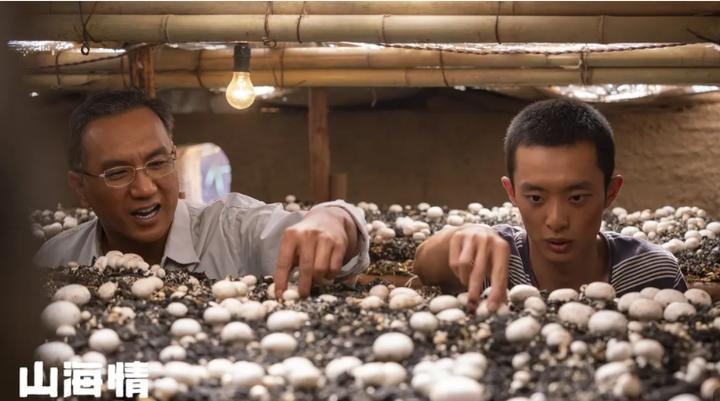
As Minning Town, a TV series that tells stories about paired-up poverty alleviation becomes a recent hit, the viewers are deeply touched by the farmers who strive to emerge from poverty, by their hardwork in breeding mushrooms, and by the bond between the farmers and their paired-up brothers and sisters from the more developed areas. In the show, Professor Ling Yinong helped the resettled farmers of Minning Village of Ningxia develop the mushroom industry and get rid of poverty. The character Ling Yinong is actually inspired by Professor Lin Zhanxi in real life. Professor Lin's reformed breeding technology is a solution to the mushroom industry's threat to forests. His new technology allows the fungi to grow on grass-based substrates instead of felled trees. This has brought hope to the sustainable development of developing countries.
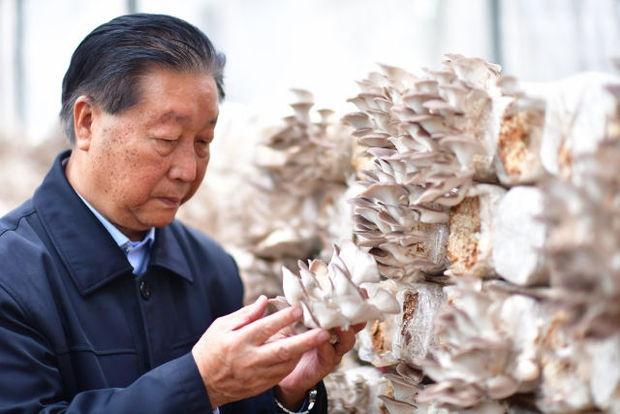
The Juncao technology, which in Chinese means breeding fungi with herbaceous plants, has benefited 106 countries and regions by addressing poverty, soil erosion and desertification. The herb used in this technology is fondly called the "China Herb," "Happiness Herb," and "Sun Herb" by the local people. The Juncao technology has been promoted in 15 languages. Over 10,000 people have been trained both at home and abroad. Thirteen Asian, African and Pacific countries have established training and demonstration centers of the technology.
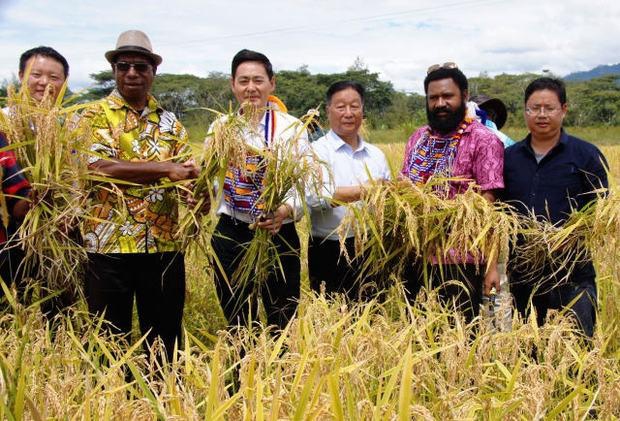
In 1997, at the request of the government of the Eastern Highlands Province of Papua New Guinea, a group of Chinese experts made a field visit to the province and decided to set up a Juncao technology demonstration site in its Lufa District. The next year, Professor Lin's team brought upland rice from China and successfully cultivated the perennial variety "Jinshan One" in the Eastern Highlands Province. For the first time in its history, Papua New Guinea was able to produce rice. In 2000, Xi Jinping, then governor of Fujian Province, personally pushed for demonstration projects of Juncao and upland rice technologies in the Eastern Highlands Province with aid from Fujian Province. Many years later, Xi said he was happy to learn that the project is doing well and producing good economic and social benefits. It has become a much-relished story in the China-Papua New Guinea relationship. The governor of the Eastern Highlands Province Peter Numu said Juncao was a gift from China and enabled the local people to emerge from poverty.
Today, more than 700 rural households in the Eastern Highlands Province are breeding mushroom with Juncao technology. According to a successful breeder, Juncao and mushroom are easy to grow and transport. They don't need fertilizer or pesticide and the economic benefits are 20 to 30 times that of cabbage which they previously grew. His life got much better by breeding mushroom. He could send his children to school and afford new clothes and daily necessities.
The Chinese experts also trained local students to grow upland rice and Juncao. Professor Lin said this exemplified the Chinese approach to foreign aid: teaching how to fish instead of just giving fish.
Juncao is called "the Lin Herb" in Papua New Guinea to honor the friendship between the two countries and express the local people's gratitude to the Chinese experts. The former Defense Minister of Papua New Guinea even gave his daughter the Chinese name Juncao and announced it in the newspaper. He said to Professor Lin that no matter what happens to the Juncao project in the future and how the world changes, he would always keep in mind what China has done to help his country.
In Fiji, Juncao technology is believed to be a new hope of agriculture for island states. Fiji now can produce fungi as food and herbal medicine. The local people are highly appreciative of the Chinese gentlemen who taught them how to build greenhouses with readily available materials and grow Juncao. The technology has generated good economic, ecological and social benefits and helped preserve and improve soil in Fiji.
In Rwanda, the intercropping of Juncao and other plants are promoted by the Agriculture Board across the country. Since 2006, Chinese experts have been promoting Juncao technology in Rwanda through technical cooperation and training courses. According to Josiana Umbeyi, a Juncao coordinator of Rwanda's Agriculture Board, Juncao breeders can get the raw materials from the local market, Juncao is suitable for small-scale production and is a good way of increasing people's income.
In 2017, the China-UN Peace and Development Trust Fund launched the Juncao Technology Project at the UN Headquarters in New York. Juncao technology is an effective approach to implementing the 2030 Agenda for Sustainable Development. At the UN High-Level Meeting on Juncao Technology in 2019, President of the 73rd Session of the UN General Assembly Ms. María Fernanda Espinosa Garcés said, "Through Juncao technology, China has a great story to tell - a story now shared with over 100 countries who have benefited from this innovation. The spark lit in Fujian Province has shown the potential of a single innovation - if nurtured and deployed wisely - to change lives and improve livelihoods across the world."
In this big world, herbs may seem small but they carry China's commitment to foreign aid and concern for the greater good of humanity. While achieving success for oneself, one should also help others succeed. This is the philosophy behind China's promotion of Juncao around the world. It is also what drives China to make continuous efforts, including through science and technology innovation, to build a community with a shared future for mankind.




- 10 dead and 84 injured in explosion at steel plant
- China unveils flexible urban planning rules to improve lives, foster new industries
- Ex–China Construction Bank executive gets 18 years for bribery, loan violations
- First batch of eco-friendly pioneer zones for construction of beautiful countryside unveiled
- Woodpeckers, finches captured in Jilin winter scenes
- Mainland reiterates 1992 Consensus as foundation for resuming cross-Strait dialogue