Study highlights risks of COVID-19 aerosol transmission







A new study released by Chinese researchers on Friday has called attention to the risk of aerosol transmission of the novel coronavirus between buildings used for centralized isolation and close to each other.
It also found the virus' spread through aerosols – droplets carrying the virus that can mix with the air and be inhaled – is likely aided by the operation of air conditioners, as well as opening or closing doors and windows. Thus, monitoring airflow at isolation wards for COVID-19 patients as well as disinfection in such areas should be stepped up.
The study was published online by China CDC Weekly, an academic platform established by the Chinese Center for Disease Control and Prevention. It was jointly conducted by researchers from the China CDC and local disease control workers in Guangdong province.
In May, a COVID-19 patient in Guangzhou, Guangdong province was suspected of catching the virus through aerosols from another patient who stayed in a separate building at the same hospital. Both were incoming passengers arriving from overseas.
Before their diagnoses, the two patients were isolated in two different buildings located about 50 centimeters apart and sharing an exterior ceiling, forming a relatively enclosed space.
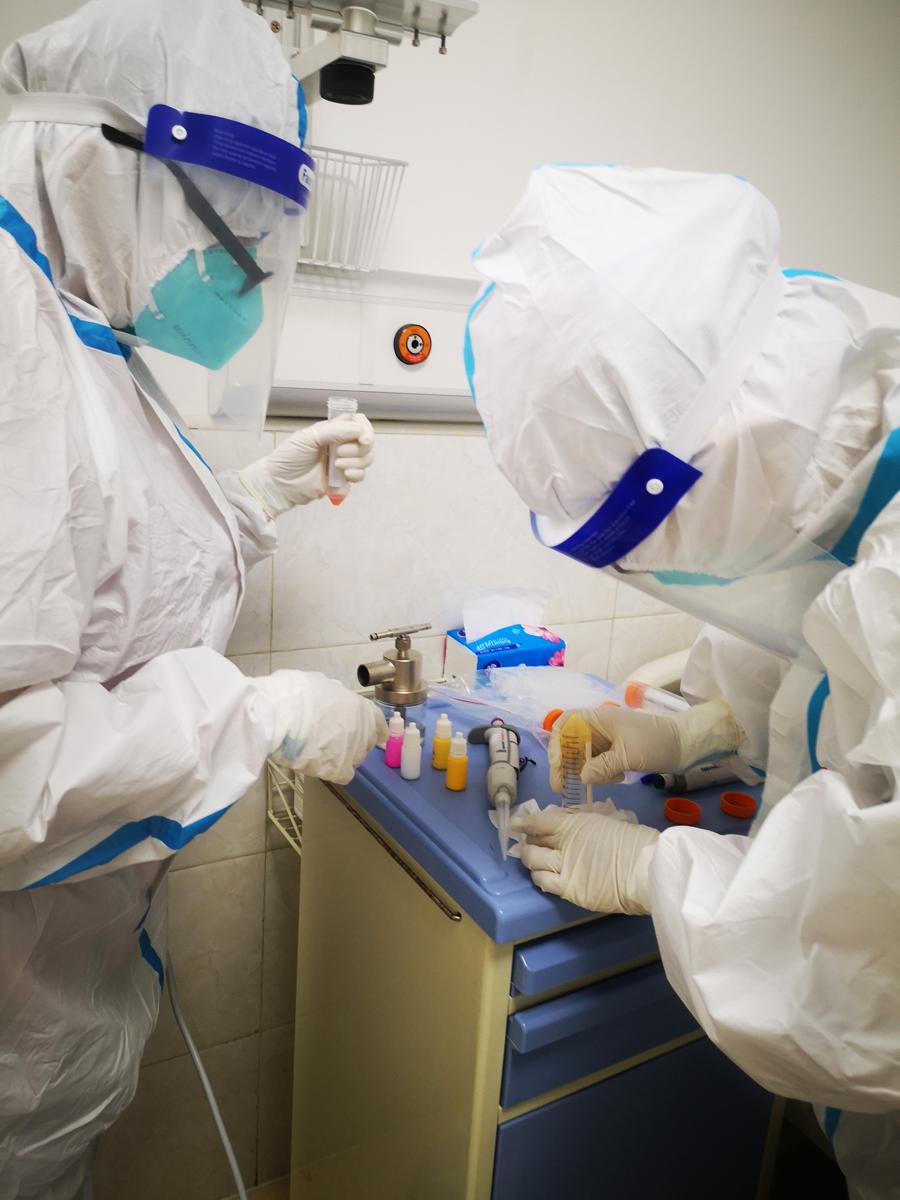
Researchers then conducted a field experiment at the hospital. They used fluorescent microspheres to simulate and observe the diffusion of aerosol particles in the air, and then determined their transmission path.
Experiment results showed the operation status of air conditioners, the opening and closing of doors and windows and regular human activity can all affect the spread of aerosols between buildings in close proximity.
"The better the ventilation, the faster the transmission," their report concluded.
Based on the findings, it is suggested adequate space should be maintained between isolation wards and routine outpatient areas at hospitals.
Additionally, in isolation wards air distribution layout should be examined and disinfection measures strengthened to lower the risk of the virus’s transmission via aerosols.






- Capital accelerates humanoid robot mass production
- Video series unveils Hebei's breathtaking ecology, landscape
- PLA conducts combat readiness patrols around Huangyan Island
- 5 Myanmar gang members sentenced
- Fishing ban revives Yangtze finless porpoises
- Foreign diplomats hail Yunnan's opening-up efforts