Cities for the young and old







Rethinking urban design necessary to ensure sustainable, healthy and age-friendly urban communities
The last 40 years have seen soaring urbanization in China, as a result of which 60 percent of its population now lives in urban areas. China's society is also aging rapidly. As these two trends are ongoing, China needs to make its cities more livable, healthy and age-friendly, as well as environmentally sustainable and socially inclusive.
Contemporary urban life in China and elsewhere has seen increased individuality with reduced social cohesion, smaller families, fewer children and many people living alone. This requires reconsideration and improvement of the social security and pension systems and health and elderly care services. But city design and urban management also have roles to play in addressing these issues by promoting social cohesion and restoring community life.
For example, China could promote healthier and more age-friendly cities with cohesive neighborhoods if it rethinks and rehabilitates its system of compounds. The rehabilitation of urban compounds in China will need to be a comprehensive and participatory effort to promote improved health, safety, resilience and an active community life.
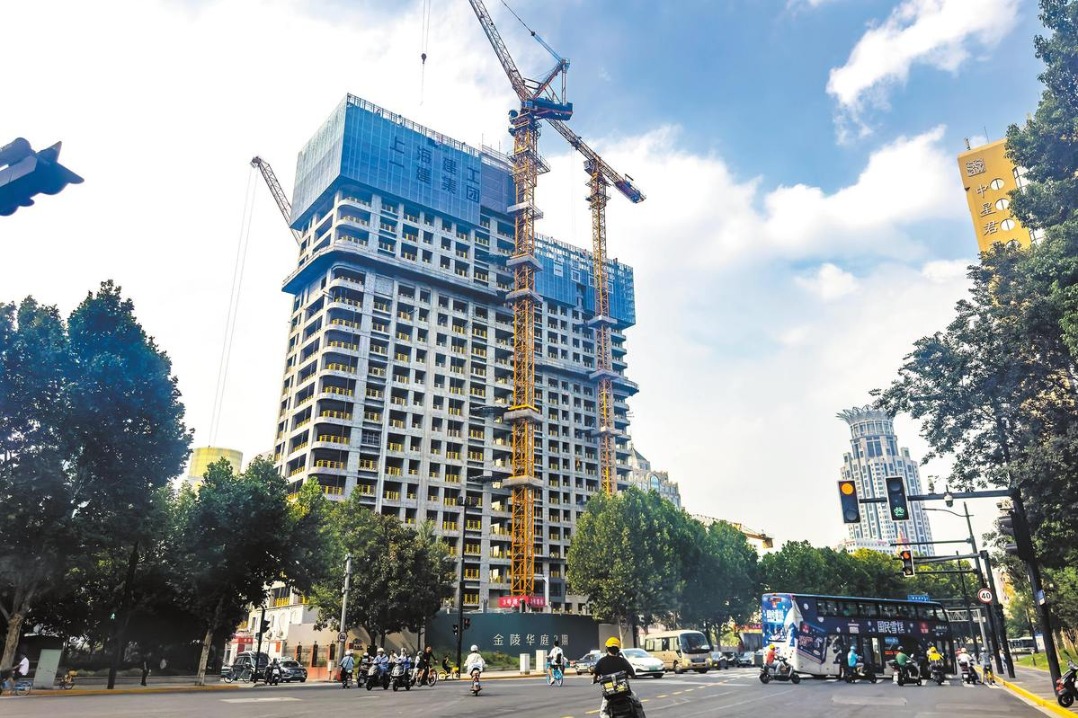
This means reducing the number of fences and gates and introducing new pathways for pedestrians and bicycles through compounds to create a finer mesh of pedestrian and bicycle networks. In the process, walking distances would be significantly shortened. Also, new small buildings with two to four stories can be introduced, as careful in-fill development between residential high-rise buildings, with community spaces, small shops and other uses.
All these will create a more humane environment amid the typical wide roads and tall buildings, as well as create well-defined spaces that are either public or semi-public for local residents, or private for individual households.
If Chinese cities and urban spaces can be made less dependent on cars, this would bring healthier lifestyles to the residents and enable more interaction within communities. That would be good news for everybody, especially the elderly and children.
One out of every five people will be aged over 60 in China by 2030, heralding a "super-aged society";and it will rise to more than one in three by 2050. Many of these elderly will age further, becoming part of an emerging four-generation urban society. It is a trend observed not only in China but in many other countries, especially high-income ones. The pressures of an aging society and inaccessible urban environments affect women disproportionally due to their longer life expectancy and care duties.
Recognizing this, urban planners could consider a number of internationally recognized best practices for sustainable urban development. These include the "compact city" concept, in which an urban area is organized in clusters of pedestrian-friendly, high-density mixed-use centers within walking distance of public transport stations, inclusive of green open space. This is known as transit-oriented development.
Other practices are low-carbon development, to which compact cities contribute, and climate-resilient urban development. In this, green infrastructure and parks are combined with gray infrastructure to provide flood and drought risk management, air quality and microclimate improvements, habitat for a diversity of plant and animal species, and green amenities for urban residents.
The overall objective must be to make cities liveable and socially inclusive. This includes not only environmentally sustainable planning but ensuring access to affordable and social housing and to public services, education, health and attractive jobs. Integrating health and aging into sustainable urban environment improvement and city planning and urban design will bring together many agencies and specialists to work across sectors and disciplines.
While these good principles create many benefits, it is important to adapt health-and age-specific features into cities and new urban developments, buildings, infrastructure and open spaces. This will be vital for urban competitiveness and will influence individuals' and companies' decisions to remain in a certain city or relocate to another.
Making cities healthier and more friendly to the elderly and children requires well-planned urban green spaces, safe, clean and walkable urban environments, and accessible services and facilities for these groups. Women who tend to live longer than men will in particular benefit from these improvements. All of these will help ease public health management in an era when infectious diseases such as the COVID-19 pandemic, noncommunicable diseases and the challenges of aging populations are converging.
Cities also need to combine an age-friendly public transport system with safe and convenient sidewalks and pathways, bicycle parking, parks, public spaces and public service facilities. This effort needs to be integrated with universal urban design to ensure that public spaces, sidewalks, parks, and buildings are accessible for people of all ages and the physically impaired.
Prioritizing health and age-inclusion will not only become the driver and platform for action to address the many challenges of the emerging four-generation cities, but is also a great opportunity to transform urban community life for the better.
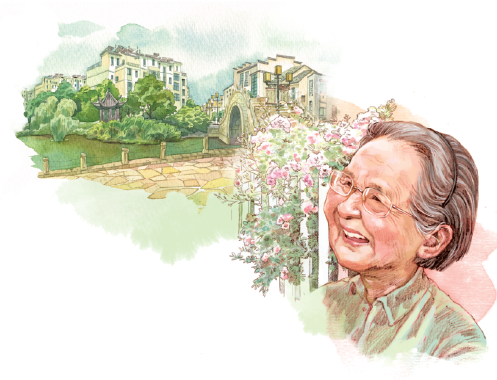
Neighborhoods, if designed well, would encourage all residents to contribute to the care of children and the elderly, just by being part of a highly interactive local community.
Urban rehabilitation and retrofitting would reduce carbon emissions as people walk more, and contribute to the country's objective of peaking carbon emissions before 2030 and reaching carbon neutrality before 2060.
If these principles of urban rehabilitation are applied, local social cohesion and wellbeing in China's cities will also improve. Urban health and age-inclusive designs will also contribute to the Healthy China 2030 Plan and more generally promote well-being and high-quality development, an overarching objective of the 14th Five-Year Plan (2021-25).
The author is a senior urban development specialist at the Asian Development Bank and one of the authors of ADB publication Healthy and Age-Friendly Cities in the People's Republic of China. The author contributed this article to China Watch, a think tank powered by China Daily.
The views do not necessarily reflect those of China Daily.
If you have a specific expertise, or would like to share your thought about our stories, then send us your writings at opinion@chinadaily.com.cn, and comment@chinadaily.com.cn.