



Reducing heat- and cold-related deaths







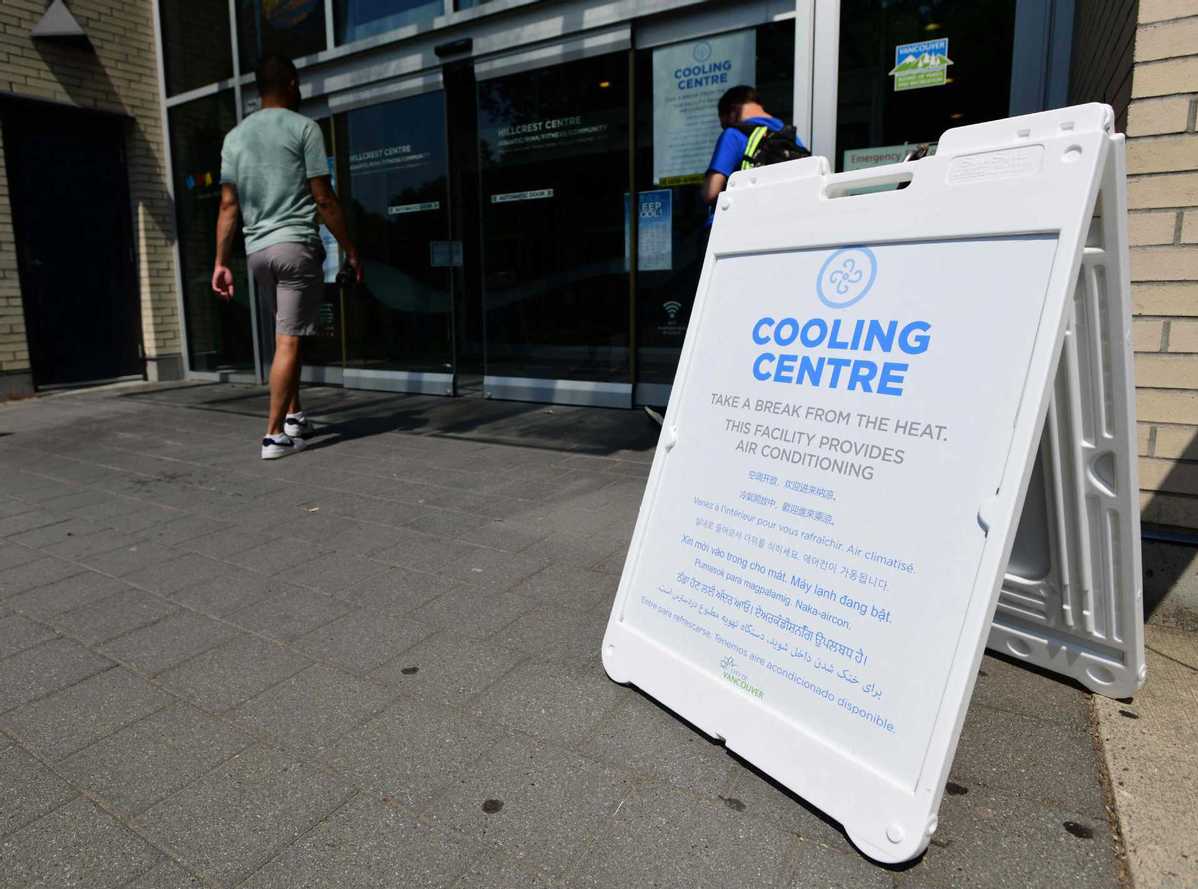
Headlines across the world tell us that hundreds have died in the recent heat waves in Canada and the northwestern United States. The stories invariably blame climate change and admonish us to tackle it urgently.
However, they mostly reveal how one+sided climate alarmist reporting leaves us badly informed.
The stories are based on a kernel of truth. Global warming is a real and man-made problem that needs addressing. And as temperatures increase, it will create more heat waves. But they turn a blind eye to reporting the full story and ask us to focus on the least effective ways to help people worldwide.
Heat-wave-related deaths are beguilingly click-worthy when bodies pile up during a single news cycle, primed to be blamed on global warming. Yet most heat-related deaths happen without a news crew to document them. Studies show that high temperatures kill about 2,500 people every year in the US and Canada. Heat-related deaths are actually a bigger problem than the news reports would suggest.
However, and almost entirely ignored by politicians and media, rising temperatures also reduce cold waves and extremely cold temperature-related deaths. Cold temperatures restrict blood flow to keep our core warm, increasing blood pressure and killing through strokes, heart attacks and respiratory diseases. Those deaths are rarely reported, because they don't fit the current climate narrative. Of course, if they were just a curiosity, the indifference might be justified, but they aren't. Each year, more than 100,000 people die from cold in the US and 13,000 in Canada-more than 40 cold-related deaths for every heat-related death.
Indeed, cold-related deaths vastly outweigh heat-related deaths worldwide. This is not just true for cold countries like Canada but also relatively warm countries like the US, Spain and Brazil. Even in India, cold-related deaths outweigh heat-related deaths by seven to one. Globally, about 300,000 deaths are caused by heat each year, whereas almost 1.7 million people die of cold.
A recent widely reported study found that higher temperatures are now responsible for about 100,000 of those heat-related deaths. But the researchers ignored cold-related deaths. A landmark study in the Lancet shows that climate change over the past decades has across every region avoided more cold than it has caused additional heat-related deaths. On average, it has avoided upwards of twice as many deaths resulting in perhaps 200,000 fewer cold deaths each year.
Besides, when news reports emphasize the need to cut carbon dioxide emissions, they push some of the least effective ways to help future victims of very high and low temperatures.
Climate policy will, at best, slightly slow the increase in heat-related deaths. We already know much more effective and simpler ways to help. Heat-related deaths are, in general, declining in countries, because they can be effectively tackled with more widely available air conditioning, heat alerts, open public pools and air-conditioned malls while encouraging people to use fans and drink plenty of water. This is abundantly clear for the US: it has seen increasing hot days since 1960, affecting a much larger population.
Yet the number of heat-related deaths has halved. The rest of the world needs access to the same simple technologies to drastically reduce heat-related deaths. Tackling cold-related deaths is much harder, because it requires well-heated homes. Moreover, strong climate policies will increase heating costs and make cold-related deaths even more prevalent.
Researchers have looked at the natural experiment in the US since 2010, when fracking led to a dramatic reduction in the costs of natural gas. This made gas-heated homes warmer and safer, especially because poorer households could afford better heating. The study estimated that these lower energy prices save about 11,000 Americans from dying in winter every year. This alone saves four times the lives lost from all North America from high temperature-related deaths.
If climate policy is to work, it has to drive up prices of energy to reduce consumption. A climate policy that raises back prices will mean fewer people will be able to afford to adequately heat their homes, and consequently the death rate will go back up.
Climate change is still a real problem that affects many other areas than heat and cold. We need to tackle it effectively through innovation, in order to make green energy cheap enough that everyone will want to switch.
But when it comes to tackling heat- and cold-related deaths, current climate reporting leaves us badly informed. It makes us focus on the costliest and least effective ways to help future victims of increasingly high and old temperatures. It even risks exacerbating cold-related deaths by raising heating costs.
Moreover, it simply tells us a misleading story of heat-related deaths, ignoring the much greater, avoided cold-related deaths. For now, global warming saves us more deaths than it causes, possibly 100,000 lives a year.
The author is president of the Copenhagen Consensus. His latest book is False Alarm: How Climate Change Panic Costs Us Trillions, Hurts the Poor, and Fails to Fix the Planet.
The views don't necessarily reflect those of China Daily.
If you have a specific expertise, or would like to share your thought about our stories, then send us your writings at opinion@chinadaily.com.cn, and comment@chinadaily.com.cn.





