A 'Dialogue of the Century' on South-South Cooperation







Editor's Note: To celebrate the 100th founding anniversary of the Communist Party of China, we are launching the "100 CPC Stories in 100 Days" series, featuring foreigners who witnessed and participated in the CPC's history and helped the world better understand the CPC. The following is the 56th story of the series.
During his visit to China in 1988, then President of Brazil José Sarney had a "Dialogue of the Century" with Deng Xiaoping. This dialogue has forged a bond of South-South cooperation across the hemisphere and left a legacy of friendship transcending long distance.
Back in the 1980s, the global landscape was still dominated by the Cold War. Nonetheless, against the backdrop of the US-Soviet rivalry and East-West confrontation, the call for cooperation was growing ever stronger in the international community. It was in this context that Comrade Deng Xiaoping made the creative and important assessment that peace and development are the two major themes of the contemporary world, and outlined the international configuration and challenges at that time with the "East, West, South, and North" theory. He observed that East-West relations are essentially about peace, and North-South relations development.
South-South cooperation is an important component of Deng Xiaoping Theory. China maintains that developing countries must, on the premise of self-reliance, enhance solidarity, support and help each other through South-South cooperation. They should also use South-South cooperation to promote North-South cooperation and bring the world toward greater multipolarity.
China and Brazil established diplomatic ties in 1974. To further cement the bilateral friendship and expand South-South cooperation, President José Sarney paid a state visit to China in July 1988 and met with Deng Xiaoping.
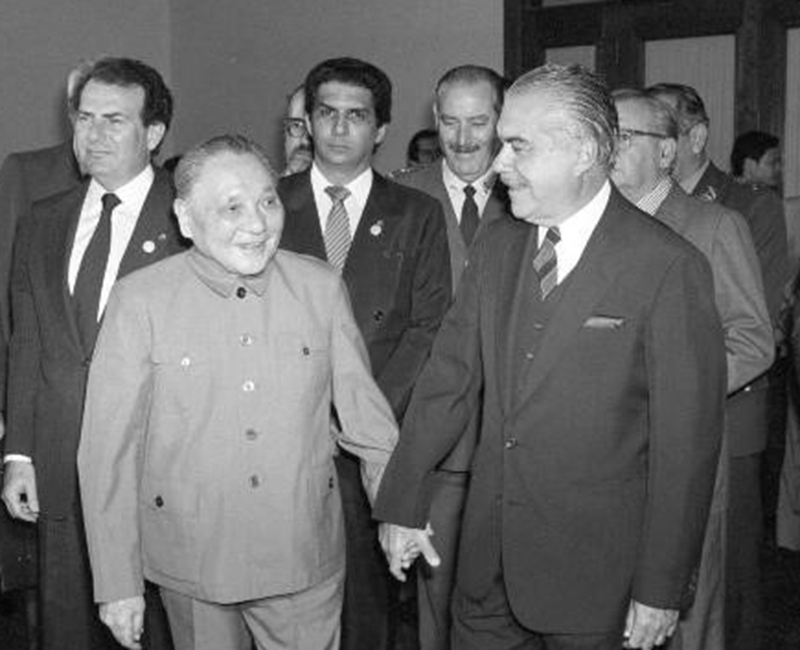
During the meeting, Deng told Sarney that as China and Brazil were at similar development stages and similar levels of economic development, the two countries should seek complementarity by drawing on each other's strengths. China and Brazil enjoyed a sound political foundation for greater cooperation. The development of the Third World was a major force for ensuring world peace. The Third World countries need to step up cooperation in order to contribute to human progress.
When recalling this meeting many years later, Sarney said he was deeply impressed by Deng's wisdom and wit. He described Deng as a resolute, sharp-minded, charismatic and far-sighted leader who gave his all to the development of New China. He was clear-headed, insightful and visionary when talking about China's future. His vision of reform and opening-up was the culmination of the Chinese people's wisdom. On the development of human society and world peace, Deng foresaw that for quite a long time, the world would be in a period of peaceful coexistence. Thanks to the guidance of Deng Xiaoping Theory, China secured greater international space and opportunities for reform and opening-up against the backdrop of US-Soviet rivalry for hegemony.
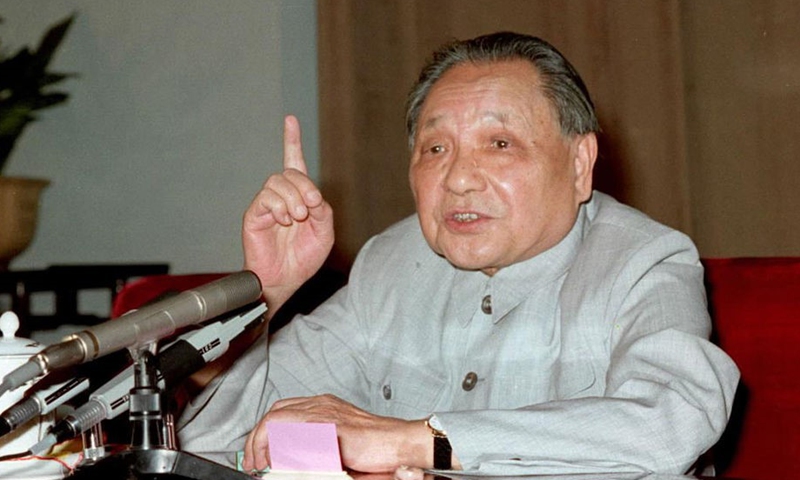
During Sarney's visit, the two countries signed the Protocol on the Approval of the Research and Production of the Earth Resources Satellite. The unveiling of the China-Brazil Earth Resources Satellite (CBERS) program set a shining example for South-South cooperation.

In 1992, José Sarney made another visit to China. He travelled to the Shenzhen Special Economic Zone and saw for himself the tremendous changes in China brought by reform and opening-up. Sarney pointed out that Deng's reform and opening-up policy not only spurred rapid economic growth in China but also benefited the whole world. Through reform and opening-up, China actively participated in international competition, boosted foreign trade, built its own strength and became an important force for world peace and stability. Deng Xiaoping was a decisive, confident, bold and extraordinary leader. With wisdom, charisma, leadership, courage and vision, he knew what the right path was. Sarney was convinced that Deng Xiaoping Theory would be a powerful engine for China's modernization drive.
Today, Deng's vision on world peace, China-Latin America relations and China-Brazil relations has come to pass. Brazil is the first developing country to form a strategic partnership with China, the first Latin American country to establish a comprehensive strategic partnership with China, and the first Latin American country to register over 100 billion US dollars in two-way trade with China. The two countries boast an even more solid political foundation for bilateral relations, pragmatic cooperation in a wider range of fields, and closer communication and coordination in international affairs. The two sides have made steady progress in major cooperation projects in energy, finance, infrastructure and other sectors. They have kept up good communication in international organizations and multilateral mechanisms, including the UN, the WTO, the G20 and BRICS, and jointly upheld the interests of the developing world.
Driven by China-Brazil relations, China-Latin America relations have achieved all-round, rapid development, bringing concrete benefits to peoples on both sides. In the new era, it is the shared aspiration of people in both China and Latin America to advance their friendship and mutually beneficial cooperation across the board. The Chinese people are working hard toward the Chinese dream of great rejuvenation of the Chinese nation, just as people in Latin American countries are striving for their dreams of solidarity, coordination, development and revitalization.



- Ministry to optimize the structure and scale of university enrollment
- Why do China's cultural and creative products go viral?
- Aviation sci-fi park Nantianmen to open in 2027
- Chinese researchers make breakthrough in green cooling technology
- Former head of national forestry and grassland body under investigation
- A new lease of life: Providing dialysis access in rural China