The Cowboy-Hat and 'Deng Whirlwind' — The First Visit to the United States by a Leader of New China







Editor's Note: To celebrate the 100th founding anniversary of the Communist Party of China, we are launching the "100 CPC Stories in 100 Days" series, featuring foreigners who witnessed and participated in the CPC's history and helped the world better understand the CPC. The following is the 52nd story of the series.
In 1979, an extraordinary historical event took place against the backdrop of intense US-USSR hegemonic struggle and a rapidly changing global political landscape.
With the national flags of China and the United States hoisted side by side at the White House South Lawn on the morning of January 29, President Jimmy Carter held a grand welcome ceremony for Vice Premier Deng Xiaoping. According to the then US National Security Advisor Zbigniew Brzezinski, it was an electrifying moment, and in his memory there had been no moment like it before at the White House.
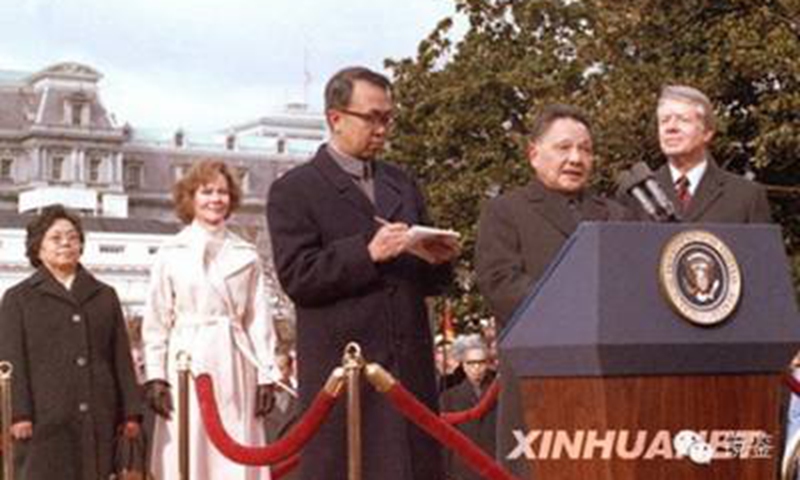
Deng Xiaoping was the first leader of New China to pay an official visit to the United States. The trip was made in less than one month after the official establishment of diplomatic relations between the two countries. It took place only 37 days after the conclusion of the Third Plenary Session of the 11th Central Committee of the Communist Party of China (CPC), where an important decision was made to shift the focus of the Party and the country to economic development. After three decades of hostility and estrangement between the two major countries across the Pacific, Deng Xiaoping took the ice-breaking trip with the goodwill of the Chinese people to increase understanding, friendship and trust. With a historic vision to advance reform, opening-up and socialism with Chinese characteristics, he led the ancient nation of China to open the gate and explore a path of win-win cooperation with the world.
With "Teng Comes Calling" as a cover, Time magazine carried an exclusive interview with him for the visit. Indeed, Deng came. He was busy meeting with American leaders, and the two sides issued a Joint Press Communiqué stating that "the difference in their social systems should not constitute an obstacle to their strengthening friendly relations and cooperation,… such cooperation is in the interest of their two peoples and also that of peace and stability in the world and the Asia-Pacific region in particular." He worked tirelessly, meeting with people from all sectors of the American society and signed a series of cooperation documents on economy, education, science and technology, space and high energy physics, bringing China-US relations to a new stage of all-round growth. His candor and wisdom even impressed the most difficult members of Congress. "Reunifying the motherland is the shared aspiration of the entire Chinese population... as to what means will be used to ensure Taiwan's return to the motherland, that is China's internal affairs."
Deng came. He stressed that he came to the US to learn everything advanced. He visited some cutting-edge industrial and high-tech projects in America. While listening attentively, he was envisioning China's own industrial modernization. At a plant of Ford, he said that China needed to develop its own automobile industry and he would give it a time frame of 20 years. At the Johnson Space Center in Houston, he started to envisage how China may catch up with advanced countries in its space program. At an assembly plant of Boeing 747 jets, he pointed out that as its economy grew, it was important for China to design and produce its own jumbo jets.
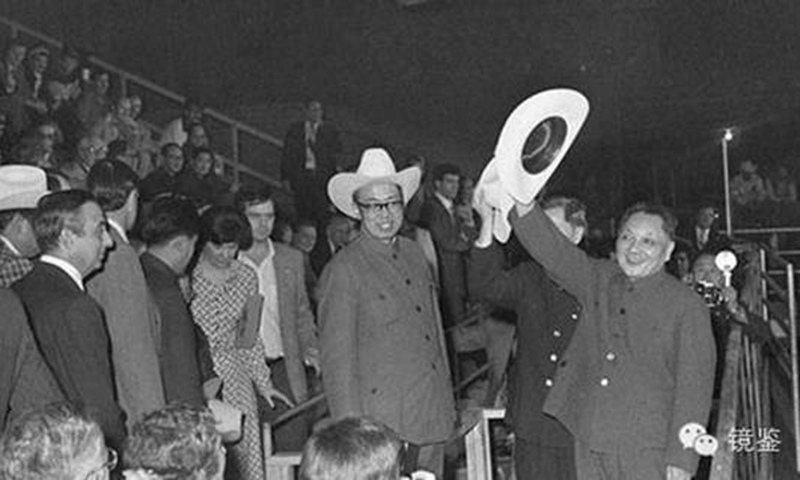
Deng came. He stressed that friendship between countries started with their peoples. His amicable and approachable demeanor charmed the American people, giving rise to enthusiasm for China and for the "Deng whirlwind" in the country. At a rodeo in Houston on February 2, Deng Xiaoping tried on with pleasure a white cowboy hat presented to him by two cowgirls. When he took it off and waved at the audience, he earned himself a hearty whoop from the spectators. He acted just like the locals, showing respect for American culture and goodwill to the American people. This image of openness and confidence has become an enduring symbol in China-US relations.
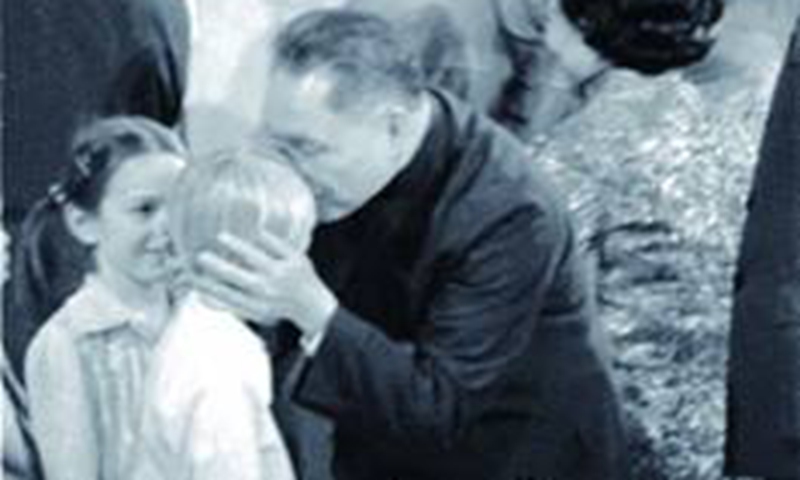
At the John F. Kennedy Center for the Performing Arts in Washington, D.C., about 200 American primary school students sang the song "I Love Beijing Tiananmen" in Chinese. After the performance, Deng Xiaoping went up to the stage, hugging the kids and kissing one of them on the forehead. The audience was moved and responded with waves of applause. Some even had their eyes wet with tears. Such an affable and sincere move greatly changed Americans' stereotype that the Chinese carried a style of revolutionary stiffness. American media commented that Deng's sincere kiss would remind many American politicians of how to kiss kids.
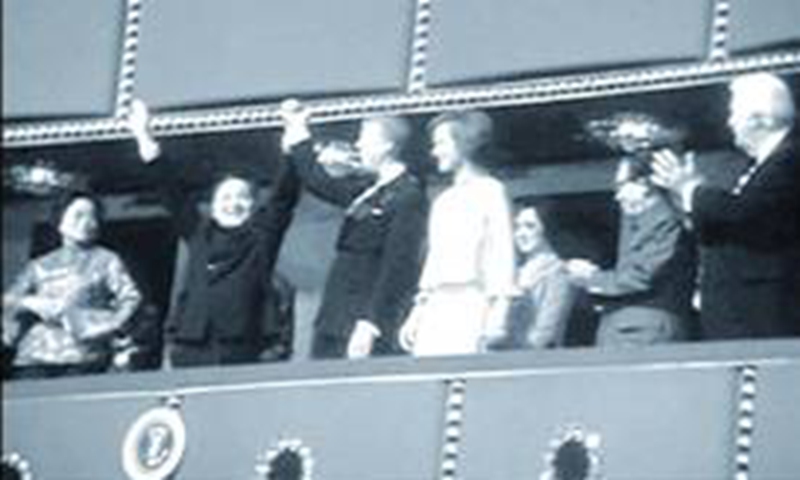
In Atlanta, Deng insisted on adding an item onto his schedule and took time to meet the wife of the late African American leader Martin Luther King Jr. and laid a wreath at the tomb, expressing his goodwill to the African American people.
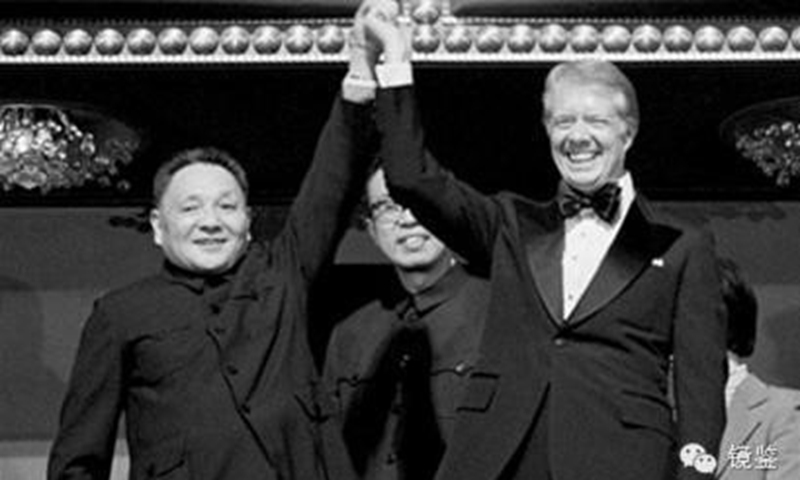
During the 8-day visit, the 74-year-old Deng Xiaoping had nearly 80 talks and meetings, attended about 20 banquets or receptions, gave 22 formal speeches, and met with the press on eight occasions. With extraordinary diligence, diplomatic deftness and personal charisma, he showed the world China's brand-new look on the eve of reform and opening-up, and won valuable space and opportunities for China's development in the changing global landscape. He set China on a path of exchanges and cooperation with the West, and sent out a strong message that China loves peace and desires cooperation. Since then, China, in its reform and opening-up process, has enjoyed even broader prospects.
Deng Xiaoping's visit ushered in a new era in China-US relations. He emphasized the importance of viewing and handling China-US ties from a long-term political and strategic perspective and in light of the overall international situation, pointing the way forward for the sustained and sound growth of bilateral relations. Over the past four decades and more, China-US trade has increased from less than US$2.5 billion to nearly US$600 billion, making the two each other's second biggest trading partner. People-to-people and cultural exchanges have also been fruitful. Equal-footed and mutually beneficial cooperation between the two sides has also greatly promoted the development and employment in the United States. Such cooperation has delivered real benefits to American businesses and consumers, and helped promote US industrial upgrading. Meanwhile, the two countries, through exchanges and cooperation in the political, financial, counter-terrorism, climate change, peace-keeping and other fields, have also made important contributions to world peace, stability and prosperity.
The Pacific Ocean is vast enough to accommodate both China and the United States. It has been proven by history and reality that both countries stand to gain from cooperation and lose from confrontation. The growth of China-US ties meets the expectations of the two peoples and the world at large. Facing compounding global challenges, China and the United States need to take a strategic approach, firmly keep to the general direction of bilateral ties, and respect and accommodate each other's core interests. It is important for both countries to focus on cooperation, manage difference, increase mutual trust, and expand cooperation. Only in this way, can the two countries steer the bilateral ties toward sustained and steady growth, and jointly shoulder the historical responsibility for the noble cause of human peace and development.



- Why do China's cultural and creative products go viral?
- Aviation sci-fi park Nantianmen to open in 2027
- Chinese researchers make breakthrough in green cooling technology
- Former head of national forestry and grassland body under investigation
- A new lease of life: Providing dialysis access in rural China
- China's grain output hits new high in 2025