



Olympics has little upside, huge downsides







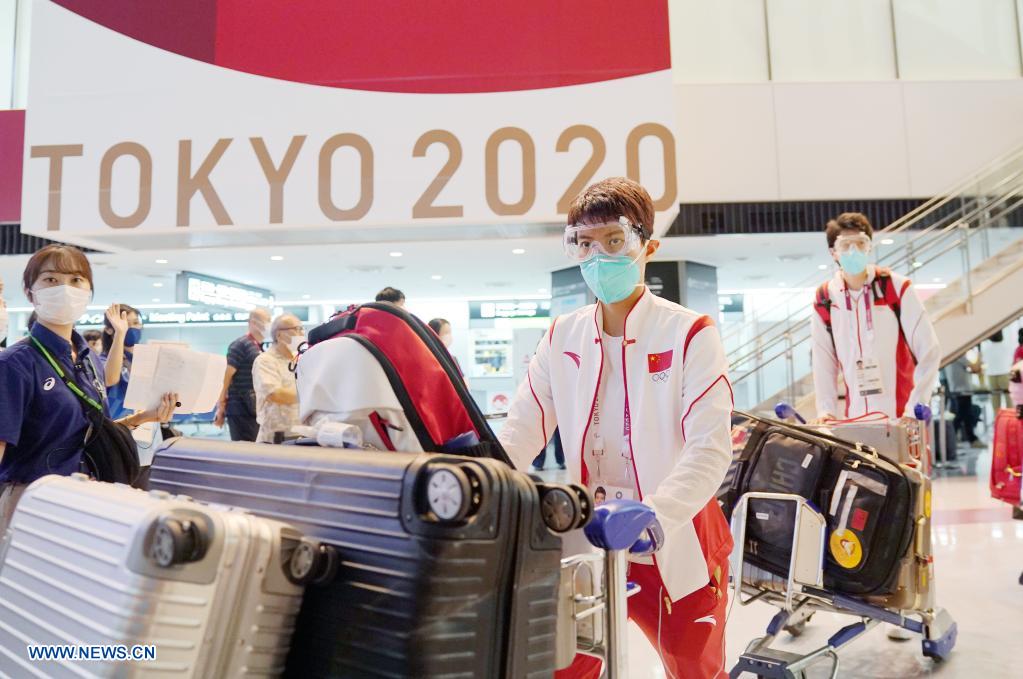
After the Tokyo Organising Committee of the Olympic and Paralympic Games decided in March to ban overseas fans from the 2020 Summer Games, the question of whether to hold or cancel the Olympics ceased to have much significance for Japan's economic outlook. To add to the problems facing the Games, Tokyo re-entered its fourth state of emergency on July 12, prompting the organizers to even bar domestic spectators from most of the events.
As such, the Olympic Games has little upside. The best outcome would be a non-event, with limited numbers of new COVID-19 cases. The downsides, on the other hand, could be significant. If the Games triggers a rise in new infections, it could lead to stronger measures restricting mobility and further delay the reopening of the Japanese economy.
While such a risk is small, given the reduced scale of the event, complacency is not an option, as the pandemic situation in Tokyo is already serious.
The number of new infections in Tokyo has continued to rise since mid-June. Despite the re-imposition of a state of emergency, restrictive measures have proven less effective and had limited impact on people's mobility. Without the legal power to enforce restrictions and the capacity to provide financial compensation, the state of emergency relies on voluntary compliance by the public. And people have grown tired of repeated impositions of the state of emergency and are less willing to follow the government's measures.
The fragile Japanese medical system is another concern. Even a modest rise in infections could overwhelm the country's medical system. The large number of small and understaffed private hospitals constrains the capacity of the Japanese medical system to take proper care of the COVID-19 patients, especially those in critical condition.
Besides, rising cases of the Delta variant of the novel coronavirus pose a serious threat to Japan, which lags behind other countries in vaccine rollout. Despite Prime Minister Yoshihide Suga's desperate push to accelerate the pace of inoculations, as of mid-July, only 20 percent of the population had received the second dose of the COVID-19 vaccine. While Suga has expressed confidence that Japan will be able to fully vaccinate all those willing to get inoculated by November, the country will remain highly vulnerable to novel coronavirus variants till then.
Besides, a delay in reopening the economy could change Japan's baseline scenario of a consumption-led recovery in the second half of this year. We currently project GDP growth of 2.6 percent and 2.9 percent for 2021 and 2022, respectively, after a sharp drop of -4.7 percent last year.
A strong consumption recovery is ready to take place once the vaccine rollout makes progress. And while the income situation of workers is not encouraging, households can tap into their excess savings — unspent money that accumulated during the COVID-19 pandemic — to meet their needs. Enforced cutbacks on spending and government income support have resulted in excess savings of more than 8 percent of GDP, the fourth-largest among advanced economies. But another wave of infections could change that and derail the economy.
A delay in reopening of the economy could also result in long-lasting scars on the economy. COVID-19 has hit small companies in the service sector particularly hard. So far, they have shown a resiliency to the shock thanks to government subsidies and massive liquidity support from banks. However, prolonged restrictions have weakened many smaller businesses, and we could witness a rise in layoffs and business failures, which would add to the woes of regional banks that have already been suffering from low profitability for years.
Containing the pandemic, in order to hold the Games has been a priority for Suga. He has turned the Olympics into a means for winning the upcoming lower house election and proving he is more than a caretaker prime minister following the abrupt resignation of former prime minister Shinzo Abe in September 2020.
So far Suga's approval rating has been low due to a series of political scandals; his reputation has suffered an additional blow because of the way he has handled the pandemic. He has also failed to convince the public why holding the Olympic Games is necessary when the pandemic is yet to be contained. If the public realizes that Suga has failed to fulfill his commitment to hold a “safe and secure” Olympics, the ruling Liberal Democratic Party may start looking for a new leader to head the party in the coming election.
Yet, given the weak opposition, the LDP may stay in power despite losing some seats in the lower house. And the basic direction of economic policy is also not likely to change with a new prime minister. But global investors may start losing confidence in Japan's political stability, which was established during the nearly eight years under the Abe administration.
The author is head of Japan Economics at Oxford Economics.
The views don't necessarily reflect those of China Daily.
If you have a specific expertise, or would like to share your thought about our stories, then send us your writings at opinion@chinadaily.com.cn, and comment@chinadaily.com.cn.





