NEVs being embraced by major economies







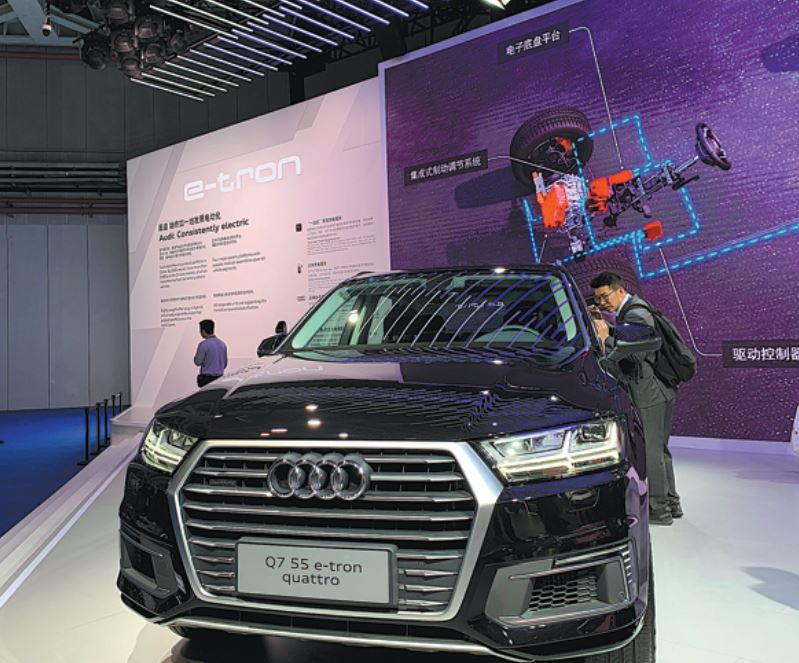
Gasoline cars may become dinosaurs sooner than many would expect, as major economies propose bans on their sales to cut emissions, carmakers speed up their transition toward electrification and customers develop a fondness for the electric alternatives.
Last week, Canada became the latest country to announce a ban on new gas-powered car sales. The Canadian government said it will require 100 percent of car and passenger truck sales to be zero-emission by 2035 to protect the environment.
Over the last few years, several countries and regions have made public plans to ban sales of gas-powered vehicles.
The United Kingdom will implement a ban on new cars with internal combustion engines by 2030, so will China's southernmost Hainan province.
Japan also issued a green strategy plan in December to make all new cars hybrid or electric by the mid-2030s, and France will see all new cars battery-powered by 2040.
Norway is the leader on that front, aiming to phase out new fossil fuel-powered vehicles by 2025.
It is already well on its way. The market share of electric cars in Norway hit 54 percent in 2020, up from 42 percent the previous year, according to data published by the Norwegian Road Federation.
Governments' resolute pushes and clear schedules are prompting carmakers to steer toward electrification.
Most major carmakers ranging from Volkswagen to Toyota have launched electric cars, and some have released a timeline to become electric only.
Volkswagen's premium arm Audi will stop introducing cars based on gasoline and diesel engines from 2026, reported German daily newspaper Sueddeutsche Zeitung last month.
British luxury marque Jaguar will be even earlier, producing and selling fully electric cars starting from 2025.
Volvo, a Swedish brand owned by China's Geely, will follow suit in 2030. It expects 50 percent of its sales in 2025 will be electric cars. Another British luxury brand, Bentley, will sell only electric cars from 2030 as well.
Klaus Zellmer, a sales executive at Volkswagen, told German newspaper Muenchner Merkur that the automaker will start to phase out internal combustion engines in 2033.
He said by 2035, European consumers will only be able to purchase cars that offer electric power. Zellmer said Volkswagen will also stop selling internal combustion engines in the United States and China as well, but at a later date.
Earlier this year, Ford announced that it will only offer electric vehicles in the European market by 2030, while Honda also said it will phase out combustion engines by 2040.
Last week, China's largest SUV maker Great Wall Motors said 80 percent of its vehicles sold in 2025 will be new energy vehicles, as part of its goal to become carbon neutral in 2045.
These carmakers' ambitions are based on the growing acceptance of their electric models on sale in the market.
Electric vehicles, thanks to their extended driving ranges, new smart features as well expanding charging infrastructure and government subsidies, are gradually being accepted as alternatives to gasoline cars.
"Mileage anxiety, which used to be a major concern, is almost gone forever," said Feng Chunyu, who owns a BYD Qin Plus that can run 600 kilometers on one charge.
"In terms of acceleration, electric cars are doing a far better job than gasoline cars," said Feng, who drove a Volkswagen Sagitar before buying the BYD vehicle.
Statistics from the China Association of Automobile Manufacturers show that electric cars and plug-in hybrids accounted for 8.7 percent of new car sales in China in the first five months of the year. The figure was 5.4 percent by the end of 2020.
Fu Bingfeng, executive vice-president and secretary-general of the CAAM, said their popularity with customers factors in the boom, which hinged primarily on subsidies in past years.
He estimates that their sales will grow at over 40 percent year-on-year over the next five years, and will account for at least one-fifth of total new car sales in China by 2025.