US likely to boost military presence in Indo-Pacific







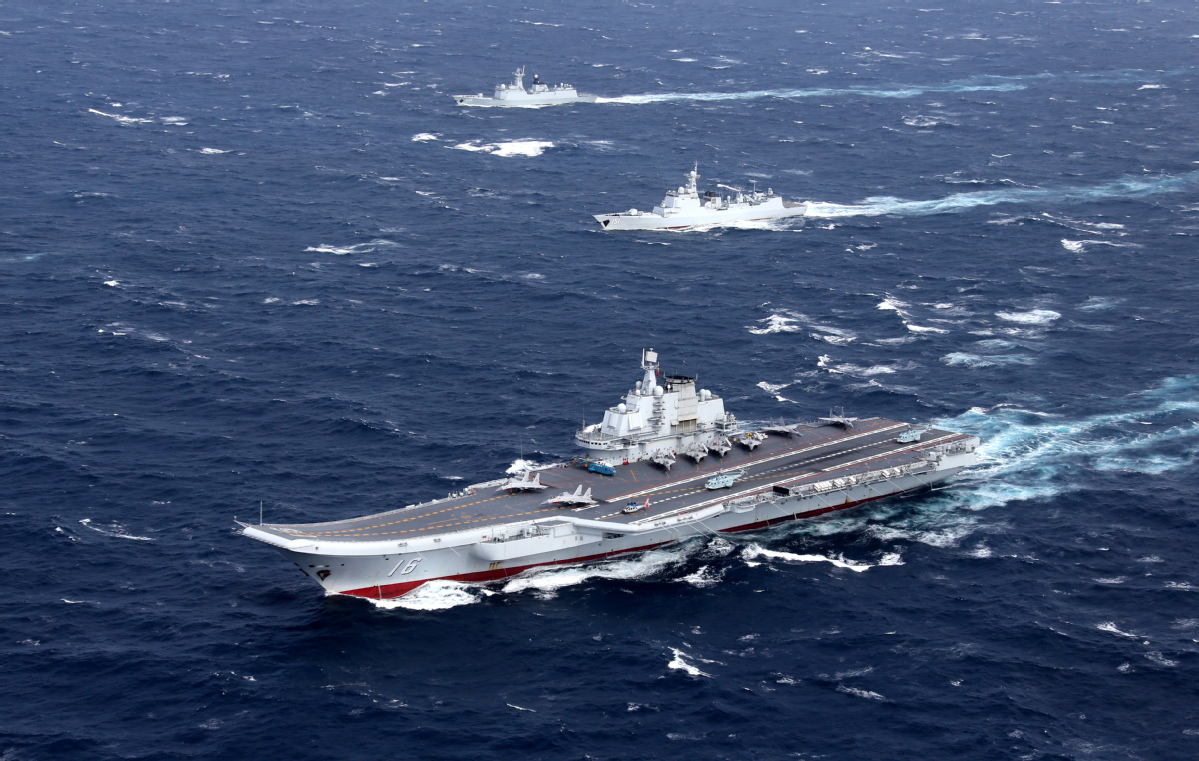
The United States has made clear its intention to strengthen its presence in the Indo-Pacific region. While former US secretary of the navy Kenneth Braithwaite has reiterated his proposal to reconstitute the US First Fleet, which was active from 1943 to 1973 in the Western Pacific, the US is keen on testing the First Fleet's revival as a "trial balloon" or "thought exercise" to see whether it will help it strengthen its forward presence in the Asia-Pacific region and promote its Indo-Pacific strategy to counter China.
The First Fleet can also serve the US' strategy of "great power competition" that targets Russia, China and other countries. In 2018, the US Second Fleet was resurrected to counter Russia. The Second Fleet has frequently carried out operations near the western border of Russia in the North Atlantic Ocean, including the Barents Sea and the Baltic Sea, and has had near standoffs with Russia's Northern Fleet and Baltic Fleet.
The Second Fleet coordinated with the US Sixth Fleet in the Mediterranean Sea and the naval and air forces of Washington's NATO allies to control Russia's northern and southern sea routes.
At present, the US Seventh Fleet undertakes most operations in the Western Pacific and the Third Fleet in the Eastern Pacific. Considering that vessels comprising the Third Fleet have frequently joined the Seventh Fleet's "missions" in the Western Pacific, rebuilding the First Fleet would ease the pressure on the Seventh Fleet for conducting operations in the Western Pacific and the Indian Ocean.
The US has built a dense network of naval and air force bases and intensified its military buildup in the island chains along the Western Pacific. It has also urged its allies, including Japan and Australia, to strengthen their naval and air forces and missile defense systems. And to advance its Asia-Pacific strategy, the US has renamed its Pacific Command as the Indo-Pacific Command.
Strategically, the US armed forces have expanded their operational zone by integrating the Pacific and Indian oceans in their "mission". The US is determined to strengthen its military deployment in key areas in the Pacific and Indian oceans in conformity with Braithwaite's assertion that the First Fleet be placed at a crossroad between the Indian Ocean and the Pacific Ocean.
Since the Ronald Reagan administration, the US has focused on controlling the international sea routes in an attempt to block them whenever necessary to further its interests.
And that is exactly what the First Fleet will do, if it is reconstituted - it will attempt to block the key routes, especially the "oil channels" of the Strait of Malacca and the Strait of Hormuz to contain China's rise.
Hundreds of millions of tons of commodities sail between China and more than 150 countries and regions through four sea lanes every year.
The east lane to the Americas, Africa and Western Europe through the "first island chain" and the Panama Canal, and the north lane to Europe through the Bering Straits and the Arctic Ocean are mostly under the surveillance of the US Seventh Fleet.
And the First Fleet, if reconstituted, will cover the crossroad between the south lane to South Asia and Australia through the South China Sea, the Makassar Strait and the Sunda Strait, and the west lane to Persian Gulf countries through the Strait of Malacca, the Indian Ocean and the Strait of Hormuz, as well as to Europe and Africa through the Indian Ocean, the Bab el Mandeb Strait and the Suez Canal.
After Joe Biden was sworn in as the US president in January, the "freedom of navigation operations" of the US Navy, including aircraft carrier battle groups, have increased in the Indian Ocean and the South China Sea-they have become more frequent than during the Donald Trump administration.
And at least one of the Theodore Roosevelt and Nimitz carrier strike groups that frequently sail through the Indian Ocean, the Strait of Malacca and into the South China Sea will join the First Fleet, if it is reconstituted.
When it comes to the rim of the South China Sea, thanks to its Changi Naval Base in Singapore, Subic Bay and Clark Air Base in the Philippines, and Da Nang and Cam Ranh Air Base in Vietnam in the past, the US still exercises some influence there. And the US has been inviting countries such as India, Malaysia, Singapore and Thailand to join its naval drills in order to make them parties to its military strategy.
The Darwin Port in Australia may be a preferred option for the First Fleet Command because Australia supports the US' Indo-Pacific strategy and the Darwin Port is close to the Strait of Malacca and its three alternative routes of the Sunda Strait, the Lombok Strait and the Makassar Strait.
But Southeast Asian countries are cautious about establishing closer military ties with the US because the US' strengthened presence in the region may undermine their growing economic and trade cooperation with China.
The author is a council member of, and senior research fellow at, China Arms Control and Disarmament Association. The views don't necessarily reflect those of China Daily.