Profit redistribution can dispel inflation fears







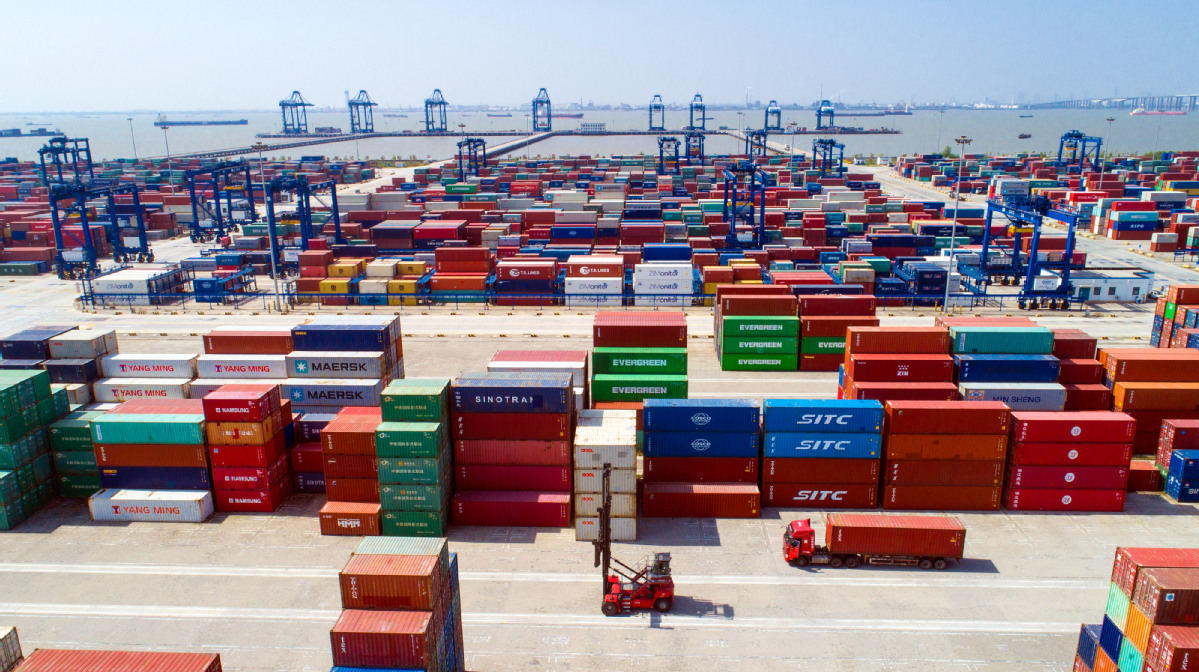
Since the beginning of this year, global commodity prices have risen significantly, with the Nanhua industry index increasing by about 7 percent as of April 16.
The prices of copper, rebar, iron ore, and crude oil have all surged by more than 10 percent, and the CRB Spot Market Price Index has soared by nearly 15 percent.
Some people worry that if rising commodity prices bring about a new round of inflation, or if the authorities have such a concern, early tightening of macroeconomic policies may ensue.
With the absence of significant expansion of demand, there is no need to worry that the Producer Price Index, or PPI, rise will trigger a new round of inflation.
Instead, attention should be focused on the effect of redistribution of corporate profits brought about by the rise of the PPI; and an effective way to improve the cash flow of downstream industries should "make the cake bigger" and solve the problem of insufficient aggregate demand.
Even if inflation rises in the future, as long as such a rise remains moderate, the benefits to the economy will outweigh the negative impacts.
The logic of this round of commodity price increase is quite similar to that in 2016, when demand-side structural features can provide better explanation.
Hit by the COVID-19 pandemic, the overall performance of the Chinese economy was similar to that in 2009, having a V-shaped rebound after a rapid bottoming out, and so it was with commodity prices.
However, it is not right to simply draw an analogy between the ongoing economic recovery and the rise of commodity prices to that in 2009, and then predict a new round of inflation will occur.
In 2009, driven by the significant expansion of aggregate demand, goods prices soared and caused inflationary pressure, as reflected in the simultaneous bottoming and peaking of the consumer price index or CPI and the PPI, and their similar growth rates.
Before 2016, the PPI and the CPI often moved in the same direction in each economic cycle, and the PPI did not have a stable and obvious leading role over the CPI.
In the current economic recovery, the CPI and the PPI have diverged significantly. The PPI is on a quick rise, while the CPI and the core CPI are falling rapidly.
The GDP deflator, which can more comprehensively reflect price changes, has not shown any significant increase. That is to say, even if the Chinese economic rebound lasts four quarters, the actual inflationary pressure will not be heavy.
In short, we don't have enough evidence to show that the PPI was a leading indicating index over the CPI for the past five years, which means the price transmission mechanism from the production end to the consumption end is not smooth.
Our calculations showed the rolling correlations of the CPI and the PPI in different periods had a great structural change in the year 2016.
Before 2016 and except for the period during the 2008 Global Financial Crisis, the rolling correlation between the PPI and the CPI was relatively stable-the three-and five-year rolling correlation coefficients were both around 0.8.
However, after 2016, the three-year rolling correlation coefficient slumped rapidly, followed by the rapid decrease of the five-year rolling correlation coefficient in 2017.
Moreover, different types of commodities have shown different price performances during this round of so-called commodity price surge.
Since Jan 2, 2020, black-color commodity price index by Nanhua Futures has surged by 71 percent, followed by nonferrous metals (27 percent), and agricultural products (10 percent), while energy products' price index has declined 5 percent.
Such differences in price performance can be well explained from supply and demand nonequilibrium.
From the supply side, output of black commodity and nonferrous metals has declined due to production disruptions caused by the pandemic, while the impact on supply of agricultural and energy products is not that strong.
Meanwhile, demand for crude oil has shrunk, causing a slide in oil price. Before the official removal of quarantine policies by different countries, it is difficult to see a significant improvement in crude oil demand, and the decline of price of crude oil, which is the most upstream product in the energy and chemical industry, has created a huge decline space for the prices of energy and chemical products.
Demand for the black commodities and nonferrous metals, however, is stronger, because it is obvious that investment is stronger than consumption during this round of economic recovery, and the real estate industry has the most eye-catching investment performance, which is similar to that in 2019.
Exports, another important contributor to the Chinese economic recovery, have also limited impact on agricultural products demand.
Such differences can explain to some extent why changes in the PPI have not conducted to the CPI, as the prices of agricultural products and crude oil have stronger correlation with the CPI than black commodity and nonferrous metals.
More attention should be paid to the redistribution of corporate profits alongside the industrial chain, while tax and fee reductions have limited effect to deal with surging raw material prices.
In the past five years, the PPI and the CPI had a lasting divergence, and there was no evidence to show the PPI has influenced the CPI.
The commodity price surge will mainly cause redistribution of profits alongside the industrial chain, and the upstream industry has an increasing share of the total profits.
Also, with the absence of demand expansion, there is no need to worry about the risk of the PPI triggering a new round of inflation, and more attention should be paid to the effect of redistribution of corporate profits brought about by the PPI rise.
Since supply cannot be controlled and demand cannot be suppressed, some will think of reducing taxes and fees to deal with the surging commodity price. This approach may reduce the cost pressure of downstream enterprises to some extent, but is not as effective as some people may think.
On the one hand, value-added tax reductions cannot improve cash flow of downstream enterprises directly, because benefits from reductions of value-added tax, a turnover tax, will be distributed among upstream and downstream enterprises, in accordance with a corporate's bargaining power, and downstream enterprises have weaker bargaining power than the upstream ones.
Reducing corporate income tax rate is also in conflict with China's fiscal and taxation reform paradigm that focuses on gradually increasing the proportion of direct taxation, although it can directly improve enterprise incomes.
On the other hand, reductions in tax and fees cause decline in government revenue, which may further aggravate the grassroots governments' pressure to equate revenues with expenditure, and even indirectly strengthen their dependence on "land finance"-a fiscal strategy in which local governments generate revenue through land grant premiums and land tax revenues.
Based on the analysis above, it can be concluded that to improve cash flow of downstream industries, the real effective way is dealing with the problem of insufficient aggregate demand and "making the cake bigger".
China's economy is still recovering, and enterprises need time to improve their balance sheets, while the government has fiscal pressure.
A mild inflation will help improve the balance sheets of enterprises, residents, and the government, as well as increase aggregate demand. As long as inflation stays within the central bank's target range for inflation and does not evolve into hyperinflation, the benefits will outweigh the negative effects.
If support policy for the economic recovery is withdrawn prematurely, the economy will fall into deflation due to insufficient aggregate demand, accompanied by a new round of economic slide.
The writer is a research fellow with the China Finance 40 Forum, an influential think tank in the field of finance and macroeconomics.
The views don't necessarily reflect those of China Daily.