China brands keep gaining ground with young moms







Domestic enterprises creating greater competition for known foreign names
For He Yang, a mother who just turned 30, the past practice of Chinese moms preferring foreign baby and maternal goods seems like a relic of the past.
He, who works at an advertisement company in Beijing, has a three-year-old son and has become a fan of domestic labels for her toddler and herself.
"Ever since the birth of my child, I have been trying out baby products from a bunch of brands, both domestic and foreign. For example, in terms of baby skin moisturizers, after testing a variety of international infant care brands, I found that domestic brands better suit my baby.
"Facial creams by Baby Elephant have a high moisturizing effect, while the repairing cream produced by Mama & Sweeties proved to be very effective in treating baby eczema," she said.
Those born after 1990 are generally more willing to accept new things and are more confident about national culture. Therefore, domestic baby and maternal brands are gradually gaining acceptance.
China's baby and maternal market has been expanding in recent years owing to the introduction of the second-child policy, consumption upgrades and rapid development of e-commerce.
Shanghai-based data service firm MobData said that in 2019, the market totaled 3.35 trillion yuan ($509.9 billion), with a recent compound annual growth rate of 14.82 percent.
It is estimated that the market will reach 3.99 trillion yuan by 2021, and maintain rapid growth in the coming years.
A decade ago, foreign baby and maternal brands dominated China's market. However, in recent years, with the upgraded market demand and deeper research and development by domestic firms, Chinese brands are rising in popularity.
The quality of certain baby and maternal products made in China has met international standards, thus gaining increasing traction in the domestic market, industry experts said.
Chen Qiang, chairman of Burdock Biotechnology (Dezhou) Co Ltd, parent company of Mama &Sweeties, said: "In the past, US and European brands dominated more than 90 percent of China's baby and maternal market. But in recent years, we've noticed that homegrown brands are gaining acceptance among consumers, especially young moms."
Chen said: "Consumers born after 1990 have a relatively objective perception and assessment of East and West, and are confident about our national culture. In addition, the fact that China has done a good job in containing COVID-19 and boosting work resumption amid the pandemic contributed to the public's rising faith in 'made in China', generating business opportunities for domestic brands."
He, a post-1990 mom herself, said that the rise of homegrown baby and maternal brands prompted her to give them a shot, and the pleasant user experience led her to purchase domestic brands over and over again.
"From messages shared on our platform, we found that those born after 1990 are confident about our national culture, which contributed to their fondness for homegrown brands. They also tend to try new things. This is part of the reason for the rise of domestic brands," said an executive, who declined to be named, at Xiaohongshu (Little Red Book), an Instagram-like Chinese fashion and lifestyle-sharing platform.
In 2008, domestic dairy giant Sanlu Group was involved in a major scandal due to its contaminated milk powder, which sickened over 1,000 babies with kidney stones, leaving two dead.
Sanlu's baby formula was determined to contain melamine, a chemical believed to cause kidney stones in toddlers.
The scandal was so devastating that almost all Chinese baby and maternal brands, especially milk powder brands, lost credibility among Chinese consumers for years. It wasn't until recently that domestic baby formula brands started to rebuild trust with consumers.
"The previous scandal required us to take even more measures to strictly control product quality and build brand image," said Chen from Burdock Biotechnology.
Ma Lin, chief physician at the dermatology department of Beijing Children's Hospital, affiliated with the Capital Medical University, said: "Chinese baby and maternal companies have made remarkable progress during the past decade. The pandemic that began at the end of 2019 enhanced the public's recognition and acceptance of domestic brands. People came to realize that international brands are not necessarily the best all the time, and domestic companies can also offer high-quality products. Besides, due to the pandemic, the import of foreign products was partially affected, offering business opportunities for domestic companies."
Ma said that with great market potential, domestic baby and maternal enterprises should carefully think about how to produce the products the right way.
"Efforts are needed to enhance R&D and control product quality. Those who plan to make a quick buck won't succeed," she said.
And such efforts are actually bearing fruit among homegrown brands.
For example, in 2016, when Mama& Sweeties started R&D into its baby skin cream-a product that aims to cure infant eczema-it set standards at its factory in Dezhou higher than the level requested by the local government.
"We invested a lot in the preparatory stage. For instance, the Shandong government required local buildings be able to withstand seismic events up to six on the Richter scale, but the factory we built was able to withstand a maximum of eight," Chen said.
"As the products we produced are for moms and babies, who are relatively vulnerable, we adopted the best-quality ingredients and raised the quality control level to that of pharmaceuticals," he added.
To enhance the R&D of its products, Mama & Sweeties established a long-term partnership with the National Glycoengineering Research Center, the National Institute for Communicable Disease Control and Prevention, Peking University Clinical Research Institute, Peking University First Hospital and the educational research institution of North California.
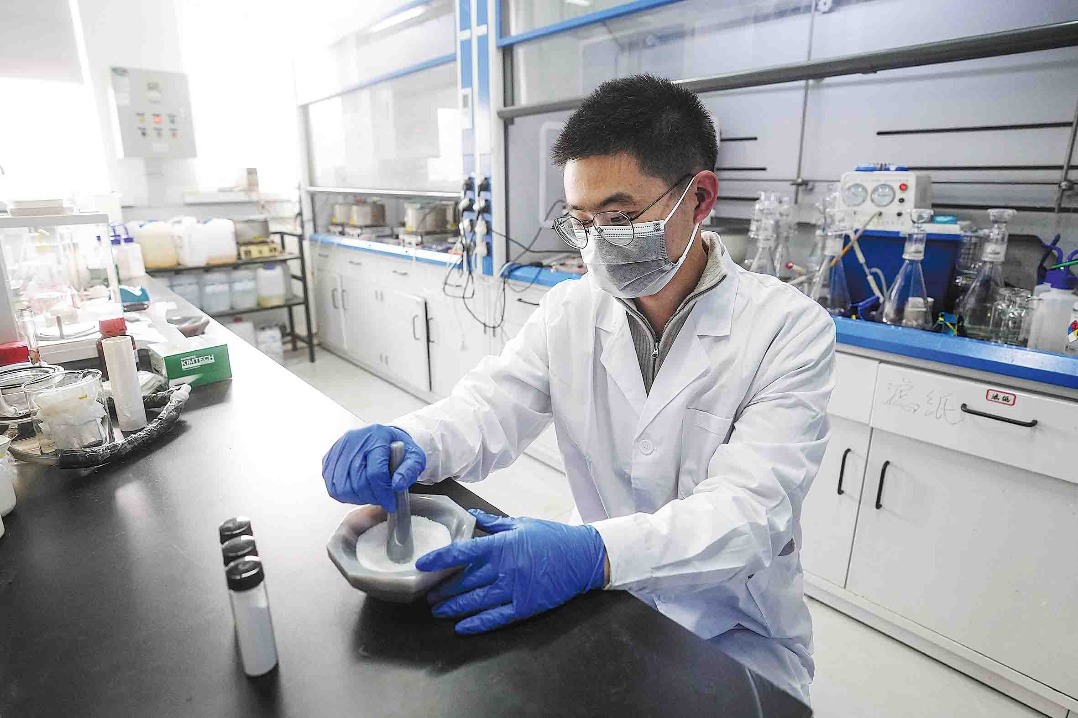
Working with the NGRC, it also built the Dezhou Engineering and Technology Research Center for Burdock Polysaccharide to strengthen the study of the core ingredient extracted from burdock plants that proved to be effective in treating eczema.
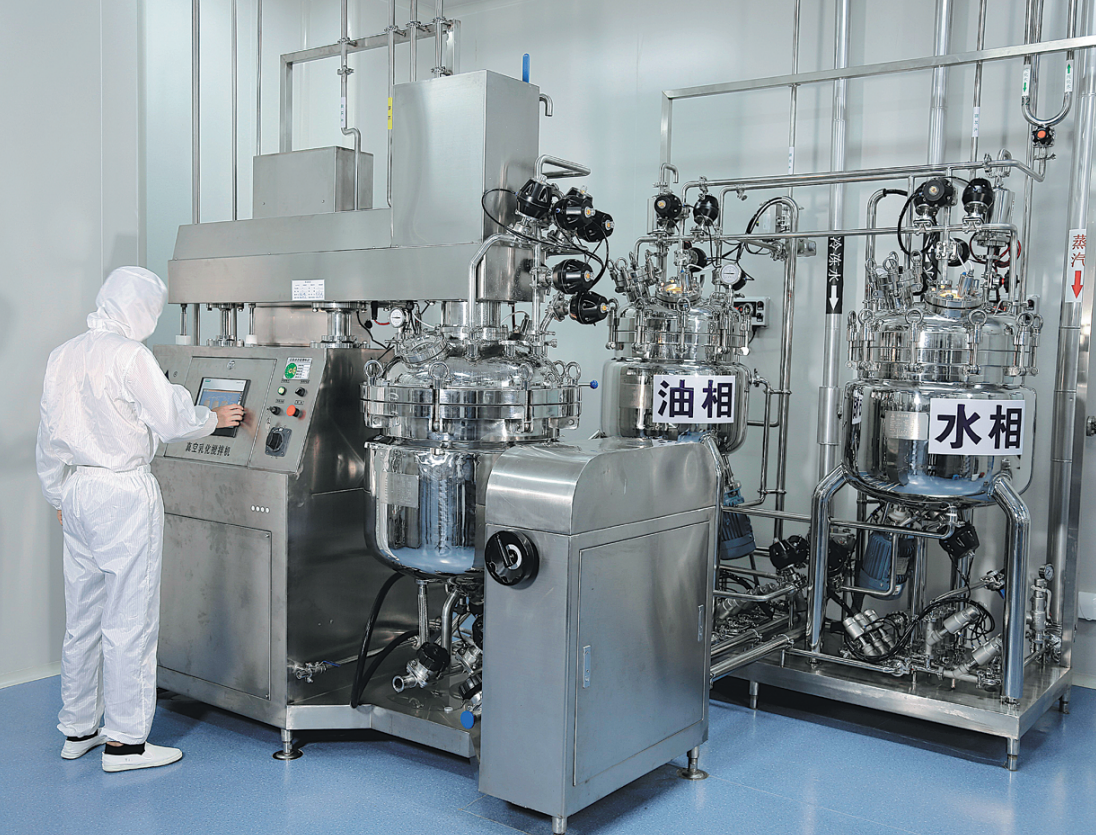
Currently, Mama & Sweeties owns a plant extraction workshop of over 5,000 square meters, with an annual output of over 6,000 metric tons, a 2,000-sq-m standardized cosmetics clean factory that conforms to the standards of GMP (Good Manufacturing Practice) in Europe, and automated and semi-automated production lines able to produce a total of over 1 billion units of products per year.
Likewise, to control product quality, Heilongjiang province-based milk power provider Wondersun established operating standards in five areas-resources, breeding, manufacturing, management and team building. It also established intelligent factories with 24-hour monitoring, and implemented 18 inspection procedures to ensure the quality of its milk powder.
Jiangsu province-based baby car seat manufacturer Goodbaby Co Ltd spent five years and 750 million yuan, and conducted over 120,000 crash tests to produce high-quality infant car seats.
Apart from efforts made by domestic baby and maternal product companies, the government's strengthened supervision also promoted the sustainable development of the sector.
In recent years, the central government has carried out a series of measures to strictly control the quality of baby and maternal products, such as organizing more inspections and tightening sanctions on problematic products.
"It takes time for consumers to change their opinion on homegrown baby and maternal products. However, I am confident that given the great market potential, and with Chinese companies committed to improving their products, domestic brands will eventually become a mainstream part of the market," Chen said.