Rain or shine?







Will the outcome of the visit of John Kerry to Shanghai for discussions on climate change cooperation be positive or negative?
Given the current freeze in US-China relations, no news is good news for the observers of the bilateral relations. At a time when the Joe Biden administration seems more prone to continue the tried and failed China policies of the previous administration, such as the self-hurting tariffs and the unilateral sanctions against an increasing number of Chinese individuals and companies, the visit by Special Presidential Envoy for Climate John Kerry to China is widely seen as a promising sign for at least potential cooperation.
Everything else aside, Kerry will be the first top US official to visit China in 20 months, the last assistant secretary of state for East Asia and Pacific Affairs never even set foot in China. But considering the recent US administrative and legislative provocations against China, can we still be optimistic about Kerry's trip? Should we believe that on this single issue of climate change, Washington is ready, willing and sincere about cooperating with Beijing, once again?
Let's be positive first. When Biden was the vice-president and John Kerry was the secretary of state, the United States worked quite well with China on climate change. It would have been almost impossible to reach the Paris Agreement in December 2015 if it weren't for the US-China Joint Announcement on Climate Change in November 2014 and the bilateral Joint Presidential Statement on Climate Change in September 2015. On top of the Paris Agreement, China also worked with the Barack Obama administration to accomplish the Kigali Amendment of the Montreal Protocol and the International Civil Aviation Organization's Carbon Offset and Reduction Scheme for International Aviation, both in October 2016.
The significant progress of bilateral cooperation on climate change during former president Obama's second term provided at least five lessons for the Biden administration: mutual respect is essential for accomplishing the final goal; building sound working mechanisms is critical to the success of cooperation; domestic politics matter a lot in pushing forward the agenda; local and pragmatic cooperation once established is resilient and enduring; and China plus the US is greater than two and others will follow their lead. Despite a troubled start, China-US cooperation on climate change before the Trump administration took a wrecking ball to it was a great accomplishment. It proved the viability of genuine bilateral cooperation on pressing global challenges based on common interests and real political leadership.
Unfortunately, the Trump administration burned all the bridges on climate cooperation over the past four years. It suspended the China-US Ten-Year Framework for Cooperation on Energy and the Environment (2008-17), canceled the Clean Cargo Working Group, and froze the China-US Clean Energy Research Center. Moreover, US tariffs and sanctions against China in the name of "national security" are so extensive, they have become a web of barriers that are blocking progress on climate cooperation.
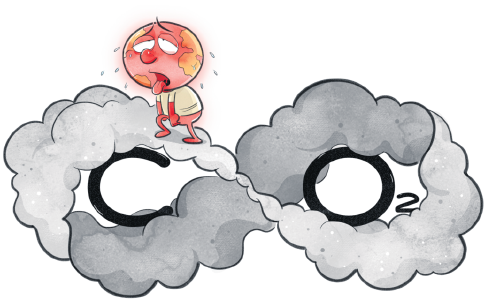
But climate change is not waiting for human disagreements to dissolve. The year 2020 tied with 2016 as the hottest year on record, making the last decade the hottest on record as well. Temperatures soared the most in the Arctic and Northern Siberia, reaching more than 6 C above average and causing weather abnormalities all around the world. The cost of inaction or weak response is no longer bearable to humankind, and such a global emergency demands a decisive global response, particularly a China-US coordinated one.
So this time, with the positive legacy of the Obama era and the urgency created by the Trump wreckage, and with a more sophisticated China policy of "cooperating where we can", maybe we should welcome Kerry with Chinese hospitality and extend our best wishes.
But let's also take a look at the negative side for a moment. President Biden's plan to counter climate change touches on the China-US relationship in some detail, but the undertone of the plan is competitive, not cooperative. It specifically ties trade to climate policy, raising the concept of a carbon adjustment tax or quota on carbon-intensive goods. It even suggests conditioning future trade agreements on China's commitment to meeting the Paris Agreement targets. On green technology and the supply chain, Kerry, newly appointed as the presidential envoy for climate, argued in December 2019 that the US is in a "green race" with China and it would be a geopolitical failure if China were to outrun the US in innovation and green technology.
The plan extends and reinforces the "Buy American" policy with a view to build a more resilient supply chain domestically, including for electric vehicles. The Biden plan also takes a hard line on the Belt and Road Initiative, recommending alternative financing for low-carbon investments in projects to replace Chinese sources. The plan seeks to hold China to high environmental standards for the initiative's infrastructure projects and to stop China from exporting or subsidizing coal-fired power plants to Belt and Road countries.
The lack of a positive and cooperative plan with China on climate change in the Biden agenda shows the pervasive influence of the "tough on China" mentality in US politics.
Bearing the overall US political climate in mind, China must remain vigilant about the real purpose of any US climate change proposals. Since Kerry is sitting at the table of the National Security Council, his visit to Shanghai will carry a special weight and reveal the Biden administration's true intentions on climate change interactions with China. Will this be a rare opportunity to bound the two powerful countries together for the global good, or another joint venture to be dissolved under the increasing pressure spilling over from other pressure cookers?
For now, let's just welcome Kerry and await the outcomes of his visit.
The author is a research fellow at the Institute of World Economics and Politics at the Chinese Academy of Social Sciences and a member of the Academic Committee, Grandview Institution.
The author contributed this article to China Watch, a think tank powered by China Daily. The views do not necessarily reflect those of China Daily.