



Biomass energy to provide heat, fuel







Reusing leftover organic matter part of strategy for emissions reduction targets
From plants and wood, to crops and animal droppings, all of these examples of organic waste could soon become important energy sources to heat homes and fuel cars.
Biomass, such as agricultural and forestry products, organic household waste as well as livestock and industrial refuse are some of the biological materials used as fuels in producing electricity and heat.
Biomass can be burned directly for heat, or converted to renewable gaseous and liquid fuels through thermal, chemical and biochemical processes.
Under the energy efficiency and carbon intensity targets set by the Chinese government, the country's development of biomass energy will see fast track growth thanks to preferential policy support, experts said.
"The development of the biomass energy industry in China has ushered in an important window period under China's strong green commitment and the industry has great potential for further growth," said Zhang Dayong, secretary-general of China's Biomass Energy Industry Promotion Association.
China vows to peak carbon emissions by 2030 and reach carbon neutrality by 2060.
During the recently closed two sessions, China's commitment to green development was reiterated by Premier Li Keqiang.
While delivering the Government Work Report, Li said China plans to reduce energy consumption per unit of GDP by 13.5 percent and carbon dioxide emissions per unit of GDP by 18 percent during the 14th Five-Year Plan period (2021-25).
"China's strong green commitment will provide more opportunities of growth for biomass energy development as biomass is the only zero-carbon fuel among renewable energy sources. If it is equipped with BECCS technology, (bioenergy with carbon capture and storage), the process of turning biomass into energy can achieve negative emissions," Zhang said.
BECCS is the process of extracting energy from biomass and capturing and storing the carbon, thereby removing it from the atmosphere.
At present, China produces about 6.3 billion metric tons of organic waste on average per year, according to Zhang.
"By processing 40 percent of this into energy, which is a goal that is likely to be achieved in the near future, China can reduce its carbon dioxide emissions by 20 percent, which is about 2.3 billion tons. That is very meaningful for China's green development," Zhang said.
"Developing biomass is also meaningful in helping reduce reliance on fossil fuels and diversifying energy sources," Zhang added.
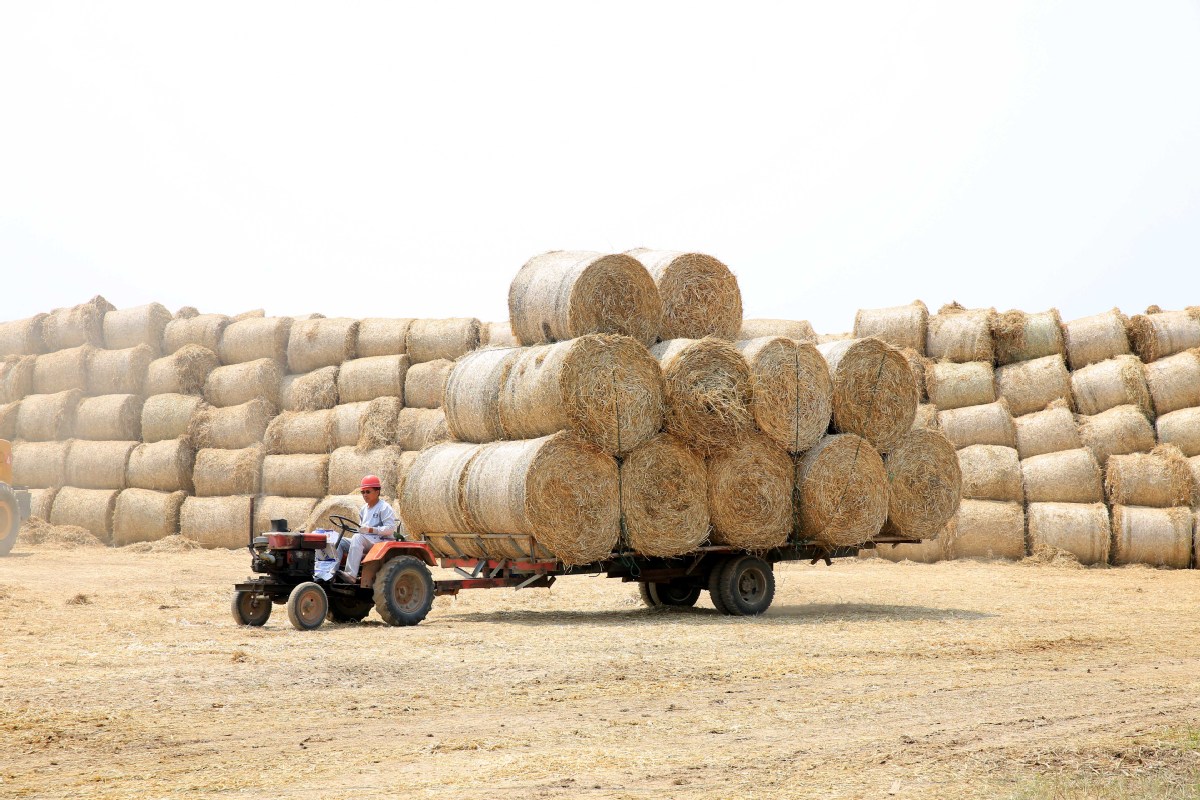
BEIPA said that each year China produces over 900 million tons of agricultural and forestry biomass which can generate power equal to that from nearly 400 million tons of coal. The number is even larger when adding organic waste from urban and rural areas.
However, at present only around 90 million tons of agricultural and forestry biomass is used for power generation annually.
Aside from stating energy efficiency and carbon intensity targets, the 14th Five-Year Plan also sent positive signals to encourage proper handling and comprehensive use of crops, which account for a large portion of raw materials for biomass in China, Zhang said.
A BEIPA report said more support from government to boost the industry's development is expected in the next five years.
The report estimated that about 1.2 trillion yuan ($183.6 billion) will be invested in the industry from 2021 to 2025, which could help the industry handle about 350 million tons of organic waste, and create job opportunities for around 1 million people.



















