



Vaccines give China and India a chance to boost cooperation







Before flying to Beijing from Singapore, a low-risk country that has used an all-of-society approach to contain the COVID-19 pandemic, I was required to submit to the Chinese embassy negative results for polymerase chain reaction (PCR) and serology tests taken less than 72 hours before my flight.
After landing in Shenzhen, I was tested again for COVID-19 and spent two weeks in quarantine in a hotel. I underwent two more PCR tests during my stay in Shenzhen, and traveled to Beijing where I spent seven days in isolation in a hotel room.
Even though I reached home after 21 days and six negative tests for COVID-19, I needed to report my health status to the community twice a day using WeChat.
The community conducted a final PCR test on the 28th day of my arrival in China, which ended my quarantine, isolation and self-observation period.
It is amazing that even more than one year after the outbreak of novel coronavirus, China continues to have in place strict prevention and control measures for international and domestic travelers.
As someone living in Beijing when the epidemic broke out last year, I witnessed the strategies used by the government to prevent the spread of the virus and played my part by using apps such as the "Health Kit" and QR(quick response) code. This was long before the world realized that people too have the responsibility of taking measures to prevent the spread of the virus. In fact, Western media narratives were mostly critical of large-scale lockdowns and quarantine measures at the time.
Individual sacrifices ensure that cities and countries can operate somewhat normally. Wuhan, a city of 11 million people, was completely locked down for a few months at the peak of the outbreak. Even a month after the lockdown was lifted, about 10 million Wuhan residents were tested for COVID-19 following the detection of six new cases in the second week of May 2020.
Indeed, people endured personal hardships and played their part in restoring normalcy in the city. In the end, their sacrifices paid off, and their joy was visible in the images of the HOHA Water Electrical Musical Festival where thousands of Wuhan residents congregated to celebrate the victory over the virus.
Although a painful exercise, preventive quarantine ensures that parents can later send their children to school and families can get together as usual. Governments handling such crises can be "expected to do better in terms of economic outcomes as well, since good crisis management pays off" in the end.
Ideally, countries should share their lessons with other countries so they can better address global health emergencies in the future by collaborating with each other. China and India have been helping other developing countries with medicines, vaccines and other necessities to deal with the health crisis.
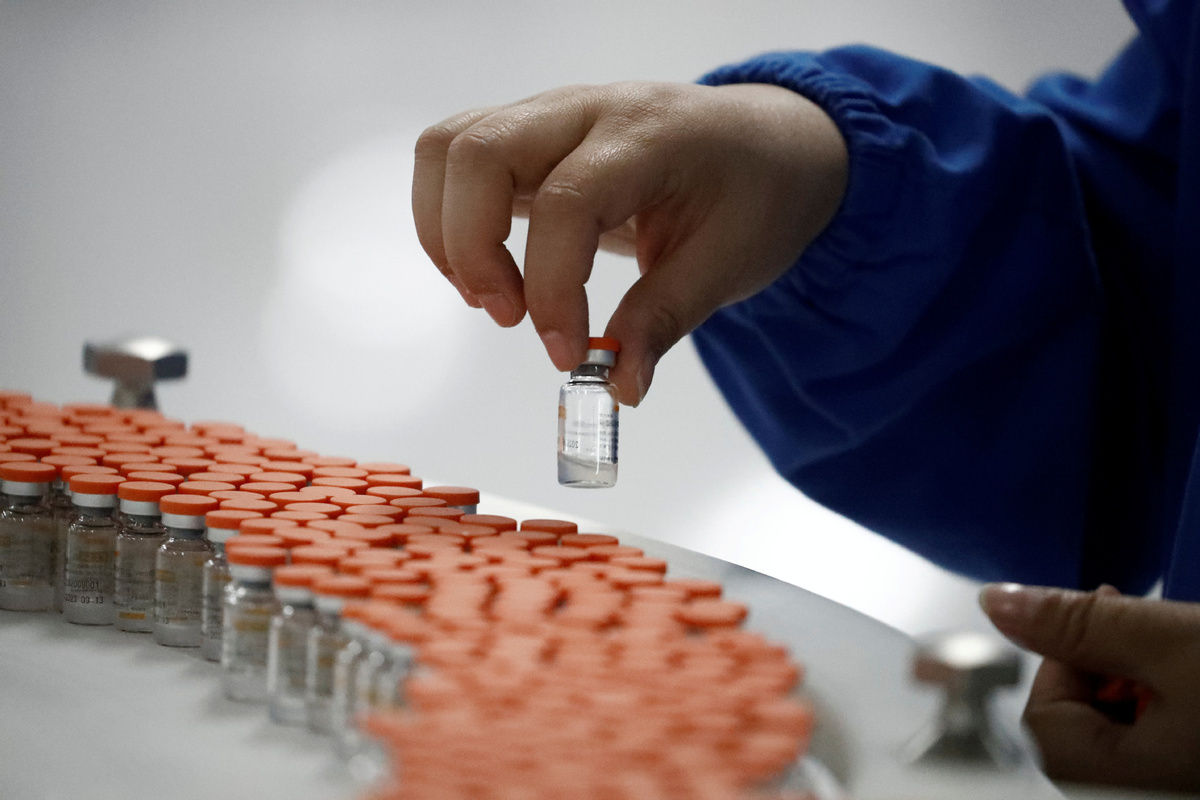
India is among the largest manufacturers of vaccines globally. And China not only managed to largely control the epidemic but has also developed and rolled out its own vaccines. Combining the strengths of both countries and establishing a mutually beneficial development partnership to find lasting solutions to global problems will therefore be a win-win formula.
Given that China and India both are part of the World Health Organization-led COVAX and are more than playing their part in making vaccines global public goods, if one tries to outdo the other in a bid to "gain influence", it will be counter-productive and will certainly not help in advancing collaboration and solidarity.
We need to learn from the COVID-19 pandemic ways to address inequity in a way that enables governments to quickly reach out to vulnerable people to provide health and social services. There is also a need to apply lessons from successful approaches and improve the health systems to quickly address health emergencies. China's effective use of the whole-of-society approach and the ability to mobilize technology across multiple sectors, and the ability of China and India to meet the needs of other developing countries are examples worth building upon and expanding.
As the major emerging economies of the Global South that understand the need of other developing countries, India and China should join forces to strengthen the South-South cooperation framework. This will add to the political stability across Asia, improve the investment environment and promote socioeconomic development in the region.
Hence, there is a need to invest more resources to develop regional plans to improve the health systems of countries in the Asia-Pacific region, train health workers, facilitate sharing of vital health information, support governments' digital healthcare drive, and strengthen cross-border monitoring to prevent the spread of diseases.
The author is the regional director of Vital Strategies Asia Pacific and a trained public health professional.
The views don't necessarily reflect those of China Daily.
If you have a specific expertise and would like to contribute to China Daily, please contact us at opinion@chinadaily.com.cn, and comment@chinadaily.com.cn.





