



Can China, US dance together again?







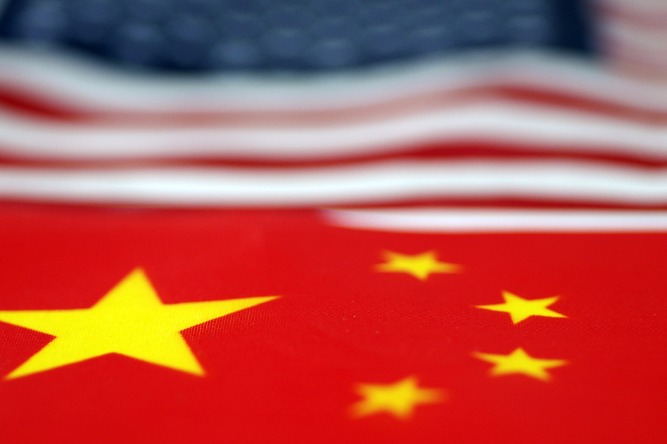
This year marks the 50th anniversary of Henry Kissinger's visit to China. In July 1971, Kissinger, as national security adviser to then US president Richard Nixon, held several rounds of talks with Premier Zhou Enlai in Beijing. The Chinese and US sides addressed many thorny issues, including the Taiwan question, in a manner that was candid and discerning. Kissinger's visit paved the way for Nixon's visit to China in February 1972 and the subsequent normalization of ties between the two countries.
Looking back on the historic episode, Kissinger used the term "minuet" — a slow, stately kind of dance — to describe the extremely prudent yet significant interaction. The analogy was fitting because the room for policy maneuvers for the leaders on both sides was limited and called for extraordinary diplomatic sophistication — and resilience. Considering the various difficulties facing Sino-US ties today, what Kissinger described as minuet remain an important source of inspiration.
After Joe Biden was elected United States president, many hoped China-US relations would be reset, but that hope seems to be fading by the day. Despite some differences in tactics, the Biden administration is sticking to the Donald Trump administration's approach to bilateral relations. In fact, Biden recently called China the "most serious competitor" of the US and, in his address to the virtual Munich Security Conference on Feb 19, he stressed that the US and Europe should prepare for long-term strategic competition with China.
Some senior officials in the new US administration have sounded tougher than Biden himself. While Secretary of Defense Lloyd Austin sees China as "a pacing threat", Secretary of State Antony Blinken and National Security Advisor Jake Sullivan consider China as the "greatest long-term national security threat" for the US.
The Biden administration was expected to be prudent in its interactions with China and ensure that it works from a "position of strength". Yet Biden didn't talk with President Xi Jinping until after communicating with leaders of US allies and partners. Explaining the meaning of "position of strength", Blinken said that when making its China policy, the administration would coordinate with allies and partners, and then work together with them to exert pressure on China.
US officials are already busy revitalizing the US alliance network, conducting in-depth discussions with the European Union and NATO on meeting the "China challenge" and preparing to turn the G7 summit in the United Kingdom in June into a "democracy summit". Which means Biden is not in a hurry to adjust the US' China policy.
But that doesn't exclude the possibility of a new China-US minuet, as both sides have been sending out noteworthy policy signals. In fact, the Biden administration has displayed some new thinking. To begin with, Biden doesn't seem interested in a new Cold War, especially because in his address to the Munich Security Conference, he said: "We cannot and must not return" to reflexive opposition and rigid blocs of the Cold War. "Competition must not lock out cooperation on issues that affect us all."
These remarks seem to have something in common with the Chinese side's proposal of "no conflict, no confrontation".
The Biden administration also seems willing to have more dialogue on democracy and human rights. In his phone conversation with Xi, Biden said that no US president can retain his position unless he adheres to American values while emphasizing that to become a global leader, China has to win other countries' trust.
More important, Biden said: "Culturally, there are different norms that each country and their leaders are expected to follow." But the fact is, if the US can accept some basic Sino-US differences on normative levels, it could help ease their ideological conflict.
Unlike the preceding administration, the Biden administration has not launched groundless attacks on the Communist Party of China, which is conducive to safeguarding the political foundation for bilateral relations.
During the Trump administration, the word "engagement" had become a taboo in Washington's China policy. Trump virtually shut all channels of diplomatic dialogue and did everything in his power to destroy the foundation of Sino-US engagement.
Therefore, to put bilateral relations back on the constructive track, China has put forward a series of proposals for promoting some adjustments. Yang Jiechi, a member of the Political Bureau of the CPC Central Committee and director of the Office of the CPC Central Committee Foreign Affairs Commission, and Wang Yi, State councilor and foreign minister, have repeatedly called for improvement in Sino-US ties.
For instance, Yang has emphasized that China has never interfered in US domestic affairs, never exported its development model, never engaged in ideological confrontation, and never pursued spheres of influence. And Wang has said that China is willing to coexist peacefully with the US and seek common development.
Speaking about the Biden administration's concerns about democracy, Wang said democracy isn't the sole domain of one country or one group of countries but rather a common value of humanity. While calling on China and the US to reactivate their communication mechanism at all levels, in order to conduct "dialogue that solves problems", Wang urged the two sides to coordinate their policies and work together to control the novel coronavirus pandemic, combat climate change and promote global economic recovery.
Given the domestic pressure on both sides, neither China nor the US is willing to compromise on significant, sensitive issues, which is understandable. But both sides need to rediscover the art of diplomacy, read each other's policy signals, explore new models of effective dialogue and demonstrate confidence through their actions, rather than engaging in simplistic, empty sloganeering or placing unrealistic demands on the other side. It will require substantial efforts on the part of China and the US to tango in a repeat of their historic minuet.
The author is a research fellow at Charhar Institute.
Source: chinausfocus.com
The views don't necessarily reflect those of China Daily.





