Asia shows the West how to manage a crisis








One year after the beginning of the COVID-19 pandemic, one fact is difficult to dismiss: Asia has handled the crisis significantly better than the West.
A year ago, the West appeared as the certain frontrunner in bringing the pandemic under control. The technology, the science, the healthcare system - everything looked as if one was well equipped for what was to come.
But the reality turned out very differently.
The two continents particularly hit hard are Europe and North America, especially compared to many places in Asia. The coronavirus pandemic is thus the first major crisis in which the relationships between Western industrial nations and developing and emerging nations are being reversed: Western societies continue to struggle mightily with their vulnerability, while in Asia, the virus is more or less under control.
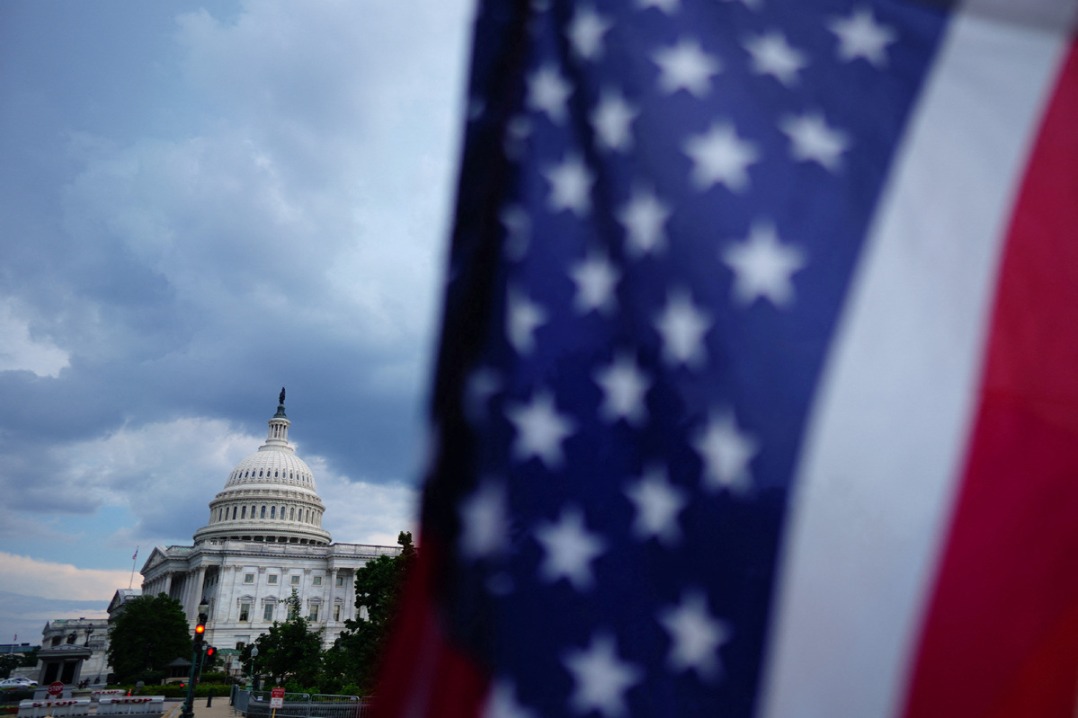
The country that was hit hardest by the virus is the United States. As of March 12, over 540,000 lives have been lost – more than the US lost during the Vietnam War and World War II combined. It marks a stark contrast to nations such as China, which, despite a population four times as big as the US, only has 4,849 deaths or Japan, which has lost over 8,400 lives.
However, the West has seemingly little to no interest to assess what caused these discrepancies. In their default position, critics will allude to the idea that the US and Europe do not have the same options at their disposal as Asian countries do, given that data protection laws in Europe, in particular, have made tracing COVID-19 extremely hard.
But that's only half the story, at best.
While the world's knowledge about the virus continues to be limited, science indicates that many factors influence the spread of the coronavirus in the world. In Africa, for example, a young population seems to have kept the death rate comparatively low. In addition, many people live more outdoors and travel less around the world. Of course, these are difficult things to replicate in modern societies that are parts of the globalized world of commerce, such as the aforementioned US or Europe.
But how does one explain the situation in Asia? Asia is home to several highly developed societies with a lifestyle that is similar to that of the West. Japan, for example, even has a population that's a little older than many Western European nations. Nevertheless, in Asia, the most densely populated continent, there is no diffuse infection process with a few exceptions, but rather limited local outbreaks.
One can try to explain this with the fact that cultures in Asia are generally more considerate of one another, are more community-oriented and more disciplined than in the individualistic and hedonistic Western world.
But there are other reasons why Asia dwarfs the rest of the world in managing the COVID-19 pandemic.
First, countries like China and Japan reacted quickly and decisively. Above all, they reacted immediately to new infection clusters. Procrastination, as occurred in the West during the previous summer, is not part of the modus operandi.
Second, Asian countries were better prepared and made equipment accessible faster. In the West, on the other hand, masks and protective clothing were missing first, then tests. Europe is currently suffering from an acute self-inflicted shortage of vaccines.
Third, a large part of the pandemic success in countries such as China, Japan or South Korea is also based on the fact that a large number of staff was available to follow individual infection routes and thus isolate outbreaks swiftly.
Fourth, Asia is focused on digital technology. The latter is particularly beneficial during the pandemic. GPS tracking, mobile phone apps, cameras or bank details have made it possible to enforce quarantines and track contacts. Coronavirus apps in Asia, in particular, collect significantly more data, which makes them very effective. In contrast, the European coronavirus apps have made little to no significant contribution to containing the pandemic in Germany, France or the United Kingdom.
These different approaches have allowed many people in Asia to lead a carefree life once again, while in Europe, which has long struggled with technological progress, the lockdown remains the ultima ratio – at least until vaccinations have been conducted sufficiently. In the US, several states, such as Texas, are now reopening but doing so for purely political reasons and without regard to the health of their citizens, as the infection rates remain high.
The fight against the coronavirus has been a stress test for states and societies. It displays how well one can deal with extreme situations and how quickly one can learn – including from others.
Perhaps, historians will one day conclude that COVID-19 was the beginning of the Asian era and the West's reality check. It would not come as a surprise, given how the previous twelve months have unfolded.
The author is a London-based political analyst and commentator. He holds a Master of Arts in International Relations from the University of Birmingham and specializes in US affairs.
The opinions expressed here are those of the writer and do not necessarily represent the views of China Daily and China Daily website.
If you have a specific expertise and would like to contribute to China Daily, please contact us at opinion@chinadaily.com.cn, and comment@chinadaily.com.cn.