



In common cause







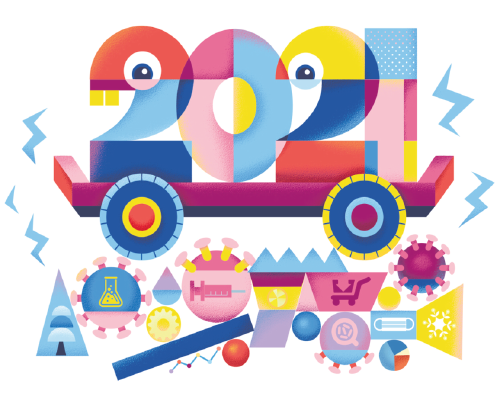
Risk reduction and a global recovery will not be possible without the cooperation and coordination among countries
Although the world economy has seen signs of recovery in 2021, the latent risks should not be ignored. The International Monetary Fund has raised its forecast for world economic growth in 2021 from 5.2 percent to 5.5 percent, 9 percentage points higher than the real growth rate in 2020.
Factors boosting the world economic recovery include the restoration of supply and demand due to widely used COVID-19 vaccines, the release of pent-up and pending consumption demand, and the additional macroeconomic policies starting to take effect. But despite the positive outlook, we should still guard against latent risks and challenges.
The foundation for the global economic recovery is not solid, threatened by the inconsistency and poor coordination among the macroeconomic policies of different countries.
In 2020, the world experienced the steepest economic recession since World War II, with all major sectors hit hard at the same time, global industrial and supply chains disrupted, and trade and investment activities depressed. To minimize the impacts of the pandemic, countries have carried out massive relief and stimulus measures.
By the end of 2020, roughly $14 trillion in fiscal aid had been rolled out around the world, accounting for about 16 percent of the global GDP. Meanwhile, central banks of different economies have lowered interest rates 207 times in 2020, with major developed economies sticking to super-low interest rates.
The development and rolling out of vaccines pave the way for the post-pandemic recovery. However, mutations of the virus and the inequality in vaccine allocation and distribution cast a shadow over the effectiveness of the vaccines and consequently the world economic recovery.
Some developed countries have bought their way to the front of the line in their bids to acquire vaccines, while developing countries lack the financial capability to buy vaccines, or lack the necessary cold-chain facilities to store and transport the vaccines. The inequality and inefficiency in vaccine production and inoculation might compromise the efforts to promote a global economic recovery.
Currently, fighting the pandemic is still the most pressing task for all countries, and the containment of the virus is the prerequisite for a global economic recovery. To this end, it is essential to build consensus, strengthen confidence for cooperation and create new opportunities from the crisis.
First, with the principle of giving people's health and life top priority, the most urgent task is to combat the pandemic, which requires the solidarity of all countries. To this end, it is necessary to share experiences and best practices, enhance traditional health cooperation, and improve medical and healthcare cooperation, particularly in vaccine development, production and allocation, making vaccines a global public good so that they are available and affordable to all people in the world.
On China's part, it has delivered anti-pandemic assistance to more than 150 countries and 13 international organizations, and sent 36 medical aid teams to countries in need. It supports and participates in global vaccine cooperation, and shares its prevention and containment experience with other countries.
Second, a strong momentum should be injected into the world economic recovery and growth by means of opening-up and cooperation. Major countries should take the lead in coordinating their macroeconomic policies to fuel inclusive, balanced and sustainable development of the global economy.
In the near term, countries should balance pandemic control and economic development by rolling out supportive macroeconomic policies and promote an orderly resumption of the flow of people, so as to bring work and production back to normal and stabilize industrial and supply chains, thus providing guarantees for economic recovery. In the medium to long run, countries should work hand in hand to promote the transformation in driving forces and the development mode for world economic growth, so as to bring it onto a track of healthy development.
Ensuring equity in economic recovery deserves special attention, as the speed of economic recovery varies among nations and the South-North gap is widening. It is crystal clear that progress made by the developing countries lays a solid foundation for the prosperity and stability of the whole world, from which the developed countries will also benefit.
To this purpose, China will promote and participate in multilateral and regional cooperation more actively to realize higher-level mutually beneficial relationships with other countries. It will keep liberalizing and facilitating investment and promote the high-quality development of the Belt and Road Initiative. It will push for institutional opening-up in rules, regulations, standards and management, and create a market-oriented, law-based international business environment. It will also take advantage of being a super large market with great demand potential to offer more opportunities for other countries.
Third, global challenges must be addressed by all hand in hand. Cooperation is the only way to end the pandemic and promote a global recovery.
The COVID-19 pandemic will not be the last global public health emergency. It is a reminder that we need to strengthen cooperation in response to global challenges. A wider and more resilient global cooperation mechanism could be built if major countries show sympathy for people infected with or at risk from the virus, do their utmost to protect the vulnerable groups and help other countries with vulnerable healthcare safeguarding systems.
Only in this way, can the international community build a global community of health for all, better implement the Paris Agreement and UN 2030 Agenda on Sustainable Development, cope with global risks such as energy and resource security, cybersecurity and natural disasters, and thus jointly protect this planet we call home.
The author is president of the Chinese Academy of Social Sciences. The author contributed this article to China Watch, a think tank powered by China Daily. The views do not necessarily reflect those of China Daily.





