



Consensus with a plan: Let's try to map the future







Everyone loves a plan. It helps us organize our lives, earnings, budgets, trips and leisure time. So, why not have a plan for everything? When you have a market economy as big as China's, yes, you need a plan.
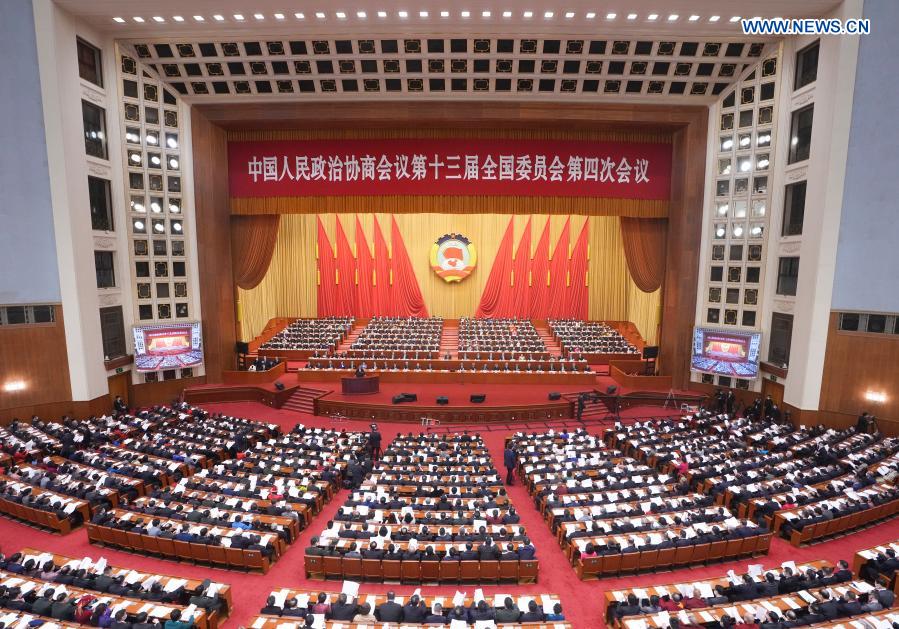
As the fourth session of the 13th National Committee of the Chinese People's Political Consultative Conference convened, its China's 14th Five-Year Plan topped the agenda of Chairman Wang Yang's opening speech.
After a year of living dangerously with the global COVID-19 pandemic, we are looking at a world now totally transformed. Decades of work building networks of globalization once taken for granted, have been decoupled. This is the outcome of both the pandemic and narrow political interests of certain Western political leaders inebriated by populist nationalism.
Sanctions and trade wars have hurt nations, including China. At the same time these interventions have allowed China to understand the missing links in its own technology chains and to address these with research and development to move all technology innovation and production onshore.
Essentially, a core aspect of this Five-Year Plan is for China to become totally self-sufficient on all aspects of technology from creative innovation to production of all parts and chips required in the manufacturing of technology products.
Self-sufficiency in technology will allow China to advance in areas of broad social healthcare, fast track the transition from fossil fuels to green energy under the policy of ecological civilization, as all of these areas require extensive big data collection and management. The 5G-network revolution will create unprecedented efficiencies that will in turn lead to both business and social transformations.
Even with sanctions against Huawei in the USA and some European countries, this will in turn advance China's domestic transition to the 5G network and further its outbound business projections to other developing nations in the Belt and Road network, which will really become the new cyber Silk Road.
With the launch of the first sovereign-backed digital currency, China is breaking new ground in the post-COVID-19 world that will be in a transition no less than that after World War II when the Bretton Wood system was set up. Now with China's yuan going global with a digital avatar, the yuan could become the clearing currency for the Belt and Road that would then witness one planet with two financial systems and two reserve currencies.
The post-COVID19 future global recovery will depend on China. That means a stable re-booting of the economy through careful fiscal and stimulus policies. An expected 1.6 trillion yuan in local government bonds will bring the deficit ratio up to around 3-3.6 percent, which is perfectly manageable. China's internal debt conundrum underwent several years of "deleveraging" and in the upcoming Five-Year Plan will enter a new phase of "stabilized leveraging" signaling financial stability rather than volatility.
Domestic debt will be invested into local and regional infrastructure, which can be expected to witness the transformation of backward areas to ecological cities with smart transport and green energy in the years to come with a new burgeoning of technology investments with particular emphasis on AI, creating new jobs for a tech-oriented youth now coming on the job market.
Realistically, China can expect an average 4.5 percent unemployment rate in the years to come based on current projections. Given the comparative global situation, that will be manageable.
All of this apprehending, planning and implementation comes from consensus building that draws from multidisciplinary feedback of the CPPCC. The CPPCC is a body not always understood by outside observers or Western journalists and political analysts. The body is a consultative congress or more specifically a vast network of professionals from all walks of life who offer their sector or regional proposals to the National People's Congress or legislative body, to be turned into law or policy. There are two phrases that could best describe the CPPCC function: multidisciplinary and consensus building.
The CPPCC members are drawn from all walks of society representing a vast cross-section of professionals and sector representatives. There are scholars, scientists, doctors, healthcare workers, researchers, lawyers, bankers, farmers, private entrepreneurs and State-owned enterprise leaders. The structure of the CPPCC is both vertical and horizontal meaning the national organization is mirrored at each level of government -- province, city, township -- creating a pyramid structure of views and suggested policies.
The multidisciplinary nature of this advisory organization allows it to gather such a vast matrix of suggestions from all walks of society to reflect to policymakers and legislators the needs, aspirations, concerns and inhibitions of 1.4 billion people in a society that has been undergoing some of the most massive social and economic transitions of any in the history of the modern world.
Key to navigating these transitions is consensus building. The CPPCC by synthesizing the views from so many sectors and regions is able over the course of each year through a continuum of local and regional meetings, to draw together the quintessential points that form a blueprint for the year ahead. The process of multiple meetings and group work sessions helps to articulate common concerns and aspirations to the policymakers and legislators that will put the blueprint into action.
This process of consensus building frontloaded into each year prevents the kind of narrow bipartisan quibbling and reactionary behavior that characterizes certain Western political systems where inertia results from stagnation due to ideological prejudices and political party deadlocks or corporate capital buying policy through lobbying. The CPPCC navigates around all of that by building consensus among all sectors and regions in advance of actual policy and legislative implementation.
The very nature of consensus building explains to a large extent China's both rapid and successful response to the COVID-19 pandemic. Where other political systems in certain Western countries may have politicized the pandemic even to the point of delineating political party affiliations by whether people wear face masks or not, China built consensus on how to tackle the crisis quite early.
The CPPCC through its vast network of representatives in all sectors and regions played a part in reaching out to the broader spectrum of society in having its pulse on social reaction while building consensus. In the end the common consensus was that there is only one enemy -- COVID-19 itself. Meanwhile political bickering polarized and in turn paralyzed any coherent response to COVID-19 in many Western countries.
There is something to it if you have consensus and then plan. And that is what this CPPCC meeting in Beijing this week is all about. No bipartisan bickering and stale rehashing of the same policy reports from think tanks that brew rancid coffee. Yes a little consensus building and planning can go a long way over cups of Dragonwell tea. Others might want to try some too.
Laurence Brahm is a US documentary filmmaker living in China, and he is a senior international fellow at the Center for China and Globalization.
The opinions expressed here are those of the writer and do not necessarily represent the views of China Daily and China Daily website.
If you have a specific expertise and would like to contribute to China Daily, please contact us at opinion@chinadaily.com.cn, and comment@chinadaily.com.cn.





