CAI is a test for European Parliament's China policy







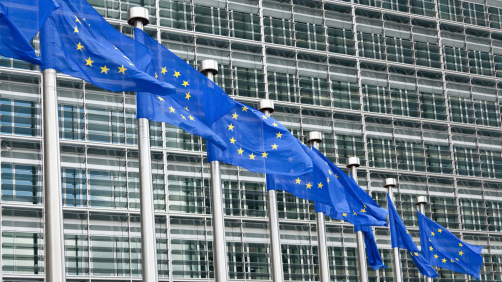
With the conclusion of the EU-China Comprehensive Agreement on Investment (CAI), all eyes are now on the European Parliament (EP), which needs to ratify the deal before it enters into force. And as expected, the road towards ratification in the EP is no less rocky than the negotiation itself, which took seven years and involved 35 rounds of bilateral talks.
The challenges that the CAI is facing in the EP are well illustrated during the debates held within the EP's Committee on International Trade on February 24. This debate marked the first time that the EP and the European Commission held a formal exchange of views after the CAI was concluded. It appears that gaps still exist between the EP and the Commission and between the different factions within the EP when it comes to the evaluation of the CAI.
While the Commission has emphasized the merits of the deal from a trade point of view, the EP has criticized the deal from a political point of view. Within the EP, different groupings are scrapping over questions of how far to push China on labor rights and whether to insist on signing International Labor Organization conventions as a pre-condition for the EP's approval.
The gaps between the EP and the Commission and the controversies within the EP, all point to the same question: that the EP lacks a balanced China policy.
With its empowerment after the Lisbon Treaty, the EP assumes greater roles in EU-China relations than in the days when it was merely a "talking shop." This is why the Commission recognized the EP as part of a "whole-of-EU" approach towards China in its 2016 policy document named "Elements for a new EU strategy on China."
However, to perform greater roles in EU-China relations also requires the EP to form a coherent China strategy on its own. Given the significance of the CAI in EU-China relations, the debates over the CAI offer a precious opportunity for the EP to reflect on its China strategy.
The EP needs to appreciate the complexity of EU-China relations and address China as a whole. In the case of the CAI, the EP needs to take into consideration three balances that the CAI has already achieved.
The first is a balance between EU-China relations in terms of market access. In this regard, the EU has gained much more access to the Chinese market in the CAI.
The second is a balance between the EU and some of its partners in the Chinese market. The CAI has put the EU on a similar footing with countries like the U.S. and Australia, which have signed trade agreements with China.
The third is a balance between interests and values, which is particularly important in EU-China relations. It is understandable that the EP takes a more political approach due to its nature as a representative body of elected politicians, yet the EP also needs to understand the broader context of the CAI and take a progressive view on its content.
In terms of commitment to sustainable developments, the CAI is the most ambitious deal that the EU has been able to negotiate with China so far. The CAI might not or never be able to address the EP's concerns in one go, but it offers a good basis for the EU to further engage with China in sustainable development.
These three balances should form the basis for the EP's consideration over the CAI. The CAI is not a perfect deal, but a good enough deal that the EU and China could have at this moment. And a good enough deal is better than no deal at all. Overplaying its hands on the CAI on the grounds of political concerns risks not only European interests in China but also the EP's credibility to perform its roles.
In a 2020 resolution, the EP called on the EU to create an atmosphere of dialogue, engagement, and genuine cooperation and competition in EU-China relations and called for a long-term strategy towards China in which the EU and its member states cooperate where possible, compete where needed and confront where necessary to defend European values and interests.
This has largely resonated with the Commission's China strategy adopted in 2019. The challenge now for the EP is how to put that strategy into practice.
In this regard, the CAI comes as the first major test for the EP's China policy, and it is definitely not the last one.