



Quality decides the future of continuing education







Editor's Note: The Chinese people have always attached special importance to education. In the 20th century, China has gone through a long, arduous journey from one-teacher schools to worldclass universities and achieved excellence in different fields including science and technology. What will China's education journey be like during the rest of the 21st century? In the 11th of a series of commentaries, a senior journalist with China Daily searches for the answers:
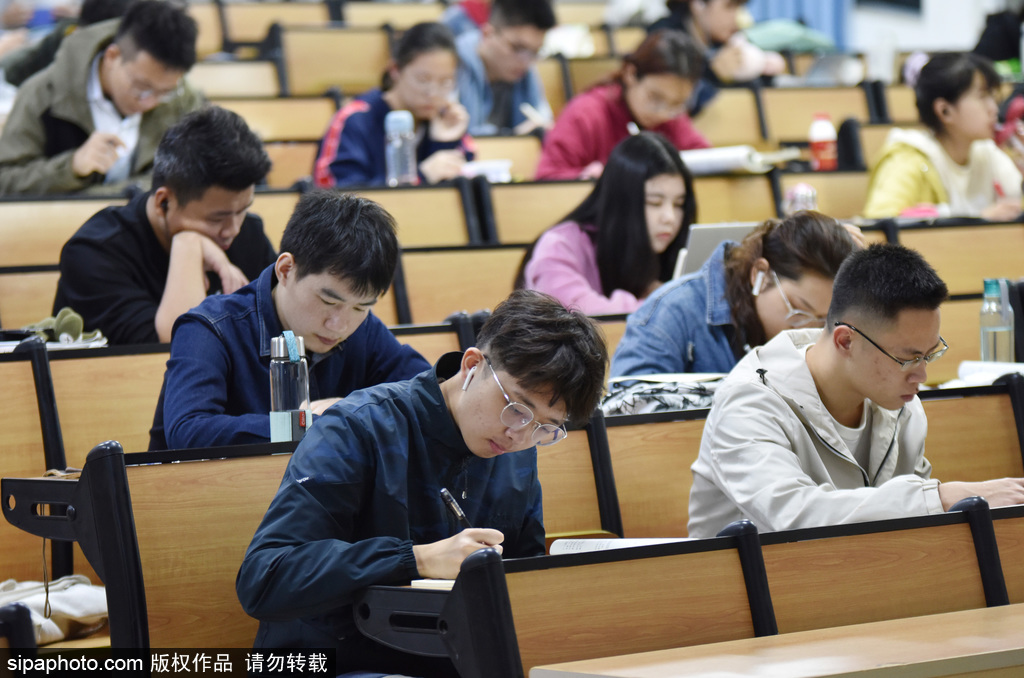
Taking a walk on the university campus near my home has been my routine for years. Yes, routine, except on Saturdays and Sundays, because during weekends the campus is packed with cars which bring mid-career professionals there to take part in a wide range of activities, from attending special classes to delivering special lectures.
The scenario is similar in many other universities across the country. Thousands of young professionals spend a lot of their spare time and pay as much as 250,000 yuan ($38,539.67) to attain an MBA or some other special degree.
China introduced continuing education in the 1950s when a few universities opened night schools for mid-career professionals. But large-scale diploma-oriented continuing education did not start until the universities reopened after end of the "cultural revolution" (1966-76). In 1977, when the universities reopened, millions of youths sat for the college entrance examination (or gaokao).
But given the limited facilities, the annual enrollment of students in the universities was less than 300,000 for some years. And those above 30 years, or those who did not do well enough in gaokao, were shut out of the universities.
To train more talents, take forward China's "four modernizations" drive and to meet the needs of those eager to acquire higher education, a few dozen open universities were started in the early 1980s which enrolled students of all ages for full-time as well as part-time courses. In fact, by the early 1980s, such universities were enrolling more than 300,000 students each year-equivalent to the number of those admitted to normal universities.
Today, nearly 3,000 universities offer continuing education courses while distance education, including through open universities, is becoming increasingly popular. Such institutions enroll more than 5 million students each year.
While the number is impressive, the institutions that provide large-scale continuing education are not traditional universities but institutions run by enterprises or government organizations. China has a norm that 2.5 percent of the staff members' salaries should be deducted to be used for staff training. Many companies, including China Daily, use the fund to invite experts to give lectures to or send some employees for higher studies to universities, both at home and abroad.
Each staff member is required to receive such kind of training for a certain number of hours each year and the annual work performance of those who fail to meet the target could suffer. Every few years, a staff member may get an opportunity to attend classes in a special institute for a few weeks.
But not all companies are using the special funds properly, as reports say some companies have been misusing them to organize office feasts or entertainment activities. Such malpractices should be checked and punished to ensure policies are fully implemented.
Universities offering continuing education, too, have challenges to deal with, not least because many don't have enough students or lack education resources.
For years, youths had been too focused on earning a diploma in accounting, computers, IT, teaching or a foreign language by attending a special course in a university, in order to embellish their resume and job profile to promote their career.
Also, to attract more students, some universities lowered the threshold for students to earn a diploma.
As a result, the students couldn't acquire the required practical knowledge to be successful in the job market and many employers lost faith in the special diplomas. No wonder fewer and fewer students seek such special diplomas and, as a consequence, some such colleges have gone out of business.
Diplomas in continuing education are yet to be widely acknowledged by employers and the public. With nearly 10 million university graduates entering the job market each year, employers often pick one out of every 100 applicants and ignore graduates from continuing education institutions.
When I switch on my computer in the morning, usually ads pop up on the screen, and more than half of them are college or university advertisements inviting applications for degree courses. In their desperation to attract more students, these higher education institutions are selling courses like street vendors.
Such tactics may help them to survive in the short term but cannot enhance their reputation in the long run. Therefore, it's high time such institutions focused on measures to improve the quality of teaching and learning.
After all, quality decides the future.
The author is former deputy editor-in-chief of China Daily.
kangbing@chinadaily.com.cn





