Sufficient grounds for Hong Kong to undertake judicial reform







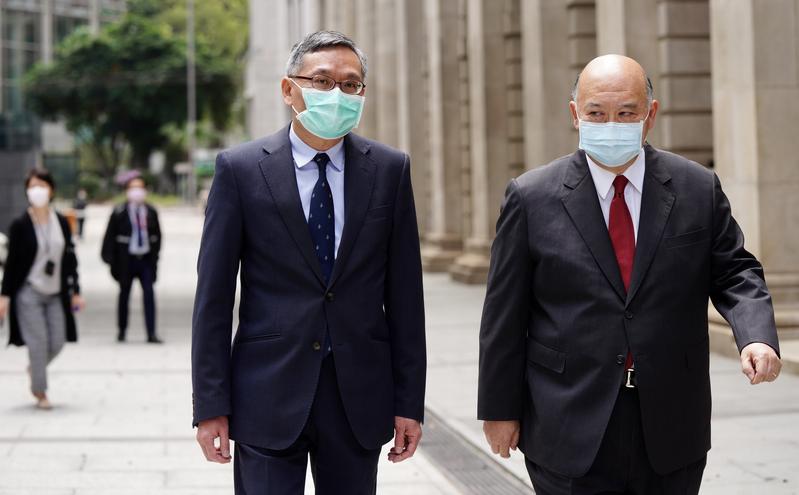
Geoffrey Ma Tao-li officially retired as chief justice of the Court of Final Appeal (CFA) on January 11, 2021. He held a press conference on the morning of January 5 to conclude his 10-year term of office. In his opening speech, Ma brought up the subject of judicial reform, which has been a hot topic in recent months. He said that the judiciary was open to reform if it meant improving what they do, and warned that judicial reform should not be based on dissatisfaction with court rulings.
Ma should be applauded for taking the initiative to discuss the subject. In fact, judicial reform has never stopped around the world, and Hong Kong should not be an exception. According to the Hong Kong Judiciary Annual Report 2020, the Judiciary handled more than 4,700 complaints as of September 30 last year, a twelvefold increase in the number of complaints from the year before. As a lot of complaints are directed at certain magistrates, the Judiciary has therefore introduced a new measure that will allow details of the complaints and investigation results to be published on its website if a certain court case has received a large number of complaints of a similar nature. This is certainly a reform in itself. Hence, when Ma expressed his support for judicial reform shortly before his retirement, he was hoping that the new Chief Justice Andrew Cheung Kui-nung would undertake the initiative during his tenure.
Ma was right when he mentioned the Judiciary was open to reform if it meant improving what they do, and judicial reform should not be based on dissatisfaction with court rulings. In fact, the appeal for judiciary reform is based on many reasonable grounds. In his opinion piece published in Ming Pao, retired CFA judge Henry Litton denounced the mess the Judiciary finds itself in, especially when courts "consistently subordinated the common good to the assertions of personal right. This gives a sense of personal sovereignty to those who have taken to the streets in violent protest". This definitely needs to be addressed through judiciary reform.
Magistrate Stanley Ho Chun-yiu, for example, was repeatedly criticized by the Court of Appeal for committing fundamental errors in sentencing principle during his tenure in the Eastern Magistrates' Court. He was criticized for making superficial judgments in the case of unlawful assembly at Lyndhurst Terrace in Central. In the case of another unlawful assembly on Gascoigne Road, he was found to mete out the wrong assessment of evidence and fact findings. He was also blamed for ignoring sufficient and comprehensive ruling guidelines in the arson trial of a 15-year-old, who was arrested for setting a fire at a police dormitory. With all those mistakes on record, Ho was tentatively appointed deputy registrar of the High Court on July 31 last year to assist with the scheduling of dates for hearings of criminal cases. The new appointment not only ensures Ho a raise in salary but also gives him the power to decide which judge handles what case, especially those related to the illegal campaign against the extradition law amendment bill in 2019. What has happened to Ho shows that the current judicial system lacks the necessary mechanism to hold judges accountable and certainly deserves rectifying.
Another alarming example comes from Kwok Cheuk-kin, a resident of Cheung Chau. Kwok was declared bankrupt years ago after abusing our judicial review system for decades. Apparently Kwok should have been banned from filing for judicial review. Unfortunately, he was allowed to waste our public resources by filing for judicial review and being rejected by the High Court time and again. He is a living testament to the need to reform the judicial review system. There are plenty of reasons for judicial reform if one cares to search online.
The newly appointed Chief Justice of the CFA, Andrew Cheung Kui-nung, remarked in his inaugural speech that, under his leadership, the judiciary in Hong Kong "must remain a professional and efficient judiciary that moves with the times". Cheung's "moving with the times" is impressive because it proves the judiciary demands reform promptly to meet the needs of our times. Henry Litton has mentioned: "To free the system from pomp and ritual, to seek truth from facts and not from ideologies, to re-energize the common law and make it relevant to Hong Kong's circumstances, to render the system fit for purpose, these require a total shift in mindset". Litton has shown Hong Kong the right direction of judicial reform.
Judicial reform is inevitable but requires public as well as self-motivation. Self-motivation means the judiciary should review its own performance and reform the judicial system when necessary instead of assuming there is no need to fix lower court problems as long as the appeal or sentence review mechanism works. By public motivation, I mean popular demand for judicial reform should never be ignored. The rising public demand for judicial reform is definitely NOT a matter of people "like" a ruling or not, but rather because they want the judiciary to fix its flaws in a timely fashion for the sake of an effective rule of law. To do so, the judiciary must ensure fair trial by all courts free of political bias. This is the best way to protect judicial independence and secure public confidence in the judiciary.
It is a foregone conclusion that judicial reform should proceed with the changing times. That means no more delay nor a flash-in-the-pan affair. It has to be a gradual and orderly process with a clear focus on what's not working in the judicial system, rather than starting all over every time, which is not in line with the legislative intent of the Basic Law.
The author is a member of the Chinese Association of Hong Kong and Macao Studies, and a senior consultant for the Hong Kong Legal Exchange Foundation. This is an abridged translation of his article published in the Hong Kong Commercial Daily.
The views do not necessarily reflect those of China Daily.