



Expats taste success in nation







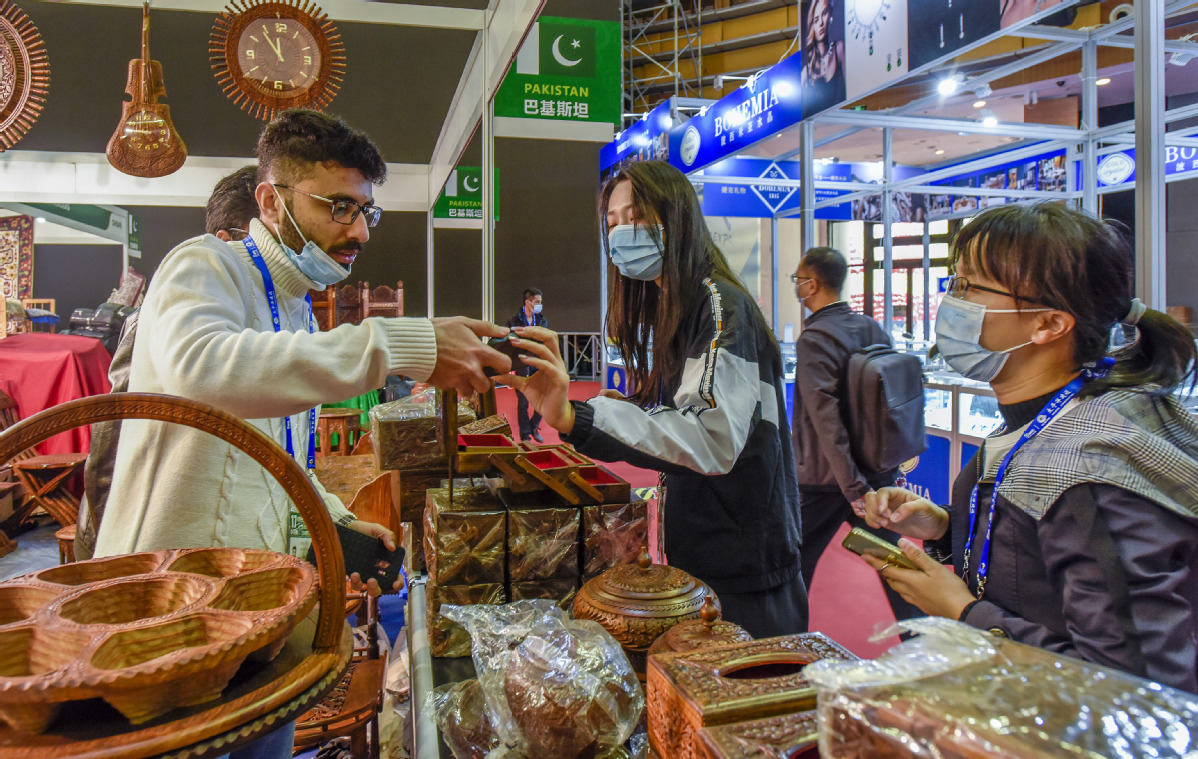
Small-scale foreign enterprises reap rich rewards from BRI, RCEP agreements
"All roads lead to China."
Such a saying is nothing new in business circles with increasing number of successful cases of East-West trade and cooperation among big firms and State-owned enterprises.
Today an increasing number of small and medium-sized foreign businesses are also tasting success in China, thanks to a slew of supportive arrangements like the Belt and Road Initiative, and the recently signed Regional Comprehensive Economic Partnership agreement.
Safak Altay, a 33-year-old Dutch chef who used to work at a three-star Michelin restaurant in the Netherlands, read an article about the BRI years ago and thought it a great opportunity to run an import-export business. Altay soon quit his job, came to China in 2015, and started seeking opportunities in trade.
"Now I am even more confident of my decision. China is likely the only major economy to see economic growth last year, and there were many supportive policies for small and medium-sized companies like us. More importantly, I feel safe living and doing business in China," Altay said.
But it was not easy starting off. Altay could not speak Chinese and didn't have any friends in the country, so he spent a year traveling across China to meet people in different industries, make connections and seek business opportunities.
"I started my journey in Shenzhen, a place full of opportunities-especially in technology and finance-and then went to Guangzhou, Shanghai and many other cities. The people I met were very friendly and open to share information with me. Gradually, I made some connections from factories and started to contact people I knew in the Netherlands, Germany and many other European countries to see if they needed products from Chinese factories," he said.
Altay added that he has imported and exported books, solar panels, home appliances, carpets and plastics. "It was not easy at the start. A lot of times after I shipped samples to customers, or after a series of price negotiations, I lost contact. It can be very frustrating."
"Luckily, Chinese products and the Chinese market are both very attractive to European companies, and that helps make the whole process a bit easier," he added.
Little steps lead to great progress. Having been in China for over five years, Altay is now manager of a jewelry company-Amber Ghata.
"I met my partner, who is the founder of the company and now my girlfriend-Sui Yongshan-in Qingdao, Shandong province. She was then running a jewelry business focusing on jade and amber. I told her about amber resources in Europe and she told me about the jewelry market potential in China, and we decided to start importing amber from Europe and expanding our business," Altay said.
To date, Altay and his colleagues have made connections with many big amber jewelry companies in Poland, and they received an increasing number of orders in China.
"Besides, logistics and transportation are becoming more and more convenient thanks to China-Europe freight train services. All in all we are very confident about market prospects," he said.
Altay and his workmates also participated in many exhibitions and trade fairs in China. "In order to promote our business, we went to multiple trade events, including the recently concluded China-ASEAN Expo in Nanning, Guangxi Zhuang autonomous region, and the China International Import Expo in Shanghai. We also participated in some others in Beijing, Guangzhou, and Shenzhen, and we even hired specialists to select proper events and ideal booths for our business."
According to Altay, the company made about 150,000 yuan ($23,190) from the four-day China-ASEAN Expo, while the overall cost was about 40,000 yuan including booths, flights and accommodations. "It was all worth it. Aside from making money, we are glad that more people became familiar with our brand name, and we made connections that we consider helpful for our business," he said.
Altay said he is now considering getting married and settling down in China. "I love doing business in China. I do hope there will be more supportive policies for small and medium-sized businesses managed or partly owned by foreigners, especially in the area of intellectual property protection."
Altay is not the only one who achieved success in foreign trade in China. Davor Richard, owner of Soko Light Co Ltd, a Shanghai-based company that sells drums, carpets and other hand-made products from his homeland Ghana, is expecting his business to grow this year.
Speaking in fluent Chinese, Richard talked about how the COVID-19 pandemic has affected his business.
"Luckily China contained the virus in an effective way last year so our business wasn't hit that bad. We are expecting better revenue in 2021," he said.
Richard came to China in 2008 for business opportunities and started his own company two years later. At first his team sold mainly chocolates from Ghana. Later they found that there were many Chinese people who were interested in products that have African cultural elements, so they changed their business focus.
"I didn't speak the language when I first came to China. I learned it from a translation app on my phone and it was not easy. But what was more difficult was getting familiar with the market and promoting our products to a wider range of consumers," Richard said.
In order to find new customers, Richard traveled across China and has been to numerous cities including Kunming, Haikou, Dalian and many others.
"It can be frustrating sometimes when I found there was not much to gain after calculating revenue and costs. Luckily the business environment in Shanghai was very friendly and supportive, which is important to small businesses like mine," Richard said.
Richard and his colleagues also participated in the four-day CAExpo, and earned about 34,000 yuan with an overall cost of 15,000 yuan. "We didn't expect that much considering the COVID-19 impact and much stricter entry requirements at the expo last year, and we were very pleased with the results."
Richard isn't the only one who was pleased with results from the CAExpo. Leng Somsath from Laos, manager of family-run business Meely Decore Sole Ltd, said: "Every business is more or less affected by the COVID-19 pandemic in 2020. Our sales were about average during the expo but all in all we are satisfied.
"We heard about the CAExpo via government contacts. We think it was a way to advertise and promote our products. We are glad and very honored to participate as it brings awareness of products from Laos. Furniture, woodworking, silks, silver, rice, beer and coffee were the main products we sold.
"People constantly approached us for cooperation and partnership. Some of the conversations were successful while some weren't. Overall we are satisfied with the experience this expo has given us," Somsath said.
Somsath's family came to China several times a year for the past few years to promote furniture, silk, coffee and many other products the company produces, as the family is betting big on opportunities from China-ASEAN trade, as the BRI and recently signed RCEP send positive signals.
"The BRI will definitely connect involved economies in trade and investment. After the completion of the China-Laos Railway, transportation and logistics will become more convenient and that will no doubt promote economic relations between the two countries," Somsath said.



















