



A big plan to make a small carbon footprint







HK's environment chief envisions a city rich in green buildings and free of gas guzzling vehicles, and plans to make it real by working with other Bay Area cities. Kathy Zhang reports from Hong Kong.
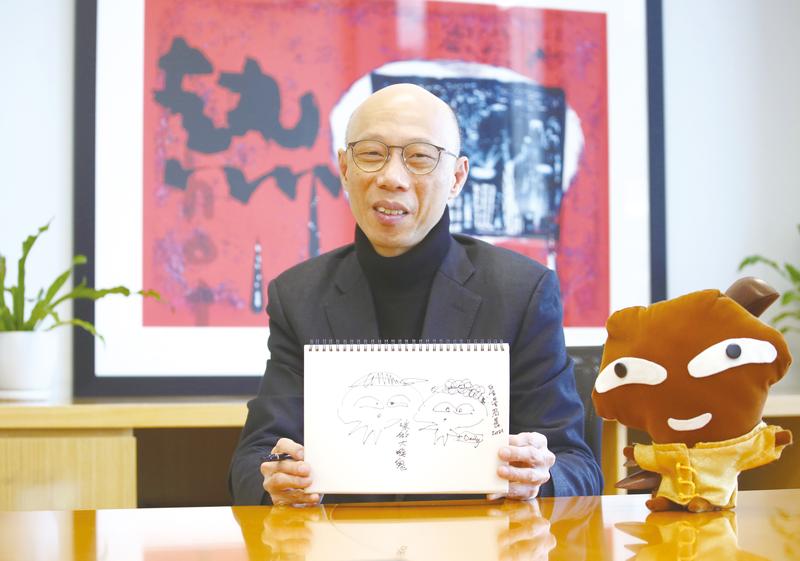
Hong Kong's environment chief has decarbonization at the top of his agenda as the government eyes technology and close cooperation with other cities in the Guangdong-Hong Kong-Macao Greater Bay Area to accelerate low-carbon transformation.
"Climate change is the prime, catch-all challenge and an urgent issue facing the whole world," Secretary for the Environment Wong Kam-sing said in an exclusive interview with China Daily.
The special administrative region government laid out its goal of carbon neutrality by 2050 in its Policy Address released in late November, two months after the central leadership committed to net zero carbon dioxide emissions by 2060.
Currently, 70 percent of Hong Kong's carbon emissions are produced by electricity generation, while transportation contributes around 20 percent and the rest is mainly from waste management.
Wong said the city has been exploring technology solutions to climate change, including seeking more zero-carbon power, accelerating new-energy vehicle popularization, and boosting the waste recycling rate.
The government in December launched a HK$200 million (US$25.8 million) program, the Green Tech Fund, to financially support and encourage local industries and academia to work on more research and development projects related to decarbonization and other environmental improvements in Hong Kong and other cities within the Bay Area.
On top of the fund, a good case in point is the city's first organic resources recovery center, which can convert food waste into biogas for electricity generation while the residues from the process can be produced as compost for landscaping and agriculture use. It began operations in 2018. The second such center is under construction and is expected to be completed in 2022. The two are capable of dealing with 500 metric tons of food waste every day.
Wong also said a co-digestion method — a way to treat food waste and sewage sludge together and generate renewable energy in sewage treatment plants — has been adopted and tested for some time.
"The effect is encouraging. So far, so good," Wong said, adding the government will expand the technology to more existing sewage treatment facilities and those under construction.
On boosting recycling, Wong said that by the end of January, the government will install a large number of "reverse vending machines" in town to encourage recycling beverage bottles. The machine will compress the plastic and notify the collectors once the device is full.
This kind of technology helps Hong Kong, a city with limited space, handle waste, he said.
Cooperation within Bay Area
Densely populated with many high-rises, Hong Kong is exporting its expertise in retro-commissioning — fine-tuning existing buildings' systems and equipment to reduce energy consumption and carbon emissions — to cities in the Bay Area, across the mainland and eventually along the Belt and Road Initiative.
In November 2018, a Memorandum of Co-operation on Retro-commissioning (RCx) of Buildings in the Guangdong-Hong Kong-Macao Greater Bay Area was signed by some governmental and non-governmental organizations and research institutions of Hong Kong, Macao, Guangdong, Beijing and Shanghai to promote green buildings in the Bay Area.
"It's not only about helping Hong Kong to decarbonize, but also working together with other Bay Area cities in a similar direction," Wong said.
Though the COVID-19 pandemic and cross-boundary travel restrictions have affected face-to-face communication and the development of some projects, cooperation between Hong Kong and other Bay Area cities didn't stop.
Wong and Guangdong officials in October participated in an online meeting of the Hong Kong-Guangdong Joint Working Group on Environmental Protection and Combating Climate Change to map out a work and collaboration plan for the new year, including both sides increasing the number of air quality monitoring sites.
Green economy
Enviromental consideration should be incorporated into economic development, Wong said, adding that Hong Kong needs to promote green innovation and technology, as well as a green economy, as part of its post-pandemic recovery.
Wong said he believes green jobs may be a solution to the unemployment created by the pandemic. The city's jobless rate rose to 6.6 percent in the fourth quarter of 2020, the highest in 16 years, amid a fourth wave of the COVID-19 outbreak.
Wong revealed the government is mulling a number of environmental initiatives that can create thousands of green jobs in the coming years.
He cited the Green Tech Fund as an example as "it would create economic and job opportunities".
He also thinks the development of the electric-vehicle industry will stimulate the economy and job market.
He said that measures to train repairing and maintenance personnel for new energy vehicles will be included in the soon-to-be-unveiled first roadmap for popularizing electric vehicles.
The government is working with some local tertiary institutes to look into offering programs to train qualified practitioners in the electric vehicle maintenance sector and help young people to develop their career path, Wong said.
Given that climate change is no longer a niche issue, he urged different sectors and people inside and outside the town to join forces and tackle the crisis together.


- Xi'an workshop lets tourists hand-make their own Terracotta Warriors
- Xinjiang's Changji welcomes visitors with festive Spring Festival flavors
- Guizhou seed specialist helps Nigerian farmers develop rice cultivation
- Ministry refines safety measures ahead of Spring Festival holiday
- Chinese scientists awarded for sci-tech innovation and leadership in frontier research
- Bilingual tour guide turns passion into dream career








