HKSAR govt should get ready for impact of US financial sanctions








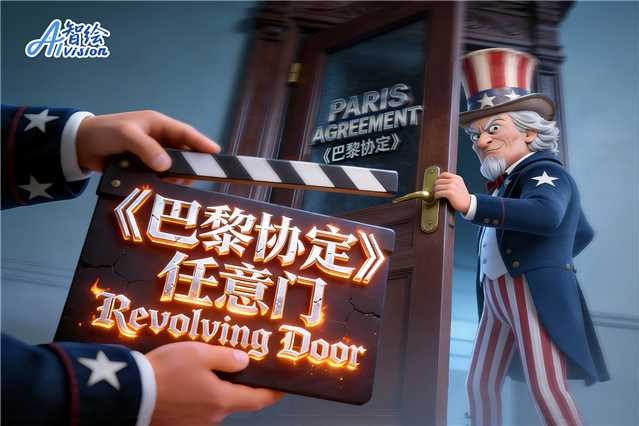
In a report issued by the International Monetary Fund on Jan 8, it has, for the first time, included US financial sanctions against China as a negative factor impeding China's economic growth. The report also cites IMF experts predicting that the Biden administration will not revise its oppressive China Policy, and that Sino-US financial decoupling will be the dominant trend.
The report, to which Hong Kong should pay attention, not only analyzes the economic situation in the Chinese mainland for the past two years, but also forecasts the US will continue to impose financial sanctions against Hong Kong and the Chinese mainland, which will, in the intermediate to long run, adversely affect Hong Kong's financial market structure and the capital structure of its overall economy, and in the short run, significantly disrupt Hong Kong's economy.
Although Washington has not directly sanctioned Hong Kong's financial markets so far, its sanctions against mainland enterprises have already sent shockwaves through the Hong Kong securities market. Following a US government ban on American investment in a number of Chinese mainland companies, American investment banks JP Morgan, Morgan Stanley and Goldman Sachs immediately delisted hundreds of derivatives traded in Hong Kong, including 484 warrants, CBBCs and inline warrants. US investment firm BlackRock announced that it would no longer invest extra capital in the affected Chinese mainland stocks.
Tracker Fund of Hong Kong is the largest exchange traded fund in Hong Kong and even Asia, with a market value of over HK$100 billion ($12.9 billion). Its manager, trustee and custodian, State Street Corporation of the US, which was caught in the middle, initially followed BlackRock's example but changed its mind two days later.
Locally, the Hang Seng Indexes gave a cold shoulder to the ban and have not delisted China Mobile, China Unicom and CNOOC from its constituent stocks. Nevertheless, if Washington continues to crack down on Chinese mainland firms and intensifies financial sanctions on the Chinese mainland, American enterprises in Hong Kong and related Chinese firms will for sure be under greater pressure. Therefore, the SAR government should have a contingency plan.
In the face of such preposterous sanctions, the central government has taken some countermeasures. On Jan 9, the Ministry of Commerce issued and enacted the "Rules on Counteracting Unjustified Extra-territorial Application of Foreign Legislation and Other Measures", which consists of 16 articles. Article 7 stipulates that "Where the working mechanism, upon assessment, confirms that there exists unjustified extra-territorial application of foreign legislation and other measures, it may decide that the competent department of commerce of the State Council shall issue a prohibition order to the effect that, the relevant foreign legislation and other measures are not accepted, executed, or observed". As the Rules are not applicable to the HKSAR under "one country, two systems", the chief executive and her governing team will need to consider enacting laws of similar nature and enforceability.
Using legal means to counter US sanctions will not only force American, mainland and Hong Kong financial institutions doing business in Hong Kong to take sides but also lead to a reshuffle of investors here. Local and mainland Chinese capital, as well as foreign financial institutions that are friendly to China, will become the dominant force in Hong Kong's financial market. Investor structure will undergo the same change.
The IMF report also lowers the GDP growth forecast of China in 2021 from 8.2 percent to 7.9 percent, because the mainland relies heavily on Hong Kong to attract foreign investments, which account for about one-third of China's total equity financing, two-thirds of its offshore bond financing and 60 percent of domestic and foreign direct investments. US sanctions on mainland enterprises may adversely affect the Chinese economy. For this reason, the SAR government will have to think about the negative impact on Hong Kong's economic growth this year.
In his recent analysis of Hong Kong's economic situation, the financial secretary was right in saying that the Sino-US rivalry is a negative factor for Hong Kong. The next step is to try and make it work in Hong Kong's favor. The SAR government can and should make the best use of the circumstances by requiring American financial institutions in Hong Kong to fully take into account the interests of investors and the stability of Hong Kong's financial market when they implement the Washington ban on mainland enterprises. It will have to, at the same time, speed up remedial legislation designed to promote structural reform of Hong Kong's financial market. The bottom line is that US financial institutions are encouraged to stay in Hong Kong but must abide by Hong Kong laws as they would anywhere else. They should separate business and politics and refuse to be used by their government as tools of evil against China. Amidst the once-in-a-century paradigm shift in global power, Hong Kong does not need to prevent the US or any other foreign financial institution from leaving, but should instead welcome mainland and overseas investors to fill the openings for long-term growth. After all, Hong Kong is an inalienable part of China and destined to thrive with the motherland.
It should be emphasized that the SAR government must do everything it can to prevent Hong Kong's economy slipping from slowdown to a recession or even depression while getting ready to handle more sanctions by the US government. To do so the chief executive and her team of principal officials need to lead people from all walks of life in achieving "zero infections" of COVID-19 as soon as possible and adopt an effective pandemic prevention and control mechanism for the "post-pandemic" new normal, so that it can resume healthy economic development.
The author is a senior research fellow of China Everbright Holdings.
The views do not necessarily reflect those of China Daily.