Rethink, readjust and restart national education campaign







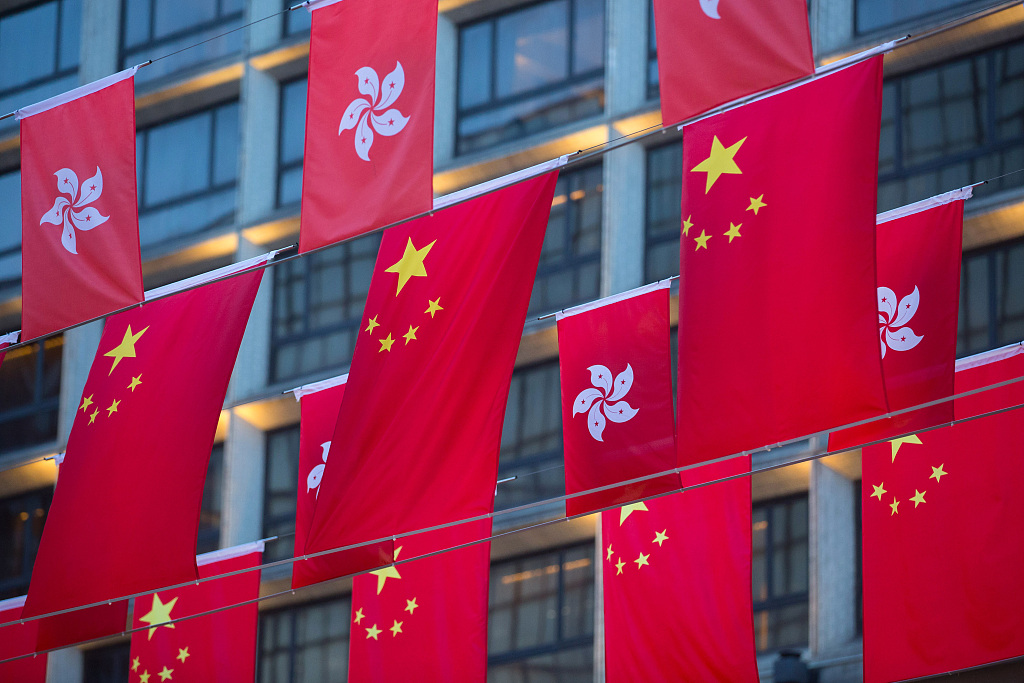
The key to ensuring the smooth and long-term successful practice of “one country, two systems” hinges on “one country”, which is characterized by Hong Kong residents’ recognition for their own country and national identity, or the so-called “reuniting people’s hearts”. The enforcement of the National Security Law has effectively cracked down on activities and separatists that pose real threats to our national security in Hong Kong, but the law can only help create a stable political environment for “one country, two systems”. “Reuniting people’s hearts” will have to be achieved through education.
The anti-extradition law movement in 2019 was a de facto anti-China unrest that highlighted the ineffectiveness of national education over the years. As a matter of fact, national education is commonplace around the world, even though it may have a different name than “national education”. In Hong Kong, the adoption of Moral and National Education into the school curriculum in 2011 has been consistently vilified by the “localists”, or separatists in disguise, with lasting damage to the moral upbringing of a generation. As the exercise of “one country, two systems” continues, we can no longer leave national education on the shelf and must bring it back online policy-wise, but from a fresh perspective suited to the new situation and political environment.
Any education policy should fit the context of the social environment, otherwise we are just imparting book knowledge that does not serve the purpose of inculcation. As education is increasingly politicized, it is not advisable to introduce a standalone subject (Moral and National Education) to force-feed students with the need to embrace their national identity. Moreover, the absence of this subject in the school curriculum framework was never the root cause of national identity unawareness among students, but rather the flawed complete-person education program short on national identity references in all subjects. For example, Chinese language and Chinese literature lessons have always been important media of Chinese culture, traditional values and national sentiment. However, Chinese language lessons in Hong Kong are designed more or less as a second language in teaching. As a result it puts too much emphasis on language skills and falls short on deeper infusion of Chinese culture in students’ mind. That is why it is necessary to upgrade the content of the current Chinese language curriculum. On the one hand, we should enhance students’ knowledge of Chinese literature and culture. Meanwhile, more efforts should be devoted to researching innovative teaching methods and attracting creative-minded frontline teachers. It will make the learning experience more natural and interesting for the students.
The Education Bureau of the SAR government should figure out the best way to involve the public in national education, since experience tells us that the government-led national education program with a top-down approach is not efficient. In fact, many people working in private education, academic and cultural sectors are in favor of enhancing national identity awareness in Hong Kong. The government can act as a facilitator to assist, nurture and make good use of these social forces. In cultivating national identity awareness, the government may as well borrow a page or two from the experience in adopting STEM education, consult with education experts, build up a comprehensive teaching framework that combines Chinese culture, literature, history and philosophy, and allocate more resources to promote the framework once it is in place. It will serve as a platform where social forces collaborate with the government in setting a trend in pervasive national education.
In recent years we have witnessed an increasing number of exchange tours in the mainland organized by various civic groups and organizations in Hong Kong. Today, the key to enhancing the efficacy of the exchange tours is no longer the quantity and frequency, but the quality of such activities. As such, the organizers should closely monitor how students feel about what they see and experience in the mainland, so that their teachers and guides will know how best to help them enjoy the exchange and appreciate the experience. To this end the government may invite organizers of these tours to share their success stories and explore how to enhance the effectiveness of such exchanges. Moreover, the government and organizations involved should stringently monitor and assess the exchange tours, such as adopting empirical studies and quality control measures, before providing subsidies. It will offer incentives for organizers to shift their focus from the number of tours and participants to the quality of the exchanges.
The national education campaign in Hong Kong must follow a pragmatic approach, because the students are constantly bombarded by information overload and fed up with formulaic instruction. Therefore, national education in Hong Kong should strive to cultivate a sense of inclusiveness in a diverse society. Pupils and young adults should be taught to have an open mind and objective mentality toward the motherland, thus becoming immune to ill-motivated disinformation campaigns unleashed both online and offline.
The author is senior research officer of the One Country Two Systems Research Institute.
The views do not necessarily reflect those of China Daily.