



Nation achieves 2020 goal for credit expansion







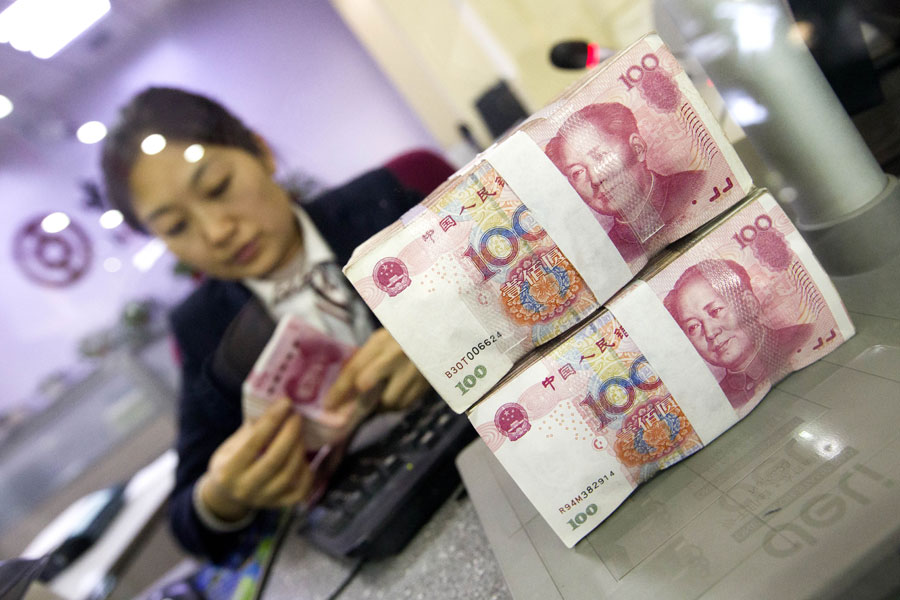
China achieved its credit expansion target for 2020 by using a large amount of funds to stabilize the economic recovery and limit damages from the novel coronavirus pandemic, before returning to normalcy, experts said on Wednesday.
New yuan-denominated loans issued by Chinese financial institutions stood at 19.63 trillion yuan ($3.03 trillion) in 2020, up by 2.82 trillion yuan on a yearly basis, according to data released by the People's Bank of China, the central bank, on Tuesday.
In December alone, new yuan loans stood at 1.26 trillion yuan, up by 117 billion yuan on a yearly basis. The total almost reached the 20 trillion yuan annual new lending target set by the PBOC in Shanghai in June. Most of the credit was used for COVID-19 control and prevention, as well as for supporting manufacturing and small companies, said experts.
China's aggregate financing, which is formed by all types of financing to the real economy, rose by 34.86 trillion yuan in 2020, higher than the targeted 30 trillion yuan. Aggregate financing reached 284.83 trillion yuan by the end of December, up by 13.3 percent on a yearly basis, according to official data.
The year-on-year growth of broad money supply or M2 moderated to 10.1 percent in December from 10.7 percent in November. The M2, a broad measure of money supply covering cash in circulation and all deposits, stood at 218.68 trillion yuan at the end of 2020.
The moderation is an indication that the central bank is veering toward a normal monetary policy stance, said Wen Bin, chief analyst at China Minsheng Bank.
"The PBOC is likely to use the medium-term lending facility and reverse repos to inject liquidity into the financial system," said Wen.
PBOC Governor Yi Gang said in an interview on Friday that monetary policy in 2021 should be stable, and liquidity should be kept at a reasonable and adequate level. The growth rates of M2 and aggregate financing, in the meantime, should match that of China's nominal gross domestic product, he said.
Lou Feipeng, a senior economist at Postal Savings Bank of China, said last year that financial institutions increased financing support to the real economy to hedge risks from the COVID-19 pandemic, and the annual increase of aggregate financing and new loans has largely exceeded the amount in 2019.
This year, monetary policy will remain prudent and stable, said Lou, who expects credit expansion and aggregate financing growth to accelerate in the first quarter. More financial resources will be guided into high-tech industries, small businesses and green development projects, he said.
Earlier, China set new regulatory caps on banks' lending exposure to the property sector to contain risks associated with excessive borrowing among property developers and homebuyers. The new rules stipulate that the six State-owned commercial banks and the China Development Bank should ensure that their property and mortgage lending do not exceed 40 percent and 32.5 percent, respectively.
New loans to the household sector have been decreasing due to tighter policies for property financing. The recent increase of COVID-19 cases in some areas may constrain consumption in the short-term, which will also reduce borrowing by households, said Wen.
"It is likely that banks affected by the new caps will adjust their incremental loan mix by cutting property-related lending. But they may opt to increase lending to consumption, manufacturing and small and medium-sized enterprises in order to maintain credit growth," said Vivian Xue, a Beijing-based analyst at Fitch Ratings.



















