



Making everything look smart







Hong Kong is blessed with the best of both worlds as it strives to realize its vision of being a regional innovation hub by capitalizing on the nation's technological push. Prominent academic Chan Ching-chuen talks to Luo Weiteng in Hong Kong.

With the coronavirus pandemic testifying to the sheer power of open data and smart technology in the epic fight against the virus, China's self-reliance in science and innovation has been thrust into the spotlight as a strategic national pillar.
The country's goals and undertakings to become a genuine sci-tech powerhouse are a timely boost for Hong Kong in striving to be a unique smart city and play a bigger role in the national technological push, says Chan Ching--chuen — the special administrative region's first academician of the Beijing-based Chinese Academy of Engineering.
In his view, such uniqueness can manifest itself in everything that looks "smart" — government, people, energy and transportation — that Hong Kong boasts of. As such, the city, having the best of both worlds, is banking on deeper collaboration and concerted efforts in the Guangdong-Hong Kong-Macao Greater Bay Area to sharpen its edge.
"This is also where the theory and practice of integration of four networks and four flows could apply," Chan tells China Daily.
The renowned engineer is working on the integration of four networks (energy, information, transportation and humanities) and four flows (energy, information, material and value) — a theory that may capitalize on the Bay Area's synergy to essentially help the nation lead the pack in the Fourth Industrial Revolution and allow Hong Kong to blaze a trail in its smart-city vision.
"Digital productivity is a typical feature that distinguishes the Fourth Industrial Revolution from the previous three. It has to be supported by the economic foundation and superstructure," explains Chan.
Through the integration of four networks and four flows, the proactive human initiative can be combined with energy, information and transportation (mobility) revolution to establish a new production relationship formed by the human-machine-physical system.
This can further stimulate the huge productivity from big data of the Fourth Industrial Revolution, which grows exponentially from the total productivity of the past three revolutions, says Chan.
He illustrates the point with examples. Transforming sewage or city waste into useful resources via hydrogen, energy management (information flow) will create added values (value flow) via coupling of energy flow and material flow. This is defined as integration of four flows.
On the other hand, using hydrogen or electricity to merge the city building network (energy/information/humanity) with the city transportation network (mobility) is defined as integration of four networks.
"The key carrier of my theory is three-fold — smart energy management, smart building and electric vehicles," says Chan.
Energy-deficient Hong Kong — home to 7.5 million people — lacks land resources and huge investment to support mass production of electric vehicles. Chan, dubbed the "father of Asian electric vehicles", believes that the future of electric vehicles lies in deeper cooperation between Hong Kong and the mainland.
Capitalizing on its impeccable strength in technological advancement and citywide adoption of international standards, Hong Kong is well positioned to be an ideal testing ground and model city of electric or even hydrogen fuel cell vehicles. The mainland — a world heavyweight in electric vehicle production — can be a manufacturer, says Chan, who sits on the HKSAR government's Steering Committee on the Promotion of Electric Vehicles.
Such smart energy and transportation visions, which may take the cue from Chan's theory, fit in well with the coal-powered nation betting on a massive green-car market and being carbon neutral in four decades from now. In September last year, China pledged to reach peak emissions before 2030 and achieve its carbon-neutral target by 2060.
The smart visions are also in line with the country's new mega infrastructure plan — a top national development priority to construct digital, smart and innovative infrastructure, including building 5G networks, artificial intelligence, internet of things and intercity high-speed rail, and setting up research and development institutions, reckons Chan.
In-depth application of AI
Compared with the steam engine, power energy and digital technology, AI lies at the heart of the Fourth Industrial Revolution.
"In fact, it's the in-depth application of AI in the digital economy that has promoted the development trend of the integration of information revolution, energy revolution and transportation (mobility) revolution," he says.
Hailed as a living embodiment of how AI changes everything, intelligent cars or connected cars virtually make vehicles smart devices and an integral part of people's digital life in a tech-savvy world, rather than simply equipped machines.
"Intelligent or connected cars mean it's not just a means of transportation. Instead, it's the terminals of broadband, the resource of big data and the node of IoT," explains Chan, who's also founding president of the World Electric Vehicle Association.
He depicts the future of infrastructure reshaped by vehicle-to-everything (V2X) technology — a term that refers to an intelligent transport system where all vehicles and infrastructure systems are interconnected. "Eventually, everything is service. Energy is service. So is mobility."
The dawn of mobility-as-a-service (MaaS) echoes the evolutionary rise of anything-as-a-service (XaaS) model, a general, collective term that refers to a broad category of services delivered through cloud over the internet.
"Indeed, the Fourth Industrial Revolution is in the context of the development of the digital economy, through the widespread application of AI technology, to build a new service-centric industry model," says Chan. "It continues the digital economy from the e-commerce, sharing economy model to 'as a service' model."
Far-sightedness
Thus, the integration of four networks and four flows is "a breakthrough, strategic and overview holistic thinking that replaces the traditional linear thinking", he says.
Chan advanced the theory in 2012 when he did research at the Institute for Advanced Sustainability Studies in Potsdam, Germany. "The National Institute of Clean-and-Low-Carbon Energy in Beijing then picked up my idea to develop the energy operation system," Chan recalls.
Chan and industry experts from Huawei Technologies, State Power Investment Corporation, the China Institute of Communications and the Chinese Society for Electrical Engineering jointly compiled and issued a whitepaper in December last year, based on the integration of four networks and four flows for smarter and broader use of the theory across the country.
Such farsightedness in black and white can be seen as another living example of how Hong Kong scientists' strengths could help to add flesh to the bones in China's aim to be a global technological powerhouse within the next five years — a lofty goal outlined in the proposals for the 14th Five-Year Plan (2021-25).
Known as a leader of Hong Kong's scientific community, Chan joined 24 Hong Kong-based academicians from the Chinese Academy of Sciences and the Chinese Academy of Engineering in writing to President Xi Jinping in 2018 calling for closer collaboration in science and technology between the SAR and the mainland.
More than two years on, he's glad to see visionary policymakers, with a down-to-earth and just-do-it spirit, being quite responsive to the call and bankrolling efforts in the country's evolving tech scene, its embrace of automation and the journey to AI dominance.
He described the Fifth Plenary Session of the 19th Central Committee of the Communist Party of China, which unveiled the first glimpse of the nation's economic blueprints for the next five years, as "unprecedented" as they attached "unprecedented" importance to innovation and technology, paid "unprecedented" attention to scientists and unlocked "unprecedented" opportunities.
At the recent annual Central Economic Work Conference, China's top policy panel struck a triumphal note with regard to the significant progress in sci-tech innovations and reinforced the theme of strengthening strategic technological innovation as one of eight key tasks for 2021.
As China charts the course of spearheading the next technological breakthrough, Chan firmly believes the development of original theory cannot be neglected.
"Closer cooperation between Hong Kong and neighboring cities can make the Bay Area a cradle of original theories, a technological base from which the theories get off the ground, and the first stop where the theories can be applied and exported to other parts of the mainland and across the globe," he said.
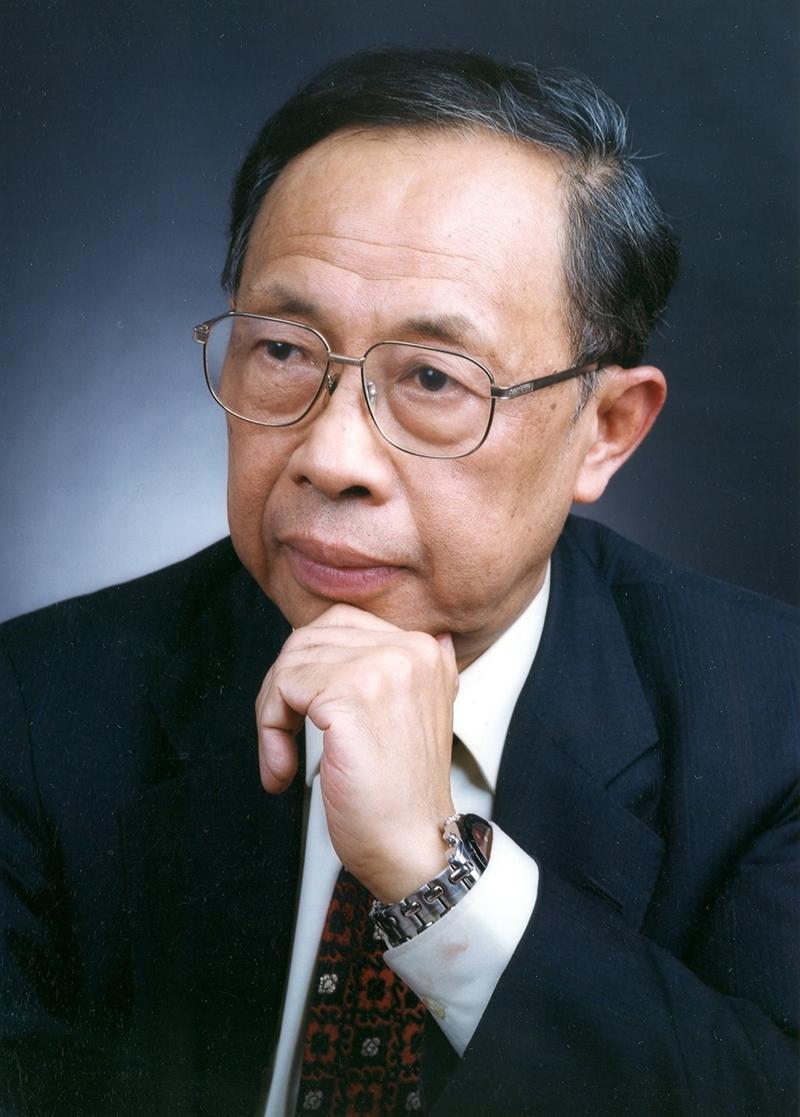
Born: January 1937, Magelang, Indonesia
Education:
1957: BSc in Electrical Engineering from China University of Mining and Technology
1959: MSc in Electrical Engineering from Tsinghua University
1982: PhD in Electrical Engineering from University of Hong Kong
Career:
1990: Founding president of the World Electric Vehicle Association
1992: Fellow of the Institute of Electrical and Electronics Engineers
1996: Fellow of the Hong Kong Academy of Engineering Sciences
1997: Fellow of the Royal Academy of Engineering UK
1997: First academician of the Chinese Academy of Engineering in Hong Kong
1997: Fellow of Ukraine Academy of Engineering Sciences
2001-2005: Chief panelist of "863" Key National Project Plan
2003-2008: Member of the Science and Technology Sector of the 10th National Committee of the Chinese People's Political Consultative Conference
Honors:
2001: Selected by Asiaweek as Asia's Best Technology Pioneer
2003: Named as "The Father of Asian Electric Vehicles" by magazine Global View
2013: World Federation of Engineering Organizations Medal of Engineering Excellence
2014: Royal Academy of Engineering Prince Philip Medal
2016: The 11th Guanghua Engineering Science and Technology Prize by the Chinese Academy of Engineering


- Yunnan's Baishuitai terraces gleam under clear spring skies
- Xinjiang through my eyes: In the fields with Gao Zhihua
- Jingdezhen holds Spring Festival celebration spotlighting opera and folk traditions
- Chinese mainland spokesperson slams Lai Ching-te's flattering remarks on Japan
- International students celebrate Little New Year immersed in Beijing culture
- Xinjiang through my eyes: Heroes against desertification












