



We have vaccines, now comes the hard part







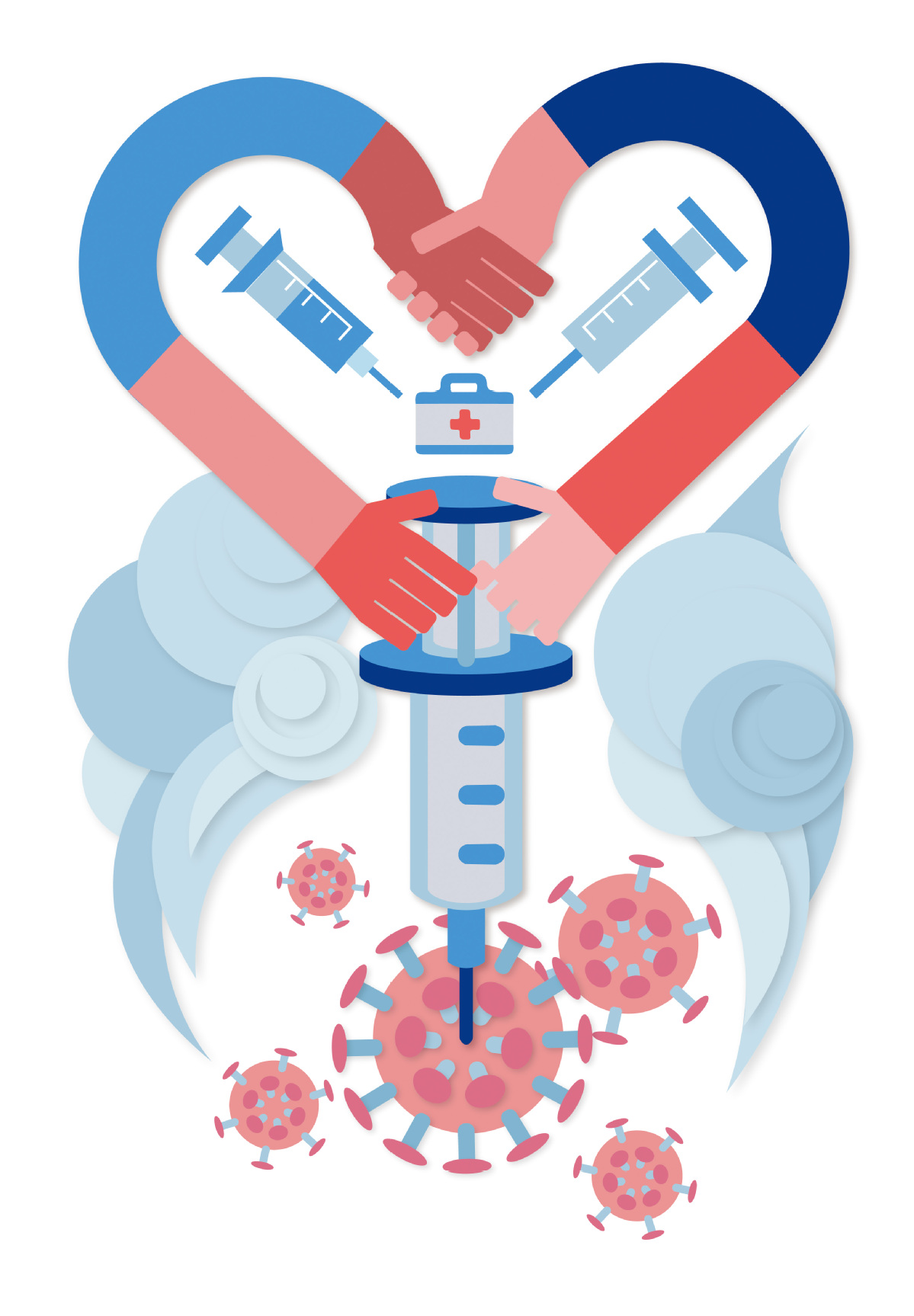
Recent good news on vaccines for COVID-19 brings us closer to ending the acute phase of this terrible pandemic. But the sense of collective relief must be accompanied by a healthy dose of reality.
While the scientific community awaits detailed data from leading vaccine developers, several questions remain. Notably, it is still unclear how long immunity would last and whether it will prevent people already infected from transmitting the virus to others. This means that mitigation measures-mask-wearing, social distancing, avoiding large crowds, and practicing good hygiene-will likely be necessary in the foreseeable future.
Experts are urging the public to continue following the precautionary measures for another reason. Even if the vaccine proves effective and is made available to the public today, getting it to everyone who needs it will not happen overnight.
Billions of doses must reach billions of people-in every country. With competition for limited resources already impacting pandemic response, high-income countries have been accused of securing disproportionate amounts of limited vaccine supply for their own population-a case of "vaccine nationalism".
All countries, especially those with fewer resources, must have rapid and equitable access to COVID-19 vaccines. Not only is it a moral imperative, global economic recovery depends on it. This is the motivation behind the Asia-Pacific Vaccine Access Facility, a $9 billion initiative launched recently by the Asian Development Bank to help its developing members procure and deliver safe and effective vaccines against COVID-19.
Another initiative, the COVAX Advance Market Commitment-co-led by Gavi, the Vaccine Alliance, the Coalition for Epidemic Preparedness Innovations, and the World Health Organization-is gearing up to provide 92 eligible low-and middle-income countries with access to successful vaccine candidates. It aims to deliver 2 billion doses of vaccine by the end of 2021.
Key and vulnerable populations, including health workers and the elderly, are slated to receive vaccines first through COVAX, and the AMC will provide doses for up 20 percent of the population of participating countries.
But this doesn't account for how and when the rest of the population in eligible countries will have access to the vaccines, or how other countries (mostly middle-income countries not participating in COVAX) will access them.
Perhaps more significantly, rolling-out the vaccines worldwide requires coordinated action within and across several complex systems-from manufacturing and storage, to shipping and distribution-and will need unprecedented global collaboration, including robust private-public sector partnerships.
Furthermore, health systems must adapt existing delivery strategies and information systems designed for child immunization to effectively distribute the vaccines among adults. The supply chains and health system capacity required to produce and distribute COVID-19 vaccines will be staggering.
We can draw useful lessons from how some parts of Asia and the Pacific have used robust public health systems and innovative approaches to contain the spread of COVID-19.
The Republic of Korea's success with testing and digital contact tracing may enable it to quickly develop digital vaccine tracking systems, and Vietnam's targeted measures to maintain public confidence and prevent widespread COVID-19 outbreaks may help to engender public trust in the safety of a vaccine. And Thailand's use of village health volunteers to support the tracing of active cases can be mobilized to support vaccination of rural populations.
The following actions should be taken by countries to ensure they are prepared to prioritize, introduce, and deliver COVID-19 vaccines.
They should adopt a whole-of-government approach to improve vaccine delivery planning. Every aspect of successful COVID-19 response in the Asia-Pacific region-from the development of test kits to the designation of treatment facilities-has involved partnerships across society. The delivery of vaccines should be no exception to this arrangement. The countries should engage key stakeholders to plan scenarios, develop a national vaccine strategy, and organize operational aspects of vaccine introduction.
The countries in the region should agree on the vaccine priority line. Who should receive the first doses of the vaccine is a complex question. So countries should assess how to identify priority groups based on their country context and specific epidemiology. They should also model different scenarios for vaccinating the general population and set expectations accordingly.
Moreover, the countries should develop communication strategies to improve vaccine uptake. Widespread campaigns will be necessary to educate the public about the benefits of vaccination, especially because many reports say some communities are hesitant to be inoculated. With vaccine coverage essential to achieve herd immunity, developing and implementing clear advocacy and communication strategies will be critical.
The countries should also strengthen vaccination infrastructure. Virtually every country in the world will have to strengthen and expand its existing vaccination infrastructure. For example, the Pfizer vaccine requires storage at temperatures below minus 80 degrees Celsius. Additionally, temperature-controlled logistics and point-of-care cold chain infrastructure are unreliable in many rural areas in low-and middle-income countries. So there is a need to strengthen vaccine storage, distribution systems and facilities, safety monitoring systems, and ways to track every dose that has been administered.
Vaccines do not save lives; vaccinations do. But vaccination in some select countries will not end the acute phase of the pandemic.
Only timely vaccination in all countries will do that. So all countries need to start preparing now.
The views don't necessarily reflect those of China Daily.
The author is chief of the Asian Development Bank's Health Sector Group.





