



World has to learn to live with COVID-19







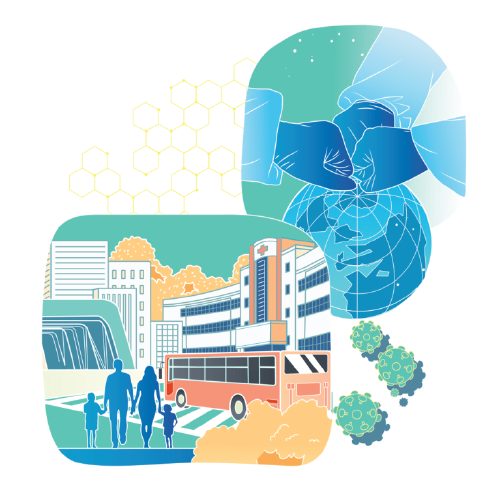
Learning to Live with COVID-19
By Erik Bergl?f
LONDON – As COVID-19 infections continue to rise in much of the world, many are clinging to the hope that the arrival of vaccines will soon restore life as we knew it. That is wishful thinking. Even with effective vaccines, COVID-19 will be with us for the foreseeable future – for several years, at least. We are going to have to learn to live with it.
An international panel of scientists and social scientists, convened by the Wellcome Trust, recently constructed four pandemic scenarios. Key variables included what we may learn about the biology of SARS-CoV-2 (the novel coronavirus that causes COVID-19) – such as the pace of mutation and the extent to which an infection elicits antibodies – and how fast we develop and deploy effective vaccines, as well as antivirals and other treatments.
In the study we considered how each of these four scenarios would unfold in five general settings: high-, middle-, and low-income countries, as well as conflict zones, and vulnerable environments like refugee camps and prisons.
Not even in the most optimistic of the four scenarios – characterized by a relatively stable virus, effective vaccines, and improved antiviral therapies – will SARS-CoV-2 be eradicated in all five settings within five years, though community transmission could be eliminated within certain boundaries. And as long as one setting is experiencing a COVID-19 outbreak, all settings are vulnerable, particularly if immunity is short-lived.
As the study shows, eradicating the virus and ending the medical emergency will require not only a vaccine that cuts transmission, but also effective treatments and rapid, accurate tests. Such a medical toolkit would have to be made available and affordable to every country, and be deployed in a manner that leveraged global experience and engaged local communities.
Yet at the moment, only one of the nine leading vaccine candidates stops the spread of the virus; the others aim merely to limit COVID-19’s severity. Moreover, while treatments for moderate and severe cases have significantly improved, they remain unsatisfactory. And testing is flawed, expensive, and subject to supply-chain weaknesses.
With such an imperfect medical toolkit, non-pharmaceutical interventions (such as social distancing and mask wearing) are vital. Fortunately, most countries have recognized the critical importance of early action, imposing strict rules to protect public health fairly rapidly. Many have also provided strong economic support, in order to protect lives and livelihoods amid lockdowns.
But short-term emergency measures like blanket lockdowns are not a sustainable solution. Few countries – especially in the emerging and developing world – can afford to lock down their economies, let alone keep recommended policies in place until an effective vaccine is widely available.
Such measures are merely supposed to slow down transmission and buy time for policymakers and health-care professionals to identify vulnerabilities and, guided by input from the social sciences, devise innovative medium-and long-term strategies suited to local conditions. Unfortunately, this time has not been used particularly wisely so far, with policymakers preferring to imitate one another’s solutions, rather than apply lessons creatively in ways that account for local conditions.
Non-pharmaceutical interventions are not one-size-fits-all. Nor is the process of rolling them back. Epidemiology – complemented by the behavioral sciences – must guide this process.
In practice, this means that advanced economies should ease restrictions only when they have robust systems in place to monitor the evolving public-health situation and to track and trace infected individuals. And they should maintain other transmission-reducing measures, such as face mask requirements, for some time. These measures must be supported by sustained investments in public health and health system capacity.
In emerging economies, full lockdowns will be much more difficult to sustain. The pressure will be on governments to find "intelligent restrictions" based on evidence regarding effectiveness, economic cost, and distributional impact.
The political dimension of the relevant decisions – for example, about whether to open schools or allow large gatherings – must also be taken into account. Leaders must identify the trade-offs of their policy options, recognizing that they may look very different depending on the economic, social, and political context.
How policy choices are made and implemented matters greatly. An effective response must emphasize both individual and collective action, with people taking responsibility for themselves and their communities. Meanwhile, as countries like Norway and Finland have shown, financing temporary "circuit breakers" – as rich countries should all be able to do – can enable progress on reducing community spread.
Political leaders who think they can avoid the pain and discontent that restrictions bring often end up imposing higher costs on their populations. Likewise, those who focus on who is doing better or worse miss the point: everyone is better off if others are doing well. Competition over medical supplies and yet-to-be-produced vaccine doses is counter-productive.
So, while individual countries must adapt solutions to local conditions, the COVID-19 response must ultimately be global. Resources, including vaccines, must be channeled toward the most vulnerable countries and population groups. They must also continue to be allocated to other public-health imperatives, such as the fight against malaria.
Already, the pandemic is fueling inequality both among and within countries. Wealth has amounted to the most potent protection from COVID-19, as it facilitates social distancing and all but guarantees quality health care. But such inequalities weaken the global community’s resilience. The most effective interventions are those that protect the most vulnerable.
Someday, the world may have the full toolkit it needs to eradicate the virus and will have to focus on building the infrastructure and implementing the logistics capacity to deploy it. In the meantime, we should stop placing our hope in a quick return to "normal," and start developing comprehensive, creative and cooperative strategies for living with COVID-19.
Erik Bergl?f is Chief Economist at the Asian Infrastructure Investment Bank.
Copyright: Project Syndicate, 2020.
www.project-syndicate.org





