Successful fight waged against waterborne killer







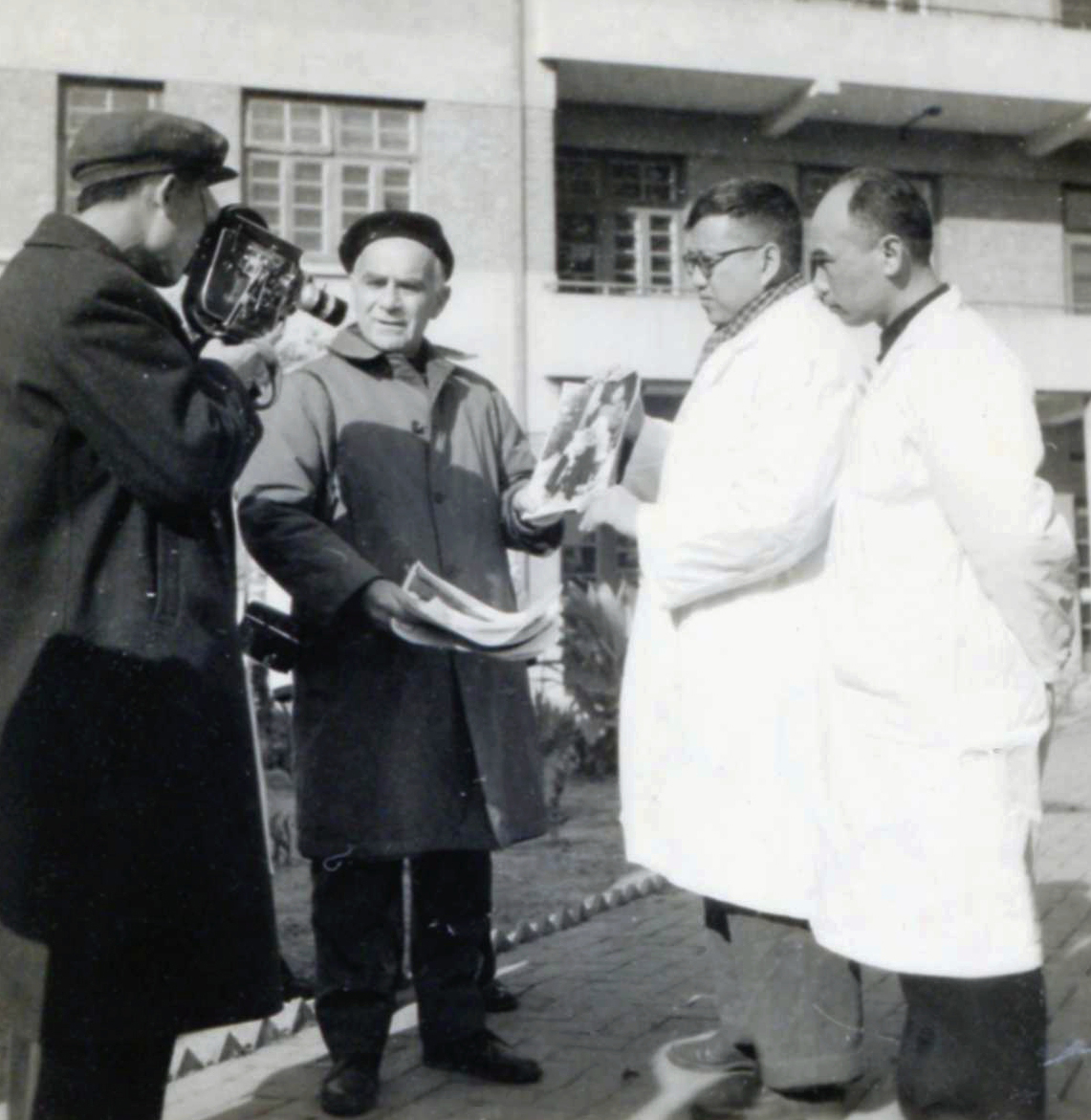
"This work has not been easy. The workers have been sent to remote areas, educating locals and combining with them to eliminate schistosomiasis. In the 1960s, some 60 percent of researchers from the institute were sent to Kunshan. They spent at least six months there every year," Li said.
"In the 1970s, researchers were sent to cities along the Yangtze to work with farmers to eliminate oncomelania (freshwater snails) on the river beaches. Inevitably, after many hours in the water, they became infected with schistosomiasis, but they went back into the water after receiving treatment."
Medical workers initially focused on saving patients who were critically ill. However, although the medicine used at the time was effective for treating schistosomiasis, it could also affect heart function.
With researchers' efforts, more effective and safer drugs from foreign countries were introduced and surgeons began to tend to patients in critical condition.
Preventing feces containing schistosome eggs from entering water was central to preventing the disease. At the time, many toilets in rural areas were not hygienic and feces were used to fertilize crops. The eggs could easily spread and pollute soil and water.
Medical workers talked to farmers, asking them not to wash in rivers or use feces as fertilizers. They set up hygienic toilets, told farmers not to drink unpurified water, and cattle were prevented from coming into contact with polluted water.
For farmers who had to grow rice or wash in river water, the researchers made protective coverings to prevent cercariae penetrating the skin.
Eliminating the freshwater snails was also crucial for prevention work, but they multiplied quickly in provinces and municipalities in East and South China.
Although the task seemed impossible, medical workers in infected areas combed all the rivers, ponds and lakes to detect the snails.
They drugged them, reinforced river banks with stones and cement to prevent the snails entering the water, and also buried them in dry soil. After being buried for three months, the number of snails fell by nearly 75 percent.
The disease now can be cured in three days through use of the synthetic drug praziquantel.
After decades of hard work, remarkable progress was made in many areas. In 1985, Shanghai announced that schistosomiasis had been eradicated in the city, while nationwide, the number of patients with the disease fell from more than 11 million in the 1950s to 840,000 in 2004.
Final cases
In Jiangsu, the last two cows were detected with schistosomiasis in 2007, the final acute case was reported the following year, and the last positive case resulting from a stool examination was recorded in 2012, according to the Jiangsu Institute of Parasitic Diseases.
In 2018, data from the national schistosomiasis prevention and control system and 453 national surveillance sites for the disease showed that five of the 12 provinces and municipalities that used to be vulnerable had made significant progress toward eliminating it. Six provinces had controlled transmission of the disease, and the transmission chain was successfully broken in Sichuan.
Also in 2018, no cases of acute schistosomiasis were reported in China.
With their experience in preventing and controlling the disease, Chinese medical workers have been contacted by other countries troubled by infections.
Schistosomiasis is prevalent in 78 countries and regions worldwide, 85 percent of them in sub-Saharan Africa.
Yang Kun, deputy director of the Jiangsu Institute of Parasitic Diseases, said it has held 59 courses to train 1,718 medical professionals from 71 developing countries in Asia, Africa and Latin America.
"In 2017, we participated in the China-Zanzibar schistosomiasis control and elimination project to help local people fight the disease. This was China's first public health program overseas," he said.
In 2013 and 2014, experts from the World Health Organization and China visited Zanzibar several times to assess the feasibility of such a project.
A memorandum of understanding on jointly controlling the disease was signed by the three sides in 2014, and two years later, the Jiangsu institute began work on the project.
"During the following three years, six groups of Chinese experts worked in Zanzibar, sharing their experience with local doctors and residents," Yang said.
"We held lectures for local medical workers, provided medicine and worked with many government organizations to improve awareness of schistosomiasis prevention."
In three years, the schistosomiasis infection rate on Pemba Island, Zanzibar, fell from 8.92 percent to 0.64 percent, Yang said.
"Our work was praised highly by the WHO and the president of Zanzibar asked us to cooperate further in controlling the disease," he added.
"We also offer medical services to some countries taking part in the Belt and Road Initiative to help local people and Chinese working in these nations."