



Hopeful Lessons from the Past







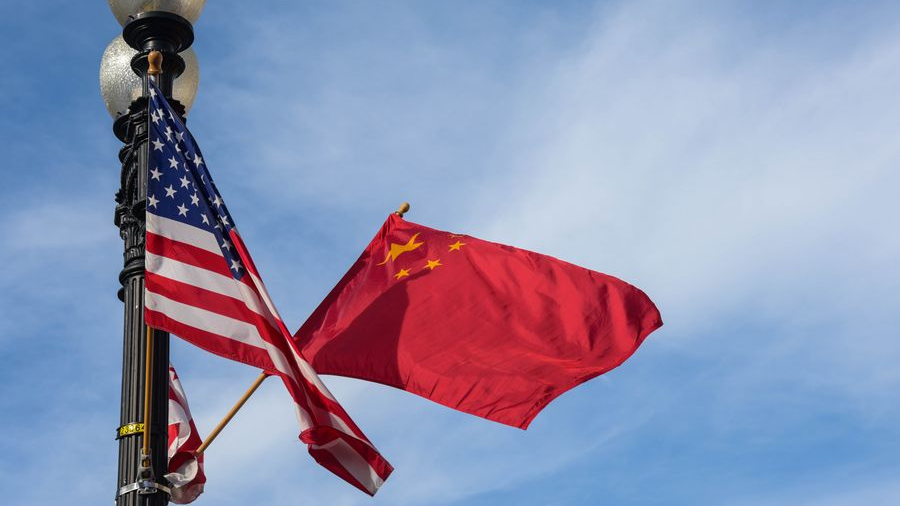
Over the past few years, we have frequently heard two judgments expressed about relations between China and the United States — that strategic competition is underway and that relations will never return to where they were.
Strategic competition is nothing new in international relations; there's nothing more normal and natural than competition between countries. It is the nature, intensity and breadth of such competition that has attracted attention to this particular situation.
China-US competition has naturally evolved from narrow topics to order-building — at least this is how the US side sees it. Many in America believe that China's international strategies, such as the Belt and Road Initiative, and the concept of a community with a shared future for mankind, are meant to formulate an international order in China's favor. That is why they define China as a "revisionist state."
In terms of intensity, there has hardly been a rivalry in recent history that was as fierce and enduring as the competition between China and the US Both parties appear to be ready to fight to the end.
As for breadth, China-US competition can be described as all-dimensional, extending from the economy and trade to science and technology, as well as to security and people-to-people exchanges. The US is even trying to extend it to the field of ideology.
No wonder there have been increasing mentions of a new cold war. Leaving aside such factors as confrontation between different blocs and proxy wars, and considering the nature, intensity and breadth of the present China-US competition, the idea of a new cold war is not without grounds. Whether or not the two have entered a new cold war or may slide into one, they and the international community must be aware that dragging the world back to a state of tense fragmentation, where countries pursue beggar-thy-neighbor policies, runs against the will of the mainstream international community and against the trend of history. Any responsible country or international actor should strive to prevent such a scenario.
It also seems obvious that China-US relations won't likely get back to what they used to be. There are at least two preconditions for the relationship to return to its past state: the right historical conditions for such a return and a willingness by both parties to get there. Neither of those conditions exists for the time being.
There is a clear sense of nostalgia when people say "China-US relations can't return to the past." But what does "the past" refer to here? Is it the past when China and the US were hostile to each other, when they were quasi-allies, when ties experienced frequent ups and downs after the end of the Cold War, or to some other period of history? Whatever past is chosen, a return is simply unrealistic. Still, it is possible — and necessary — to draw lessons from the past.
The following inspirations from China-US history are worth remembering:
First is seeking consensus. An important precondition for the thaw in bilateral ties in the 1970s was that the two sides reached consensus on opposing global and regional hegemony, which became the foundation for easing their once tense rivalry. Today, facing complex international security conditions and increasingly harsh global challenges, it's imperative for the two countries to find new modes of consensus.
Second is mutual respect, at the heart of which is respect for each other's core interests and major concerns. Whether or not China-US relations can develop smoothly hinges directly on this. In history, whenever the two met headwinds, it was when the US made trouble in connection with China's core interests — as in the 1990s, when the US stance on Taiwan was ambiguous and it engaged in direct interference.
By contrast, China-US ties developed steadily at times when the US handled issues concerning such core Chinese interests as sovereignty, security and development with prudence — as at the beginning of the 21st century, when both sides agreed on how to deal with issues involving Taiwan independence.
Third is concentration on cooperation. China and the US have different national conditions, as seen in their political systems, history, culture and development stage. This inevitably brings about diverging views and contradictions but at the same offers possibilities and opportunities for cooperation. It is thus crucial to cultivate and expand the room for cooperation. For instance, there is plenty of room for China and the US to collaborate in the field of nontraditional security and have already made conspicuous progress in such areas as anti-terrorism, nonproliferation, fighting human trafficking and climate change.
Fourth is maintaining dialogue. The development of China-US relations has never been all smooth sailing. Things would not have moved forward had the two sides failed to maintain effective communication. Even in the late 1980s, when bilateral ties were characterized by severe frustration, they managed to communiate and make progress. Maintenance of dialogue can bring a full exchange of ideas, express strategic intentions precisely and result in inclusive understanding. It is at the same time a necessary precondition for the establishment of crisis-management mechanisms.
Fifth is promoting exchanges, which refers mainly to nongovernmental ones. The development of China-US relations needs support in all dimensions, and nongovernmental exchanges are an important component. During Deng Xiaoping's visit to the US, an important subject of discussion was promoting people-to-people exchanges. Subsequent event has proved that social and cultural exchanges between the two countries not only served bilateral ties well but also brought considerable economic benefits.
Competition has always been an ingredient of China-US relations, but there have also been opportunities — and needs — for cooperation. There are always differences between countries, so it's wishful thinking that any party will transform the other. Yet, if they can't find all-around consensus, they can always find some common ground.
This means that any evaluation of the development of China-US relations should not be overly pessimistic. Even in a time of strategic competition between major powers, China and the US can find a way to make steady progress in bilateral ties based on the lessons of the past. The outcome depends ultimately on what efforts we make. The future course of bilateral relations will eventually rely on the two governments and peoples.
The author is associate research fellow from CPC Party School.





