



CAS's tech savvy helps poor counties







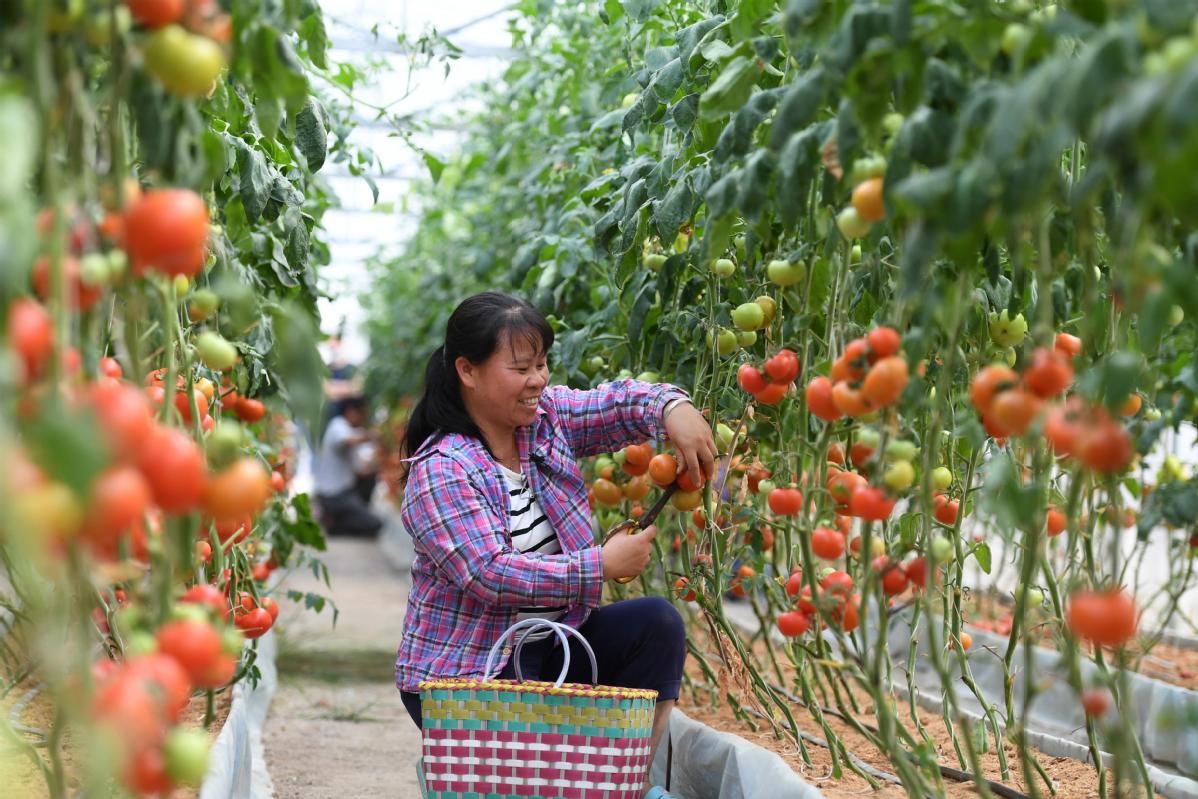
The Chinese Academy of Sciences has used its technological advantages to help lift four counties out of poverty, CAS President Bai Chunli said at a news conference in Beijing on Friday.
CAS has undertaken poverty alleviation tasks in four designated counties: Huanjiang county in the Guangxi Zhuang autonomous region, Huree Banner in the Inner Mongolia autonomous region, and Shuicheng county and Liuzhi special region, both in Guizhou province.
The academy has invested more than 20 million yuan ($3 million) annually since 2016 to fund poverty alleviation projects, and it has made full use of its scientific and technological resources and talent to offer technical support to impoverished areas.
Bai said one of the highlights of their work was that the technologies applied to combat poverty were adapted to local natural conditions. Researchers had done lots of field research on natural resources, including climate and geographical features, before deciding which technology was most suitable in each area.
In Southwest China locales like Guizhou, the numerous mountains, deep valleys and loose soil make it impossible to develop high-end industries and very difficult to grow traditional crops.
Based on local climate and the typographical features, scientists introduced kiwi fruit to this area. This planting provided a solution to the problem of soil erosion without competing with grains for land, according to Bai.
The kiwi planting area in Guizhou's Liupanshui city, where Shuicheng county lies, has grown from 1,333 hectares in 2012 to 11,867 hectares in 2019. Shuicheng accounts for about 6,867 of those hectares.
CAS subsidiary Wuhan Botanical Garden also developed a unique variety of the fruit, which was later patented and helped lift nearly 200,000 farmers out of poverty.
Bai said CAS also placed emphasis on ecological restoration as they found that environmental degradation and economic poverty closely affected each other.
Huanjiang county suffered from very severe rocky desertification, a process of land degradation characterized by soil erosion and bedrock exposure caused by the local karst landform. Local villagers have long grown corn and sweet potatoes for a living, but such traditional farming patterns have resulted in more rock exposure and soil erosion and less cultivatable land, ultimately making local people poorer.
In 1996, CAS researchers set up a pilot demonstration zone in Huanjiang and tried developing ecological industries on about 307 hectares of land with fruit, livestock and poultry that were adapted to local features. This project has helped the per capita annual net income in the demonstration zone increase from less than 300 yuan in 1996 to more than 18,000 yuan in 2019.
To stamp out poverty, it's important to motivate people to create wealth, Bai said. To help achieve this, CAS has built primary schools and kindergartens in Huree Banner and Shuicheng and has offered psychological assistance in Huree that has engaged more than 1,500 families, as well as many other local teachers and officials.
"The idea of alleviating poverty with science and technology was firstly proposed by CAS, and one thing that makes it unique is that it focuses on the long term, not just 'transferring blood', but also 'producing blood'," said Yan Qing, CAS deputy secretary-general.
"Simply investing money or building roads and bridges are not our strengths. It is necessary to take into account local natural conditions to design suitable industries so that sustainable development can be achieved," he added.
Yan said their next task is to maintain the results and integrate them into the national rural revitalization strategy.
"The poverty alleviation work has laid a good foundation from the perspective of scientific research. We will continue to promote this work on this foundation and make further contributions to the following rural revitalization," he added.














