



Govt-backed cryptocurrency could become a reality







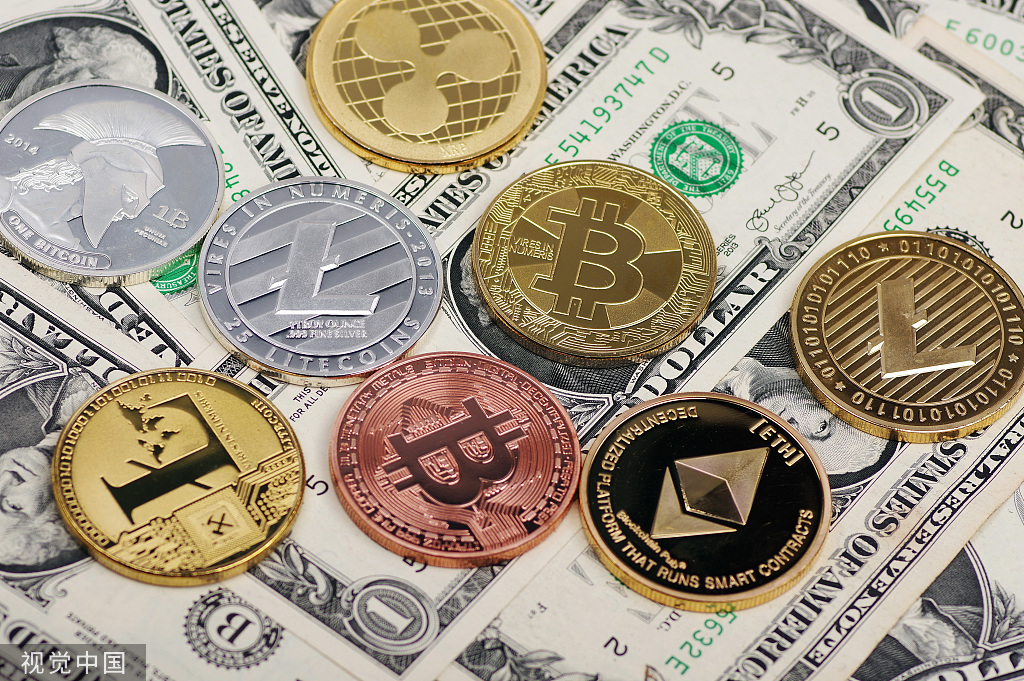
They had been around for a while, but it was not until 2017 that cryptocurrencies really gained global attention as the price of a Bitcoin surged to almost $20,000.
When Facebook announced Libra, its new cryptocurrency payment system, last year, the conversation hit all levels of society and politics. Early this year, 80 percent of central banks were working on a central bank digital currency (CBDC), 40 percent were experimenting with proofs of concept, and 10 percent, mostly in emerging economies, were running pilot projects.
But what happens in China is of key importance. The purchase and sale of cryptocurrencies are still banned in China, but things are moving quickly.
Making transactions more efficient
The People's Bank of China, the country's central bank, started research on a government-backed cryptocurrency way back in 2014. Beyond replacing cash and improving financial inclusion, the PBOC's long-term goal is to improve the efficiency of transactions across the country's financial system through the use of digital currency.
Ironically, amid all this, the COVID-19 pandemic accelerated the rise of CBDC. Indeed, viruses causing some types of common influenza have survived on banknotes for up to 17 days. So, as former Bank of China president Li Lihui said, a digital currency's efficiency, cost-effectiveness, and convenience will make it especially desirable during an epidemic.
In April, the Chinese government began testing "e-yuan" for payments in several major cities, including Shenzhen, Suzhou, Chengdu, and Xiong'an New Area, south of Beijing. The government is also expected to expand pilot programs at the venue of the Beijing 2022 Winter Olympics.
It seems, driven by several factors, China could become the first major economy to use a CBDC.
Pandemic accelerated shift away from cash
First, the COVID-19 pandemic has accelerated an ongoing shift away from cash and toward digital payments among younger populations, particularly in China. By the end of 2018, about 73 percent of internet users in China used online payment services. According to the World Bank, 85 percent of Chinese adults who bought something online also paid for it online. This contrasts with other emerging economies, where 53 percent of adults who made a purchase online in the past 12 months paid for it by cash on delivery.
Second, the central cultural question surrounding digital currencies is related to the tension between privacy and convenience. Perspectives on these two poles-privacy versus convenience-vary from culture to culture. Our (Deutsche Bank's) survey shows that only a tenth of the Chinese respondents had concerns about anonymity and traceability, well below Americans (22 percent), British (21 percent), French (29 percent), Germans (42 percent), and Italians (19 percent).
Third, young populations are generally more open to adopting new technologies; and China and Southeast Asian countries have significantly younger populations than Europe and the United States.
With more than 1.4 billion people, China has the potential to advance CBDC into the mainstream, which would prompt other countries to follow suit and devise their own digital currencies.
The next question is what China's e-currency will mean for the yuan's international standing.
The relationship between China and the world is changing. China has become one of the world's biggest consumer markets, and it has been the world's largest exporter for some years now. On the other hand, the world has been increasing its exposure to China.
Also, China has been making tremendous efforts to internationalize the yuan. From 2000 to 2015, the yuan's share as a settlement currency in China's trade increased from zero to 25 percent.
As a settlement currency, the yuan has surpassed the euro, which is now the second-most-used currency in global trade. But in international financial transactions unrelated to trade, the yuan lags far behind other major currencies-the US dollar largely dominates foreign exchange reserves and remains the dominant global payment currency.
Dollar's dominance to continue for now
In the medium term, the US dollar's dominance will continue. In the long run, if the trade deficit between China and the US widens to the extreme extent, we could see a situation in which the dollar, euro and the yuan share the global reserve currency spotlight.
In that case, the yuan could eventually dominate other currencies. And the Chinese authorities' efforts to liberalize and develop local capital markets, and develop new, innovative convenient payment apps such as Alipay and WeChat payment, could catalyze greater international use of the yuan.
But cryptocurrencies need to overcome three main hurdles to be widely used across economies. To begin with, governments and regulators should consider them legal tender. This means stabilizing prices and bringing advantages to both merchants and consumers, and allowing for global reach in the payment market. To do this, alliances must be forged with key stakeholders-mobile apps such as Alipay, Apple Pay, card providers such as UnionPay, Visa and Mastercard, and retailers, such as Tmall, Amazon and Walmart.
Cryptocurrencies not without challenges
But digital currencies could give rise to new challenges. For starters, it would mean basing a robust financial system entirely on electricity consumption. To envision a smooth transmission toward a fully digitalized platform, the financial system needs to be ready to overcome any kind of electricity shutdown or cyberattack.
Natural disasters and climate change are also issues to deal with. Natural disasters may be infrequent, but they can be crippling. For example, in 1989, Quebec was plunged into darkness for nine hours because of a solar flare. And cyberattacks remain a constant threat. Yet looking forward, we believe a new digital currency could become mainstream within the next couple of years.
The author is a Deutsche Bank research analyst, Harvard University lecturer.The views don't necessarily reflect those of China Daily.
If you have a specific expertise and would like to contribute to China Daily, please contact us at opinion@chinadaily.com.cn, and comment@chinadaily.com.cn





