


Describing the majesty of the heavens can sometimes leave people lost for words. But that is not the case for Zhang Shuzheng. The 84-year-old, an expert in studying and collating ancient books, found there are 190 variations for the name of the sun in China and 220 names for the moon. Though a smaller heavenly body, the moon's silvery appearance at night, either full or crescent-shaped, carries with it such an essence of romance that it inspires a dictionary of descriptions.
The myriad names reveal how Chinese people understand things around them, and highlight their likes and dislikes, Zhang says.
"The moon represents clarity and watery softness for the Chinese. They worship it, appreciate its beauty, and give it numerous rich meanings, signaling the people's pursuit for peace and dreams," he says.
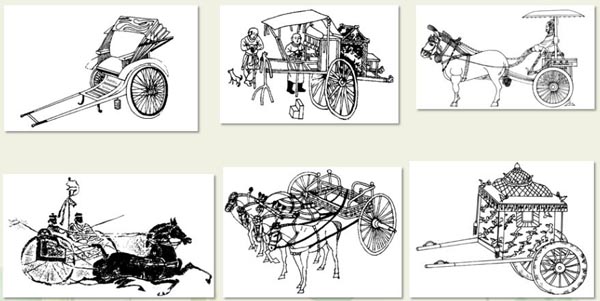
For the past 28 years, the professor from Shandong Normal University, alongside his dedicated team, has been working on a 50-volume magnum opus. Titled Zhonghua Bowu Tongkao, regarded as "an encyclopedia of Chinese material civilization", the book covers more than 80,000 elements related to almost every aspect of Chinese life from ancient to modern times. It contains 25 million words in total and 20,000 illustrations.
Given the book's quantitative content, Zhang has worked with more than 100 scholars from universities and academies.
At first, the task was tough, and not many members of the general public knew much about the traditional bowu (natural science) studies on which the book is focused.
"Sometimes we even had to use our own salary to keep the project going," Zhang recalls. The timing, though, was good. The public's interest in the essence of traditional culture has grown remarkably, he adds, and the project, it was announced in February, got funding from the National Publication Foundation.
Most of the volumes have been drafted and are currently being edited and proofread, according to publisher Shanghai Jiao Tong University Press, which refers to the project as its biggest ever.
An expert team from the National Museum of China, including its director Wang Chunfa and veteran archaeologist Sun Ji, 91, have also joined the project. Their consultancy and verification for the tome is backed up by the museum's collection of 1.4 million items.
Wang depicts the book as the first of its kind in terms of scale and systematic compilation. It is an encyclopedia featuring the collective knowledge of both tangible and intangible things related to the Chinese way of life, of production, and of recognizing the material world, or that of natural history, Wang says. "It will be a comprehensive guide presenting an overall picture of history that will help us to curate exhibitions," he adds.
For that, Hao Zhensheng, director of Chinese society of editors, considers the project as "fundamental" for the country.
The word bowu first appeared in Chinese text during the Warring States Period (475-221 BC), according to Wang. It overlaps with Western ideas in natural history and natural philosophy, and has far older origins, containing much more research fields related to man's social aspects, according to experts who attended a symposium for the namesake book project in mid-October in Beijing.
He Yan, with the Zhonglian Center for Oral History, highlights the earliest bowu book in China-a 10-volume geography-and-tale-combined account by Western Jin Dynasty (265-316) writer Zhang Hua, whose book blurred fiction and nonfiction, and recorded geographical details, mysterious beasts, historical legends, animals, plants, and fairy tales.
Bowu studies have been continuous in the country, but research was done in a scattered way, instead of as a branch of learning, thus few comprehensive, systematic historical documents were found, he says. Only in recent years has there been a revival of publishing and reading traditional bowu books.
With the help of influencers in the field, young people have begun to be drawn into the colorful world of bowu studies. For example, they are attracted by books studying the plants and birds in Shijing, or the Book of Songs, an ancient Chinese collection of poems; and many are fans of Bowujun, the online username of science writer Zhang Chenliang, with the Bowu (Nature History) magazine. The writer has published three books since 2016 about his narration of a Qing Dynasty (1644-1911) illustrated book on marine creatures.
Another book from 2014, a Wenjin Books Award winner by Sun Ji, a staff member from the museum, also features ancient Chinese material culture, and the items used for interacting with nature and the world around them.
The tome will be more like a complete summary of bowu studies, revealing not just the scientific study of nature, but more about people's understanding, experiences and emotions. "It offers a Chinese perspective in man-nature relations," Wang says.








