



The world body needs to reflect new global realities







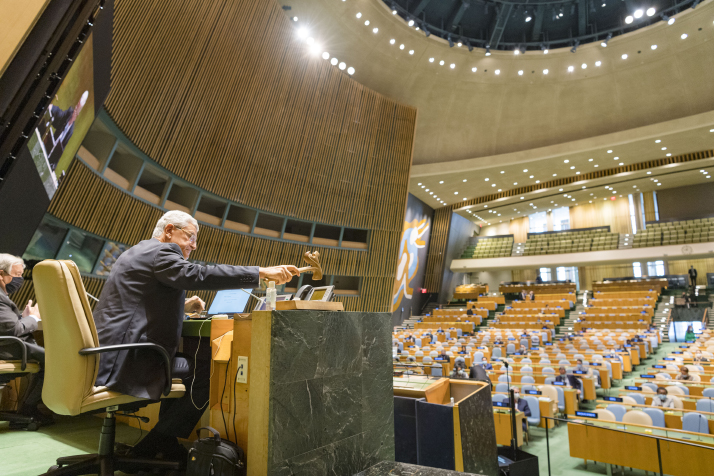
The recent speeches by world leaders to the UN General Assembly were by in large notable for three reasons. First, most countries acknowledged the 75th anniversary of the international organization, praising its good work while recognizing the need for reforms. Second, most also expressed a commitment to multilateralism in global affairs, citing the ongoing novel coronavirus disease (COVID-19) pandemic as a compelling justification for international cooperation. Third, the US administration, however, as expressed by President Donald Trump himself, used the venue to denigrate the organization and attack China in particular.
In a typical US presidential election year one can expect normal niceties and diplomacy to be sacrificed for whatever wedge issue candidates are using to shave votes from each other given perpetually tight races and polarization. US presidents are most powerful in terms of their almost unchecked power in foreign policy, and when a president is struggling domestically like Trump is presently, it's not uncommon to resort to shows of strength in foreign affairs.
The only problem is that American power isn't what it used to be, comparatively. Sure, the United States is still the most powerful country in the world, but COVID-19 and increasing evidence of a broad and deep systemic failure in governance that has accelerated during the pandemic have seen a large number of leading figures conclude that the greatest existential dangers facing the country are those it has created for itself.
Meanwhile, Trump's attempt to export America's problems by blaming and holding others responsible accounts for his near constant attacks on strategic competitors and allies alike, and his increasing abandonment of international organizations and international law has made his rhetoric a tired echo, particularly in a speech to the world's leading multilateral organization.
A new era
Chinese President Xi Jinping has repeatedly signaled a "new era," one in which China is transitioning from being a major country to a major power, but he has also used the description more broadly.
While almost everyone would now agree that the pandemic alone is a clear threshold signaling a new era, multilateralism has reached a critical threshold as well. This was made clear in Xi's speech to the UN General Assembly on September 22 where he reaffirmed China's support for the UN and other international organizations, called for global cooperation to resolve the pandemic, offered Chinese assistance for a global vaccine strategy, and called for more South-South cooperation and equal treatment for developing countries.
In 2009, Yu Keping, one of China's leading intellectuals, observed that China typically joined international organizations as a means of building, not surrendering autonomy. What's most interesting of course is that other countries, particularly the United States, allowed China to join these groups with the understanding that it would in some way help contain China's rise and preserve above all American power.
That American power has declined despite these efforts and that China has sustained and reinforced sovereignty and autonomy while becoming more integrated globally signal that Beijing's strategy has worked while Washington's hasn't. So while we might ascribe Trump's anti-multilateralism, xenophobia and racism and so on as being symptomatic of a man out of step with the times, it's not surprising the United States has become less enchanted with a system it can no longer manipulate for its own national interests.
This brings us to one of Trump's most incredible criticisms in his speech, namely, that the UN is too susceptible to authoritarian governments. Is it not the case that the US Government historically has been authoritarian in its foreign policy?
Is it not the case that the United States has historically manipulated the UN by hook or by crook to advance its own agenda? Is it not the case that the US presidency—which historian Arthur Schlesinger described critically as the "imperial presidency" given its power in foreign affairs—has operated in authoritarian ways during the Cold War era following the establishment of the UN, and more so after the dissolution of the Soviet Union, and even now, with an unabashed recourse to unilateralism?
Is it not therefore strangely fitting if not ironic that Trump's criticism, which he obviously directed at China, was in fact more a truism of the United States' own history with the UN?
Yu's observation of why China joins and supports international organizations remains valid in part but the sometime criticisms from other quarters that China has not taken an active leadership role in international organizations no longer are.
It's clear that China is embracing a leadership role in the absence of the same from the United States, offering to be a bulwark for multilateralism and the international system, including the UN.
Additionally, China has asserted the need for more justice for developing countries in these organizations. As the only developing country among the five permanent members of the UN Security Council, as one of the new global health powerhouses, as a leading source of new tech and innovation and outbound foreign direct investment, and as the home of the Asian Infrastructure Investment Bank, China's willingness to both play by the rules and contribute to global post-pandemic recovery and development needs ought to appeal to most countries in the world while also standing in stark contrast with what is coming now from the United States.
The need for reforms
The need for reforms in the UN and other international organizations is compelling. The UN itself was created under very different geostrategic circumstances that existed at the end of World War II, and while the United States eventually became the world's sole superpower, that position is eroding. This is to say that the system needs to be substantially reformed in order to reflect new global realities, including new dangers like global warming and the reemergence of great power competition, as well as the ongoing danger of a global pandemic and likely more to come.
As a rising major country committed to multilateralism, it's clear that China has many important roles to play in reforming these organizations. On the negative side, a key objective must include organizing international resistance to US reform proposals that either are disingenuous, as we have seen with US proposals for the World Health Organization, or aim to twist the UN and other organizations once again in ways that privilege its own interests above others.
On the positive side, China needs to take a global leadership role helping reform these organizations for better global governance, peace and security. To do this, it needs to prioritize these efforts in its foreign policy, study and share with others how these organizations should be reformed, join working groups with other nations for consultation and consensus building, then help push the results through the international organizations diplomatically and democratically and ensure they are implemented effectively.
And it should do this above all because no other country in the world is more experienced with the challenges of reforming large organizations and bureaucracies than China is. China is literally the global leader of reform.
If we look at the Chinese experience over the course of reform and opening up—no other country has demonstrated a similar capacity for that kind of work. Conversely, other leading countries, including above all the United States and to a lesser degree others including Japan, have become stuck in declining positions because they are unable to reform even themselves. So in this sense, China has the capacity, opportunity and responsibility to help lead reforms.
The author is Professor of politics at East China Normal University in Shanghai.





