


An unexpected host for Westerners







Several Europeans joined China's imperial court throughout the centuries following Marco Polo, Wang Qian reports.
Many scholars and historians view the Forbidden City as not only China's imperial palace from 1420 to 1911 but also as a bridge connecting the East and the West.
At the time when the West got its first glimpse of ancient China through Marco Polo's travel writings in the 13th century, the country had little contact with the outside world until Italian Jesuit priest Matteo Ricci became the first Westerner to make his way to the imperial court in 1601.
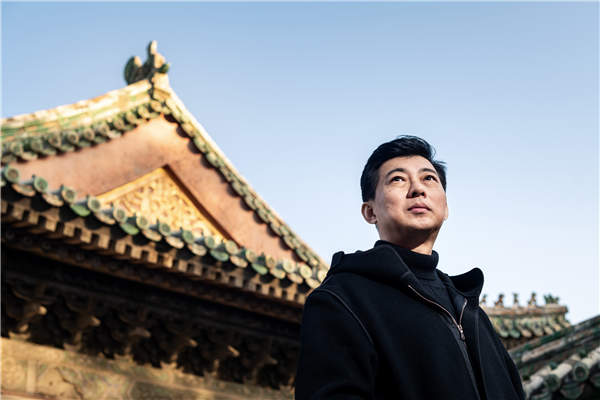
"The Forbidden City had provided a bridge for communication between China and the rest of world… These missionaries, like Ricci, brought new knowledge in such subjects as astronomy, mathematics, medicine, geography and art to China," says Zhu Yong, director of the Palace Museum Cultural Communication Institute.
Their letters and notes about China provided firsthand reports to Europe, which described a country with an advanced civilization evolving outside of the Biblical history of God's interaction with man, Zhu says.
"Looking at the Forbidden City from a Western perspective will broaden our observations and our understanding of the palace," he adds.
Ricci is widely regarded as the founder of Chinese studies in the West. He didn't realize his dream to come to the emperor's court in Beijing until after he had spent about two decades in the country, totally adapting to China, including its customs and language.
He described his journey in his letter: "I am discovering little by little."
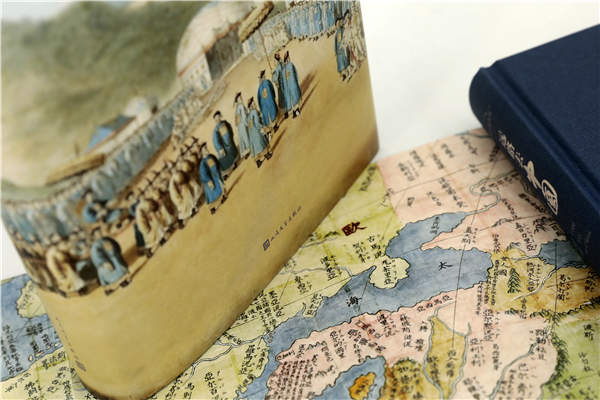
Zhu retraces Ricci's journey in China in his book, Yuanlu Qu Zhongguo (Long Way to China), which was published in Chinese in 2019.
Ricci arrived and settled in Beijing in January 1601, under the order of Emperor Wanli (1563-1620), according to the book.
After he entered the Forbidden City, Ricci wrote: "The great courtyards in the Forbidden City palace…could have held 30,000 people, and the emperor's elephants, the 3,000 royal guards, and the huge walls all increased the sense of majesty and power," according to The Memory Palace of Matteo Ricci by US historian Jonathan Spence.
Spence quotes Ricci as writing that it took eight packhorses and more than 30 porters to carry his ritual gifts to Beijing. These included three paintings, a large clock with hanging weights, a spring-driven desk clock and a harpsichord, which was believed to indicate how European powers should show their wealth and skills to the emperor.
The attempt failed. Although the clocks caused a stir in the court, Zhu says the emperor viewed them as "diabolical tricks and witchcraft "that wouldn't advance social development.
Ricci never got the chance to meet Ming Dynasty (1368-1644) Emperor Wanli in person. But his two chiming clocks attracted the emperor's interest, and Ricci was allowed to reside in Beijing to maintain them.
The Palace Museum today houses more than 1,500 Western clocks from the 17th to 19th centuries. They're generally considered to be among the best pieces in existence worldwide.