



Reforms to enable State firms' tech innovation







More measures in pipeline to boost exports, capital management, R&D, overseas operations
Alongside China's goal of building a group of world-class State-owned enterprises that lead in high-quality development over the long term, the government will roll out a number of reform measures to further enhance their core technology innovation, exports and capital management, said a senior State asset regulator.
Weng Jieming, vice-chairman of the State-owned Assets Supervision and Administration Commission of the State Council, said the government will pay more attention to SOEs' returns in areas such as investment into research and development, overseas operations, net assets, revenue margins and added value to boost their quality and efficiency during the post-pandemic era.
Since the SASAC launched a program to build more world-class companies in late July, both centrally and locally-administrated SOEs have moved quickly to study and formulate implementation plans for optimizing their resources and management efficiency.
Among 97 central SOEs, 73 have now mobilized and assigned work across their groups by convening meetings alongside other means. Thirty-four local State asset regulators have issued guidelines to the supervised SOEs.
As the central government will release its three-year action plan for State-owned enterprises (2020-22) soon to enhance the nation's efforts to steer the economy toward innovation and technology-driven high-quality growth, the official said that for the next stage, the SASAC will create a sound environment for reform so that businesses of all kinds of ownership can realize integrated and common development.
Thanks to China's early recovery from the COVID-19 pandemic, most of the central SOEs should strive to achieve relatively steady growth in the second half, said Weng, adding that more efforts should be made to deepen reforms, defuse major risks and optimize and stabilize industrial and supply chains.
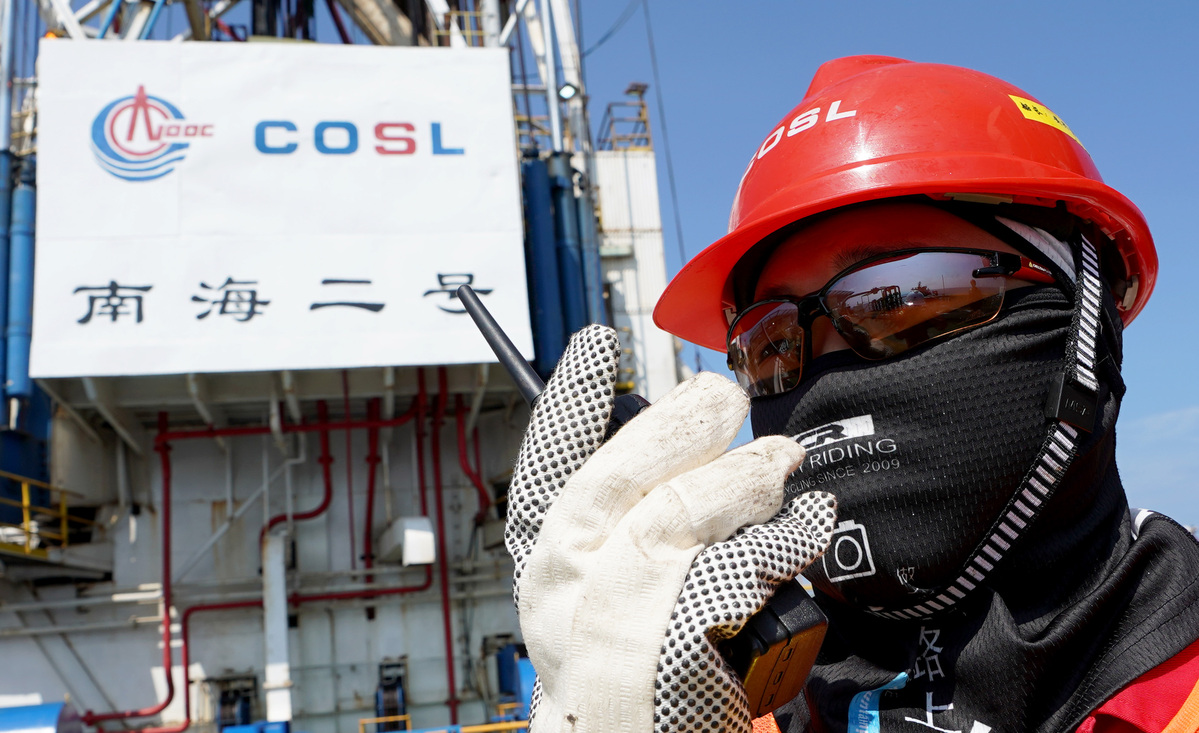
Eager to diversify its business scope, China National Offshore Oil Corp and French energy group Total SA-one of the top four petrochemical engineering companies in the world-reached an agreement on a liquefied natural gas trade deal through the Shanghai Petroleum and Natural Gas Exchange's (SHPGX) online international LNG trade system last month.
This was the first online international LNG deal, showing that the LNG business has stepped onto the digital stage.
The world's third-largest and China's largest LNG importer-CNOOC-has been seeking innovative operation models. The company joined hands with the SHPGX and launched several projects including one-stop LNG importing, transmitting natural gas from southern to northern regions and advance sales for heating in winter.
CNOOC also began using multi-modal transport in LNG tanker logistics, which contributed to clean energy supply.
Jilin province-based Changchun Yidong Clutch Co Ltd, a Shanghai-listed company and a subsidiary of China North Industries Group Corp Ltd-a Beijing-based central SOE-saw sales revenue and profit of its main business surge 16.31 percent and 66.27 percent, respectively, on a yearly basis in the first half, thanks to its shift of innovation focus alongside timely work and production resumption in the second quarter.
Even though China's auto manufacturing sector, especially passenger vehicles, saw a decline in profits over the past two years, Changchun Yidong started to focus on producing high-horsepower clutches and next-generation vibration dampers for trucks and construction machinery by setting up new research and development facilities in Suzhou and importing high-end stamping equipment from Austria and Italy over the past several years, as well as establishing a joint venture in Russia in 2019.
Meng Qinghong, Changchun Yidong's president, said the company to date has provided auto parts, in particular clutches, to more than 50 auto factories. Its clutch products for heavy trucks have a 26 percent market share in China.
"Apart from focusing on making heavy-duty truck clutch products, we will produce more clutches for commercial vehicles such as medium-duty trucks, light trucks and buses to enrich our sales categories. In terms of market structure, a strategic layout of parts support, after-sales and exports-or the 'three pillars' strategy-will be gradually formed," he said.
China's auto market has gradually recovered from the coronavirus pandemic with five consecutive months of positive growth. The market is expecting a better performance in the traditional peak months of September and October, according to the latest prediction and statistics released by the China Association of Automobile Manufacturers, which said August sales reached 2.19 million units, up 11.6 percent year-on-year and 3.5 percent month-on-month.
The CAAM said a consumer confidence boost followed the government's launch of consumption season activities and promotional events for new energy vehicles in rural areas.
Experts said the current headwinds brought by the pandemic and weak global demand have highlighted the necessity of relying on reforms to unleash vitality for sustained growth. The layout and structure of the State-owned economy will be adjusted around the goal of building a modern economic system.
Key fields of reform now include market-based allocation of production factors, SOEs, the fiscal and financial system, the piloting of free trade zones, the further opening of the country to foreign investment as well as continued stability of the supply chain, said Liu Xiangdong, a researcher at the China Center for International Economic Exchanges.
"Through mergers, acquisitions and restructuring, State-owned capital should gravitate more toward emerging industries, advanced manufacturing and trade in services," said Liu Xingguo, a researcher at the China Enterprise Confederation.
He said the capital market will play a major role in SOE reform as a platform for financing, stock issuance as well as mergers and acquisitions.




















