



Firms bet big on foldable devices







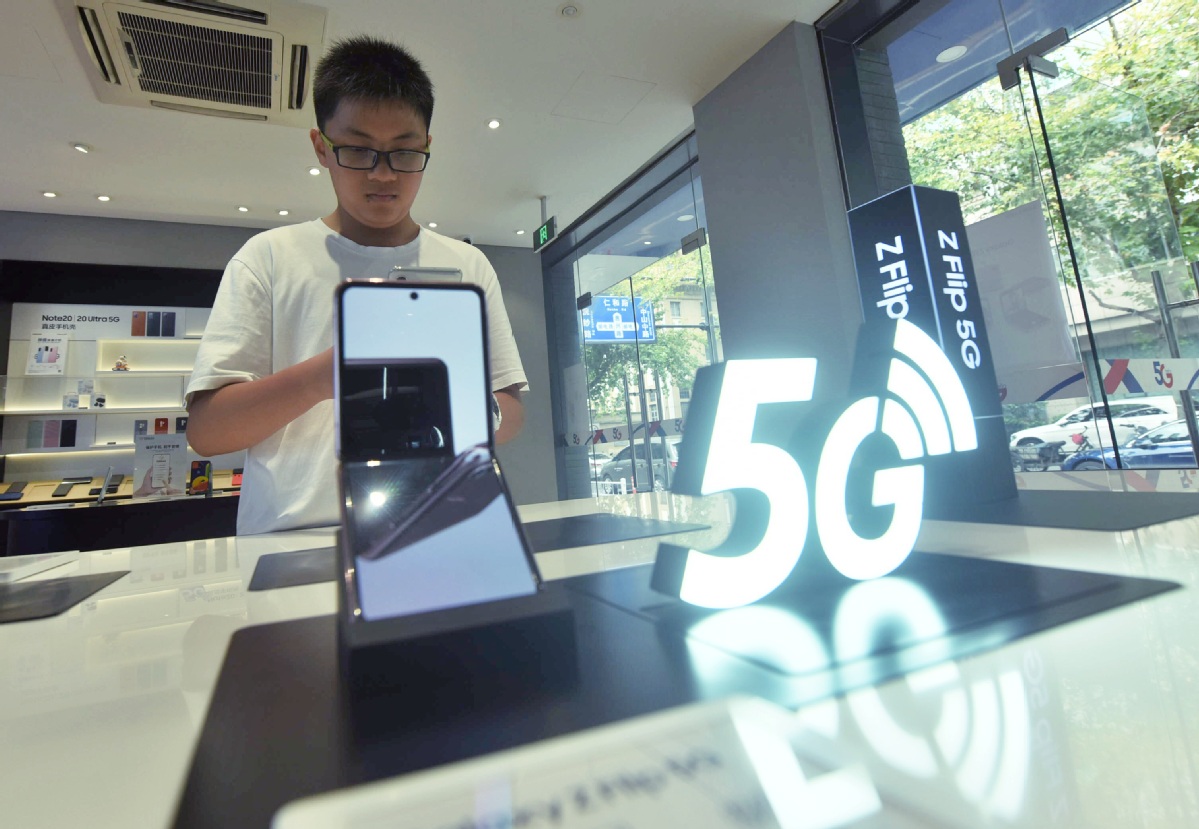
Smartphones that can double up as tablets promise to make a fortune for manufacturers
Smartphone makers are betting big on foldable screens that could be used either as tablets or as pocket-size phones.
This innovation is expected to improve handset utility and make their designs eye-catching, thereby helping revive a COVID-ravaged market.
According to a report from Strategy Analytics, a market research firm, global foldable smartphone shipments will grow from under 1 million units last year to 100 million by 2025. Foldables will be the fastest-growing segment in the premium smartphone market in the next decade.
"Samsung was the world's No 1 foldable smartphone vendor last year, followed by Huawei," said Ken Hyers, director of Strategy Analytics. Every major phone maker, including Apple, should have foldables in its portfolio by 2025, he said.
Some of the factors that are holding back the foldables market are high pricing, low yields of bendable displays and concerns if the hinges or screens are durable as to last longer than several months. They will be addressed in the long term, Strategy Analytics said in its report.
Manufacturers have stepped up efforts to roll out foldable smartphones recently. South Korea-based Samsung Electronics Co Ltd unveiled the Galaxy Z Fold 2 5G, its latest foldable smartphone, in China last week.
Priced 16,999 yuan ($2,483), the gadget serves as a 7.6-inch tablet when fully opened. It transforms into a phone when folded, with a 6.2-inch display that fits a palm.
Last year, Samsung launched the Galaxy Fold, its first consumer-ready foldable smartphone. In February, it launched the Galaxy Z Flip.
Earlier this year, China-based Huawei also unveiled the Mate Xs, its latest foldable smartphone.
On Thursday, US-based Motorola, which is owned by Chinese technology company Lenovo, rolled out the wallet-sized Razr. With the premium 5G-powered foldable mobile phone, Motorola hopes to grab a slice of the foldables pie in the world's largest smartphone market.
Priced 12,499 yuan, the Razr is equipped with a 2.7-inch quick-view touchscreen display on the front, and a 6.2-inch organic light-emitting diode, or OLED, foldable display on the inside of the phone.
Jia Mo, an analyst at Canalys, a market research company, said consumers need to spend more to buy foldable smartphones that have same technical configurations compared with other handsets. That is because foldables have low display yields and higher design costs as of now.
However, prices of foldables will likely fall in the future, and they will find broad application scenarios given their two-size screens, Jia said.
Data from IDC, a global market consultancy focusing on technology, showed the world's smartphone makers shipped 275.10 million units during the first quarter of 2020, down almost 12 percent yearon-year.
Meanwhile, demand for displays that use active-matrix organic light-emitting diode, or AMOLED, technology is surging with the arrival of foldable smartphones. Flexible display panel makers in China are set to witness explosive growth in the next few years, market experts said.
AMOLED displays are more flexible with faster response times, high contrast and wide visual angles compared to traditional liquid crystal display, or LCD, panels.
According to Omdia, a market research firm, the market for AMOLED smartphone displays is expected to expand by 9 percent this year, despite the overall negative impact of COVID-19 on handset sales.
Shipments of flexible AMOLED panels used in smartphones are set to soar to 513 million units this year, up from 471 million units last year, suggesting the product's penetration is deepening rapidly, Omdia said.
"Smartphone brands across the world are increasingly migrating their product lines to AMOLED display technology," said Brian Huh, principal analyst of small/medium displays at Omdia.
Chinese smartphone makers are expected to increase the number of high-end smartphones integrating AMOLED panels this year, he said.
Huh also said Apple Inc is expected to expand its AMOLED iPhone lineup to three models this year, up from two last year.
Samsung currently dominates the global flexible AMOLED sector, with more than 80 percent market share, but domestic display panel suppliers such as BOE Technology Group Co Ltd, Visionox Technology Inc and China Star Optoelectronics Technology Co Ltd, which is known as CSOT, a panel supplier and subsidiary of home appliances giant TCL, are doubling down on flexible screens mainly used in smartphones.
BOE has three sixth-generation AMOLED production lines. It started mass production of the flexible panels from its facility in Chengdu, Sichuan province, in October 2017. The panels have already been used by more than 10 smartphone manufacturers.
CSOT announced its sixth-generation flexible AMOLED display panel production line in Wuhan, Hubei province, achieved mass production on Jan 1. The company will make 48,000 modules each month.
Li Yaqin, president of Sigmaintell, a Beijing-based market research firm, said demand for flexible OLED panels used in foldable smartphones is estimated to surge 140 percent this year on the back of the commercial application of 5G technology. Li said panel makers need to improve their yield rate capacities and reduce production costs.
"The penetration rate of OLED in the mobile market is expected to reach 50 percent by 2024," Li said, adding about 60 to 70 percent of sales revenue will be contributed by OLED by then.




















