



Sino-American relations: A bleak tomorrow







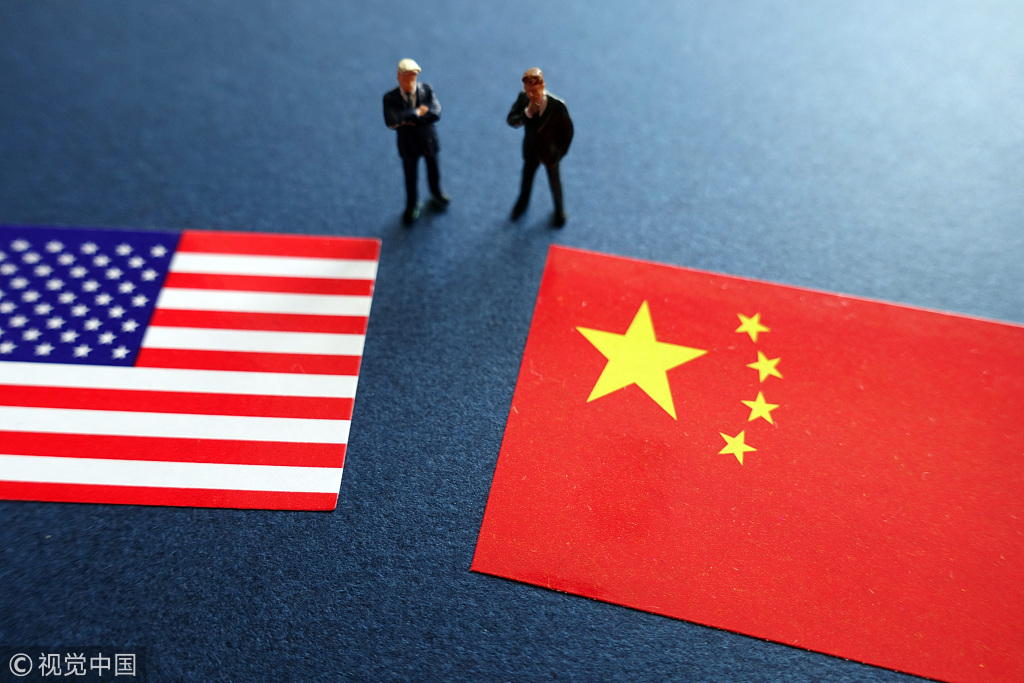
China and the United States do not have much left to say to each other. Relations have never been worse since official relations were established 41 years ago. Recent events are not reassuring about the state of the world. Since the emergence of China as an economic, military, technological and political power, the United States is increasingly waging conflicts with China as it sees its place as a "global hegemon" being threatened.
Given the various recent events, the United States is showing weakness while its power is increasingly declining. The United States still has an advantage, but it is shrinking over time and this is worrying the American ruling power. As a result, Washington is increasingly clashing with Beijing to maintain its concept of "America first".
Among the American elite, some of them are aware that what is good for Beijing is, in fact, disastrous for the United States. This is what Robert Lighthizer, US trade representative, literally said in March 2018 before the Senate: "These are things that if China dominates the world, it's bad for America". This explains why President Trump launched his trade crusade, but the stakes go far beyond the economic relationship between both states. As former adviser to President Steve Bannon commented in his cynical though insightful style: "The United States and China are engaged in an 'economic war' from which there can be only one winner".
This war waged by the United States has not only impacted their economy, but also the world economy. While this hegemony vis-à-vis Germany, Japan, Latin America, Russia or the United Nations is likely to result only in imperial extensions and a likely long-term US decline, "US attempts to establish hegemony over China tend towards more explosive futures and are in any case doomed to failure". According to Chalmers, China is the world's most crowded nation with the fastest growing economy, so it is illusory to think that it can be "contained". Washington, as well as the others, will just be able to adapt to it.
The current state of Sino-American relations once again corroborates that a "new Cold War" is ahead, caused by the structural and ideological conflicts between the United States and China, and even the Western world.
US Secretary of State Mike Pompeo gave a meaningful speech in the Library of former President Richard Nixon on July 23 in California, marking his speech with a historic reference. It was Nixon who, half a century ago, initiated US policy towards China. However, Pompeo rejects it, stating that this approach was a failure.
According to him, China has not turned into a free country "as expected" by the United States, despite the measures taken by Washington to encourage openness and reform in the country. This new speech echoes an official White House document published in May which made the same observation of a failed policy of engagement. In fact, it represents a synthesis of the successive speeches on China in recent days by the most senior officials of the American government.
The radical change in Washington's position toward China is part of ongoing developments in the Sino-American relationship over the past decade. Some of the seeds of this hostile rhetoric do already appear in the debate led by American policymakers and experts on China in 2015. Trump's inauguration has only accelerated the implementation of these trends. In fact, Vice-President Pence's speech two years ago at the Hudson Institute set the tone. Moreover, the growing American hostility to China, regardless of political leanings, provides a solid basis for this political change. Polls show that distrust of Beijing has grown steadily in recent years, recently reaching an all-time high: According to an April poll survey from Pew, 90 percent of Americans believe China is a threat to the United States, and 66 percent have a negative view of China, whether they are Republican or Democratic sympathizers. These results show that while America is deeply divided on many issues, there is a political consensus that unites all sides: stop China's expansion.
The crisis between China and the USA is intensifying following the recent closures of consulates in China and the USA. Whether in diplomacy, business or civil society - relations are at their worst in 40 years. The possibility of a partial military conflict between these two giants due to certain controversial subjects, such as the South China Sea, can no longer be ruled out. China and the United States have been making serious preparations towards this. Several American aircraft carriers merge in the region and military exercises on both sides are intensifying.
This tension between the two shores of the Pacific Ocean may prove useful for both Donald Trump and Xi Jinping to divert attention from internal social problems. It might help in the re-election of one and the consolidation of the power of the other. Should Joe Biden win the election in November, there is no doubt that the Chinese political line in the United States will remain basically the same.
Recent months have been marked by a significant turning point in the Sino-American relationship. Tensions will continue in coming years. It remains to be seen whether the other countries of the world, particularly European ones, are ready to face an international situation that will be largely determined by this new situation.
Should the forthcoming talks between both superpowers to find a "consensus" fail, the tensions between them will further deteriorate. This will cause collateral damage to the partner countries, both developed and developing.
Let us hope that these talks will end with the most "thoughtful", "common" and "concrete" agreement ever, which will at least give some hope for better prospects and the possibility of ending the year 2020 peacefully.
The author is PhD scholar at the School of Politics and International Studies in Central China Normal University.





