



White House will hurt US financial industry by delisting Chinese firms







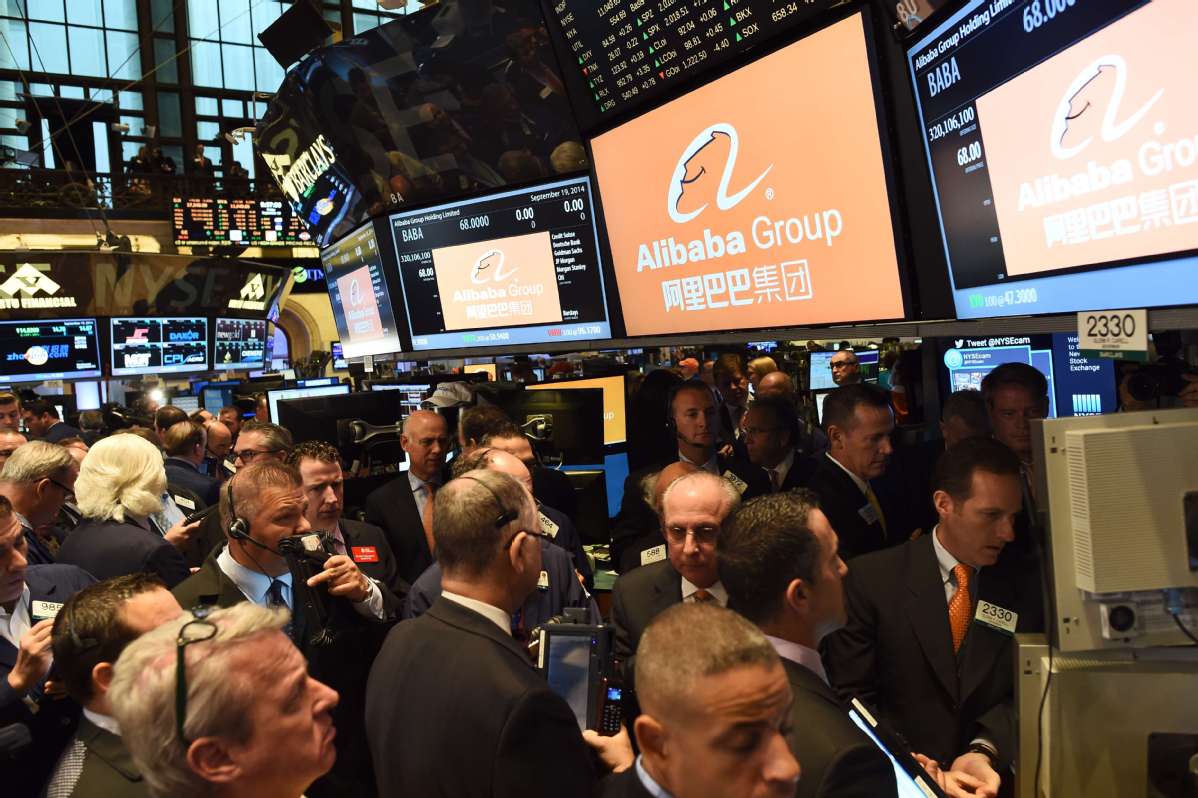
Last week, US President's Working Group on Financial Markets (PWG) recommended a plan to take tough action against US-listed Chinese companies to protect US investors. Despite the tough rhetoric from the White House, stock markets were largely unmoved for a very clear reason: If this recommendation becomes law, it would actually hurt the US financial industry because Wall Street has built a value chain around Chinese companies over the past two decades and the entire financial community benefits from it.
At the center of this PWG proposal is a recommendation for the Securities and Exchange Commission (SEC) to mandate that Chinese auditors share findings with the Public Company Accounting Oversight Board (PCAOB), a specialized audit regulator overseen by the United States government.
This recommendation is largely based on the "Holding Foreign Companies Accountable Act" (HFCAA) passed by the US Senate back in May, which seeks to ban Chinese companies from listing on the NYSE or the Nasdaq if their auditors fail to share findings with the PCAOB over three consecutive years. An identical bill was being considered by the House of Representatives, but has not yet proceeded to a vote.
Stock listings by Chinese companies is a lucrative business for Wall Street. Take for example the recent hot initial public offering of Li Auto Inc, which raised $1 billion and was listed on the Nasdaq on July 30.According to its prospectus filed with the SEC, Li Auto paid a total of $43 million to the underwriting syndicate, which includes Goldman Sachs, Morgan Stanley, UBS Securities and China International Capital Corp. Besides Wall Street investment banks, Nasdaq collects a small listing fee of $295,000.
The Financial Industry Regulatory Authority, as a self-regulatory body, collects a fee of $225,500 and legal firms engaged in this transaction pocketed $3.5 million in legal fees.
Finally, there is an accounting fee of $1.6 million mostly paid to the Chinese arm of Pricewaterhouse-Coopers, one of the "Big Four" accounting firms.
As an industry practice that is compliant with SEC requirements, Li Auto disclosed in its prospectus as a risk factor that," auditors located in China are not in a position lawfully to produce documents directly to the SEC because of restrictions under PRC laws and specific directives issued by the China Securities Regulatory Commission".
Li Auto is just one of the 233 Chinese public companies listed on US bourses. According to the US-China Commission, the total market capitalization of Chinese companies listed on US exchanges is $1.2 trillion, about 3 percent of the total US equity market capitalization, with a daily transaction volume of around $8 billion, or about 6 percent of daily turnover on the US market.
Investment banks collect hefty underwriting fees from these Chinese IPOs as well as trading commissions based on daily volume. Every time there is a major Chinese IPO in New York, NYSE will fly the Chinese national flag outside its iconic facade and Chinese entrepreneurs enjoy a lavish breakfast inside before ringing the opening bell. US exchanges therefore carry prestige for Chinese executives.
In the latest list of Fortune's 2020 Global 500 biggest corporations, for the first time there are more Global 500 companies based in China, including Hong Kong, than in the US-124 compared with 121. However, the biggest Chinese mainland public companies are either dual listed in New York and Hong Kong-such as Alibaba Group-or listed exclusively in the domestic market like the famous liquor company Kweichow Moutai. US investors risk losing out from the second-largest economy with a booming private sector as well as large public companies that perform well and expand globally.
Political rhetoric does not change the fundamentals of these companies and the uncertainty of the HFCAA bill simply drives a wider wedge between stock prices and the underlying assets. These Chinese companies have large operations in China and it's highly unlikely they'll risk noncompliance with Chinese laws by providing audit results to US regulators. If they fail to comply, their share prices may drop as uncertainty starts to mount.
Controlling shareholders will be tempted to take these companies private at a much lower price and re-list them in Shanghai where the valuation could be higher than in New York. US investors in these companies will lose out in such privatization processes and become major victims of the HFCAA bill which, ironically, seeks to protect US investors. Since 2010, over 50 Chinese public companies have already been privatized and voluntarily delisted from US exchanges.
Wall Street executives made a rare public comment expressing reservations over this bill last month during a panel discussion hosted by the SEC.
John Tuttle, vice-chairman and chief commercial officer of NYSE Group, warned that the proposed legislation could backfire.
John Zecca, global chief legal and regulatory officer for the Nasdaq, said the legislation is a very blunt tool.
The cornerstone of the Sino-US relationship is an economic relationship, which has benefited both sides in the past four decades. The pragmatic practice of engagement and conversation promoted by former US Treasury secretary Henry Paulson a decade ago still resonates within the Chinese financial community today. The key is to build on shared interests while seeking to resolve differences.
On Aug 4, CSRC reached out with an updated proposal and provided evidence for Sino-US cooperation on this subject before. Now the ball is in the court of US regulators. At stake is only $1.2 trillion of market capitalization and thousands of professionals on Wall Street who devote time and energy in their jobs. There is a channel for bilateral conversation and there have been successful precedents with the CSRC, but unilateral legislation will only drive Chinese companies away and the damage to the US financial industry could be permanent.
The author is managing director for Group Strategy& Projects of Hong Kong Exchanges and Clearing Ltd.The views and opinions expressed are personal and don't necessarily represent those of HKEX.



















