



China and US need talks, not face-offs







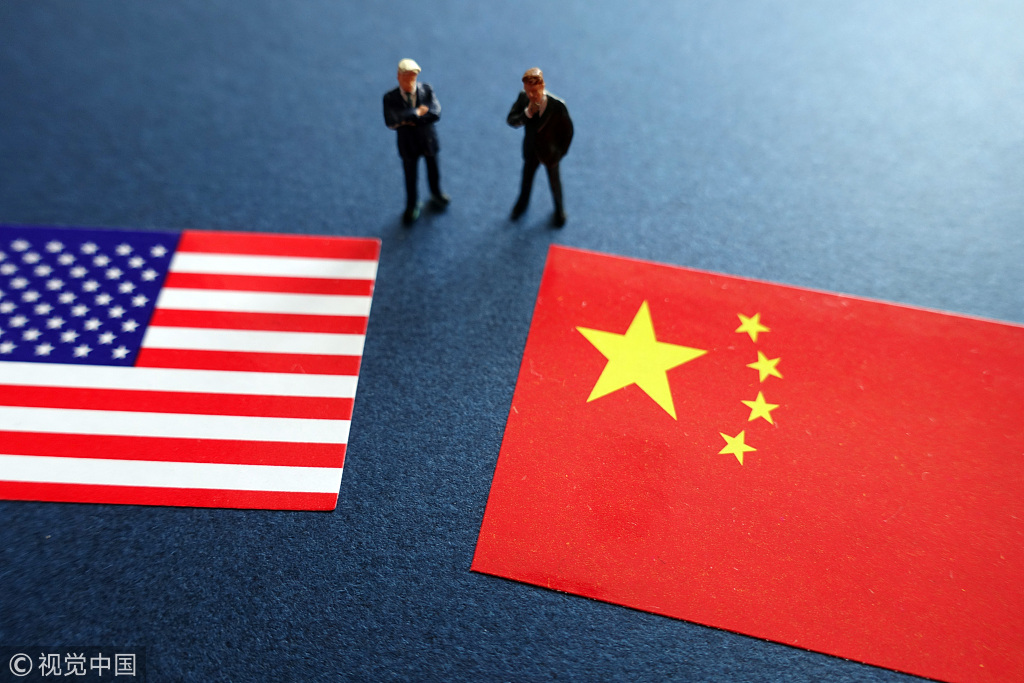
US Secretary of State Mike Pompeo delivered a blistering speech on the United States' China policy last week triggering a mixed response. Praising Pompeo's speech, Hugh Hewitt, president of the Richard Nixon Foundation, said it has opened a bold new chapter in US-China relations, while Richard Haass, president of the Council on Foreign Relations, criticized Pompeo for not understanding China or US foreign policy.
Haass also said Pompeo misrepresented the past Sino-US relationship and failed to suggest a viable path to develop bilateral relations in the future.
Pompeo's speech was the fourth in a series of anti-China tirade. US National Security Advisor Robert O'Brien spoke on ideology, FBI Director Chris Wray on espionage and Attorney General William Barr, surprisingly, on economics. In the face of the worsening presidential campaign, the White House seems to be orchestrating a different type of campaign by playing the China card and resorting to Cold War rhetoric.
US presidential candidates have always played the China card to garner popular votes. But in a digitalized, pluralistic world, it may be difficult for them to harvest the expected number of votes because the American people today are exposed to more diversified flows of China-related contents. Disinformation and misinformation about China may continue to mar the US public sphere, but real facts about China's history, current development and governance system will inevitably reach the people around the world, including American citizens.
Pompeo may believe that by employing Cold War tactics, even McCarthyism, the incumbent president can win the election, but many believe it will not help the US and China to maintain a viable relationship and turn out to be devastating for US-China ties.
The confrontational discourse, as reflected in the series of anti-China speeches by Pompeo and his colleagues, may increase misunderstanding about China, but it cannot change the fact that the US cannot override China, and vice-versa, because both countries are big global players and they need each other to propel their economies despite following different political and governance systems. As such, the US administration's belief that it can use Cold War ideological tactics to gain the upper hand on China is nothing but an illusion.
Pompeo's speech highlighted the failure of the US engagement policy toward China since the two countries established diplomatic relations in 1979. But considering the aggressive and provocative actions of the US against China, it is reasonable to say that the failure of the US' China policy is more a result of the US strategy to contain China.
Since its founding in 1949, New China has been following an independent political, economical and social development path, and has independently developed its military despite pressures and sanctions from other countries, mostly from the US. This trend has continued even after the US triggered a trade war against China in March 2018 and will continue in the future.
Pompeo and his colleagues also criticized the Communist Party of China, claiming the CPC is a major threat to Sino-US relations, in a bid to drive a wedge between the Party and the Chinese people. But according to a recent Edelman survey, 95 percent of the Chinese people have confidence in and are satisfied with the Chinese government, way more than US citizens who have faith in the present US administration.
As Haass put it, it is for the Chinese people to determine what is good for them, and what Pompeo is trying to do is to commit the US to a confrontational path.
By hankering on "distrust and verify", Pompeo has demonstrated that strategic distrust is the key factor behind the difficult Sino-US relationship. With rising Sino-US tensions, marked by tit-for-tat actions over issues such as the South China Sea, the Hong Kong Special Administrative Region and each other's consulates, many experts have said they are worried that the two countries could be moving toward a real war. And to avoid such a scenario, the US and China need to hold more dialogues instead of indulging in belligerent rhetoric.
However, the US and China have held no direct dialogues this year, except for the talks on the "first phase" of a trade deal in January, and a dialogue between Pompeo and State Councilor Yang Jiechi in Hawaii in June. Incidentally, Pompeo appeared impatient at the Hawaii meeting with Yang, and described their dialogue as only words with no offer to change behaviors. This means it is difficult for the US to abandon its distrust of China in the near future.
It is therefore imperative that the US and China open more channels for effective dialogues at different levels, including governmental, organizational and individual levels. Dialogues can be the beginning for the US and China to know what the other side really thinks and wants, and thus can enhance mutual understanding to a degree that starts dissolving distrust, if not building trust.
The author is a professor at and dean of the School of Journalism& Communication, Shanghai International Studies University.
The views don't necessarily reflect those of China Daily.





