Academic misbehavior in crosshairs
Guideline seeking stricter punishment for science frauds to take effect Sept 1







Scientists who deliberately overvalue their work, provide fraudulent information when applying for funding or awards, or plagiarize or fabricate research will be severely punished, according to a new guideline on safeguarding academic integrity issued by the Ministry of Science and Technology.
Depending on the severity of the offense, punishments can range from revoking offenders' titles and prizes to permanently banning them from doing related research.
The guideline will take effect on Sept 1, the ministry said.
Violators who tamper with evidence, obstruct investigations or retaliate against informants will receive harsher punishment.
Those who admit their wrongdoings and cooperate in investigations can apply for more lenient treatment.
The new rule will apply to scientists and their research institutions, as well as to administrative staff, appraisal experts for scientific work and third-party agencies that serve scientific undertakings, the ministry said.
A draft of the guideline was released in October to garner suggestions from the public.
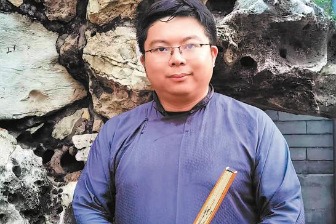
Huang Xiaoru, a science policy expert at the Institutes of Science and Development of the Chinese Academy of Sciences, said the guideline is "unprecedented" in the amount of details on how to handle academic misconduct during various stages of research activities.
"It is an instructive document that covers the entire scientific process, which allows a more methodical and unified approach in supervising and dealing with any academic misconduct," she said.
For example, the guideline specifies that pulling strings when applying for funding and awards, misusing research grants, switching job posts without approval, and violating research ethics are now punishable offenses.
Institutes that connive with or shield violators will also be punished with budget cuts or judicial action.
Huang said that under past regulations, different ministries and government agencies had their own standards and procedures for dealing with academic misconduct. The disparate rules and sometimes overlapping jurisdictions made it harder to evaluate, investigate and deal with violators.
The new document has laid out clear and unified rules to all parties involved in scientific research that work across all agencies, she said. Meanwhile, various violations are now treated differently.
"All these factors will place strong, all-around pressure on anyone who dares to undermine academic integrity," Huang said.
He Guangxi, a researcher from the Chinese Academy of Science and Technology for Development, said the new document can serve as a powerful tool to force research institutions and administrations to proactively investigate academic misconduct.
In the past, He said, some institutions either didn't take reports of academic misconduct seriously or purposely dragged out investigations, hoping the controversies would blow over.
"We must establish a rule in which all reports of academic misconduct must be investigated and properly dealt with," he said.
The new guideline states all investigations must be concluded within 30 days, and a final determination must be submitted to authorities.
If the case is high-profile, the verdict must also be announced to the public.
At the same time, the guideline establishes an appeal and reevaluation mechanism for academic misconduct.
He called this a "big step forward" because evaluating and handling controversies surrounding research integrity and ethics can be very tricky, and mistakes can happen.
With a channel for appeal, scientists can still freely pursue their subject while ensuring their work is done in a safe and responsible manner, he added.


- 2 suspects wanted over 58m yen robbery in Hong Kong
- CCG conducts patrols around Huangyan Island and its surrounding waters
- YRD demonstration zone seeks to advance concerted institutional reform and innovation
- Chinese courts boost pretrial mediation, resolve 4.32 million disputes in 2025
- Video series aims to show the beauty of Hebei
- Explore a historical city teeming with transformation in Beautiful Tianjin