Washington is biggest threat to the dollar







In response to the United States' decision to close the Chinese consulate in Houston, Texas, China ordered on Friday the closure of the US consulate in Chengdu, Sichuan province. Tensions between the two countries have now escalated to such a level that risky unpredictability is now the new common denominator of Sino-US ties.
Worse, the White House is reportedly considering moving from a bilateral trade war to taking measures that would exclude China from the dollar-denominated international payment network even though the extension of the trade war to finance could severely backfire in the COVID-19-damaged world economy.
Dollar payment system biased in favor of US
Created in Brussels in 1973-after the rise of US deficits, weaker US dollar and its decoupling from the gold standard-the dollar clearing and settlement system (Society for Worldwide Interbank Financial Telecommunication) is ostensibly a non-profit organization. Yet its first CEO was a former executive of American Express and its data centers are in the US, the Netherlands and Switzerland.
The SWIFT itself is said to oppose such measures, because they could cost it a huge number of clients. After all, a contract on connecting to the SWIFT is signed with each bank separately, not with the country where these banks are based.
In the highly interdependent global economy, international trade and finance are two sides of the same coin. Cross-border trade transactions rely on an effective international payments system and a robust network of financial institutions issuing credit. And that infrastructure is still built around the US dollar, which the US administration would like to leverage to contain China's rise.
In the postwar era, the Japanese yen's value peaked in the mid-1980s, when Tokyo agreed to a managed trade deal in New York City's midtown Plaza Hotel. The controversial pact led the US, France, the United Kingdom, erstwhile West Germany and Japan to depreciate the US dollar relative to the Japanese yen and the Deutsche mark by intervening in the currency markets.
It was this exchange rate manipulation that played a key role in Japan's subsequent containment, by paving the way to its asset bubble in the early 1990s and the subsequent lost decades.
But China is not going to follow that path.
Through the past three years dealing with the incumbent US president, China has resisted protectionism and trade wars. But as a defensive measure, Beijing may now be forced to prepare against the risks of being cut off from the US dollar payment system.
Need to diversify away from US treasury bills
As long as China holds $1.1 trillion in US Treasury bills and large investments that remain denominated in US dollars, exposure remains high. Over time, Beijing can diversify away from some of these Treasury bills and investments, while internationalization of the renminbi would reduce reliance on the US dollar.
Thanks to the long-term potential of the Chinese economy and finance, the renminbi's role as a global reserve currency and its rising attractiveness for international transactions, the time is right for accelerated internationalization. As China's is the first major economy to overcome the impact of the COVID-19 outbreak, the global demand for renminbi assets is rising.
During the 2008 global financial crisis, Zhou Xiaochuan, then chief of China's central bank, revived the Keynesian concept of bancor, an international currency, while several major economies began talks about diversifying away from the US dollar.
In 2015, the BRICS New Development Bank proposed having 50 percent of projects financed by local currencies. More recently, several countries and groups of countries, including China and Russia, have pushed for alternative payment systems parallel to the SWIFT as a defensive measure.
Dollar has disproportionate 'exorbitant leverage'
In January 2019, eight months after the US withdrew from the Iran nuclear deal, Germany, France and the UK set up an alternative payment channel with Iran (Instrument in Support of Trade Exchanges) to continue trade by circumventing US sanctions against the Middle East country.
In the late 1960s, former French president Valéry Giscard d'Estaing, while he was serving as finance minister, described the dollar's role as the leading global reserve currency as an "exorbitant leverage". Unlike any other country, the US can print money at negligible cost and use it to purchase goods and services worldwide.
In 1971, when European ministers raised concerns about the US exporting inflation to other countries, US president Richard Nixon's Treasury secretary famously said the dollar "is our currency, but your problem". Yet financial globalization was minimal at that time.
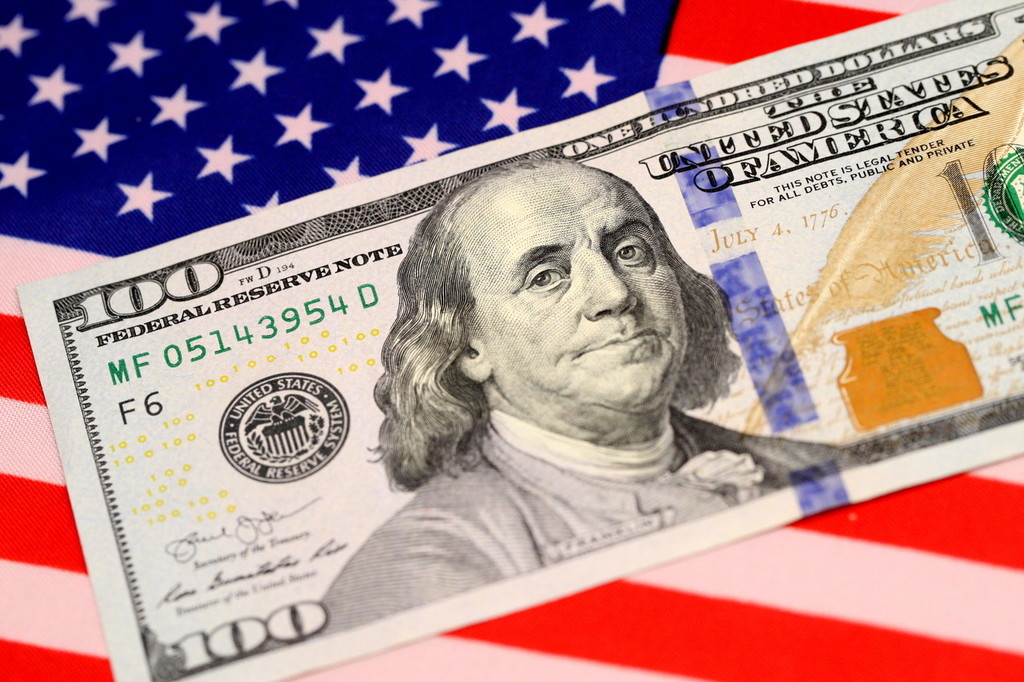
With the opening up of global capital markets, the US has projected its exorbitant leverage over the entire world but the White House has also repeatedly weaponized that power since the attacks of September 11, 2001. Today, four-fifths of global trade remains invoiced and settled in dollars, and most transactions are cleared through the US financial system. As such, Washington can isolate or block any country from that system to fulfill its unilateral goals. Limiting capital flows worldwide, such restrictions have far broader effects than bilateral trade tariffs. All that's needed to impose such gargantuan limits is for the US president to invoke the 1977 International Emergency Economic Powers Act.
Former US president George W. Bush invoked the IEEPA against terrorism, and his successor Barack Obama against transnational criminal organizations. In its "maximum pressure" foreign policy, the present US administration has used "national emergency" as a pretext to realize its economic goals and may be move toward the Trading with the Enemy Act, which was central to the US' Cold War containment policy.
The greenback takes a beating on Wall Street
Recently, the dollar has taken a beating on Wall Street. As the US national debt is about $27 trillion-133 percent of its GDP-the dollar is facing increasing volatility because of still another round of unlimited quantitative easing by the Federal Reserve.
Today, the greatest threat to the dollar-denominated global infrastructure is not China, Russia or the European Union, but the current US administration. With its unilateral use of the international payments system, it is accelerating the path toward a dollar crisis.
The author is the founder of Difference Group, and has served at the India, China and America Institute (USA), Shanghai Institutes for International Studies (China) and the EU Centre (Singapore).
The views don't necessarily reflect those of China Daily.