Revised regulation for asset management products may be delayed







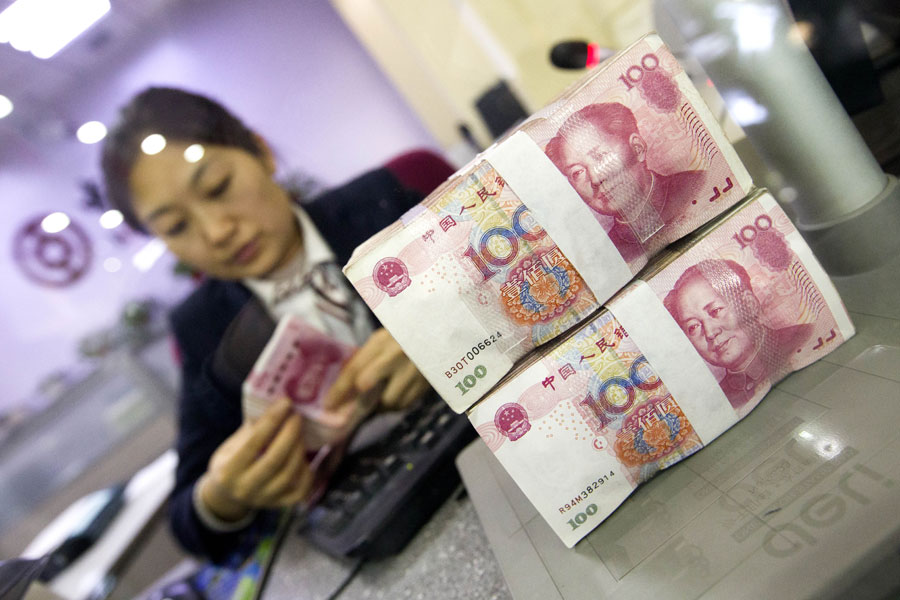
Implementation of the new regulation for China's more than 90 trillion yuan ($12.86 trillion) of asset management products is likely to be delayed, as the economic recovery in the post-pandemic era needs more funds to serve the real economy, experts said on Thursday.
The People's Bank of China, the central bank, had earlier scheduled the implementation of the New Asset Management Regulation from next year. However, financial experts have stressed the need for a longer transitional period of another one or two years, as the new rule may crimp financial conditions and disrupt the market in the aftermath of the novel coronavirus epidemic.
Sources familiar with the matter told China Daily that the new regulation is likely to be implemented in 2022, after a one-year delay, but a final decision on the same has not yet been made by the central bank.
PBOC officials said earlier this month that they were considering a delay, as the global economy is facing a deep recession due to the COVID-19 pandemic, while downside pressures exist in China. The prevailing macroeconomic environment is hindering the smooth implementation of the asset management reforms, a crucial measure to contain shadow banking activities.
The new rule seeks to limit the shadow banking businesses in which financial institutions have a high degree of exposure, especially in nonstandard debt products with less supervision, and those which could increase systemic risks due to higher leverage levels, experts said.
An earlier launch of the asset management rule will reduce the available funds necessary for economic recovery, especially in the face of rising uncertainties, they said.
Sun Tianqi, head of the PBOC Financial Stability Bureau, said the new rules for asset management products introduced in 2018 have ensured that there are no barriers to the funds necessary to support the real economy.
Most of the funds raised via asset management products have been injected into bonds issued by financial institutions and corporates and helped strengthen the real economy, said Sun.
The extension of the transitional period will help increase the aggregate financing, as the nonstandard products will supplement bank loans and lend support to the corporate sector, which is in line with the policymakers' objective of stabilizing economic growth, said Ming Ming, a senior researcher with CITIC Securities.
Some analysts, however, are worried that the nation's efforts to support economic recovery from the COVID-19 shocks may fuel further expansion of the shadow banking businesses and lead to possible systemic risks.
China's shadow banking assets showed their first increase in two-and-a-half years during the first quarter of this year, said a recent research report from Moody's Investors Service, a global credit ratings agency. "A rapid rebound is unlikely as financial systemic stability is still a key priority for the authorities," said Michael Taylor, managing director of Moody's.
Asset management products, including entrusted and trust loans, wealth management products issued by non-bank financial institutions and public funds, are the major components of China's shadow banking assets. Total asset management products stood at 90.1 trillion yuan by the end of May, up by 4 trillion yuan from the beginning of this year and up 3.5 percent on a yearly basis, according to PBOC data.
Ruan Jianhong, head of the PBOC's statistics and analysis department, said that the risks from asset management products have been further constrained this year despite the higher amount, thanks to the decrease in interbank investments and lower leverage ratio of the products.
Financial institutions used to prefer the shadow banking businesses as these can bypass certain regulatory requirements. Banks do not need to keep the required reserves for this part or set any loan loss provisions. This type of investment usually enjoys lower financing costs and higher returns, said experts.